Inside Meta’s Initiative to Deploy Robots in Data Centers
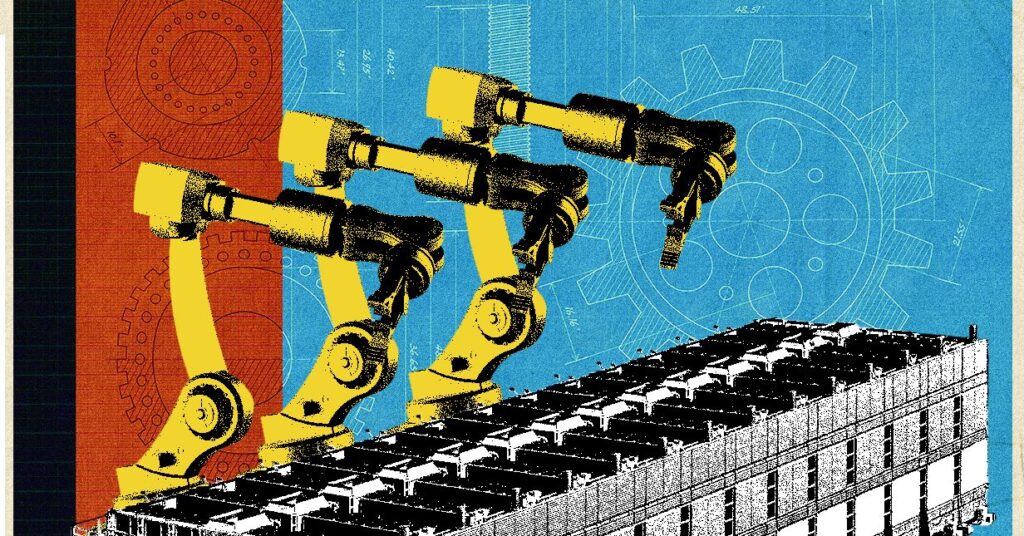
Meta is exploring robots capable of connecting cables, resetting servers, and performing various tasks within its data centers, as reported by several current and former employees familiar with the initiatives. This ongoing project, which has not been disclosed earlier, could eventually enable Meta to manage its rapidly expanding data center landscape with fewer human workers, thereby controlling labor expenses amid rising investments in AI infrastructure.
According to the same employees, who wished to remain anonymous due to media restrictions, Meta is utilizing robots and related technology from various vendors such as Watney Robotics, Kinova, and ABB. Kinova and ABB chose not to provide comments. Watney did not respond to inquiries.
In one trial, Meta is assessing the feasibility of using a Kinova Gen3 robotic arm for power cycling or shutting down servers. The company is also testing another robot designed for cable swapping. One Meta data center employee estimates that a successful implementation could replace as much as 80 percent of specific tasks performed by people. “We believed those of us engaged in physical duties were safe for some time, but that’s no longer the case,” the worker states. “It’s unfortunately coming for us all.”
In certain facilities, Meta has quietly taken on a simpler robot, resembling a finger—or maybe a pointed stick—that can activate the power button on a Mac Mini or similar device to restart it when instructed remotely by a human.
Meta chose not to comment on the testing mentioned in this article. In a statement, company spokesperson Francis Brennan noted that Meta is heavily investing in the training and hiring of workers to construct and manage its data centers. “America is undergoing its largest infrastructure expansion since World War II, and there is a substantial shortage of skilled labor for these roles; we require more workers, not fewer,” he stated.
However, at a conference last year, Eric Xu, senior manager for robotics at Meta, mentioned that the company’s “long-term objectives” include integrating robots into data centers, claiming they could enhance incident response, environmental monitoring, and preventative maintenance. “We believe greater collaboration and research are essential, but we must begin; otherwise, we lose our opportunity to make this happen,” he remarked.
Until recently, robots were generally not well-suited for the intricate tasks performed in data centers. They were costly, and previous industry trials sometimes led to servers being damaged during simple operations, according to an informant familiar with the experiments. However, advancements have made the hardware more affordable, and the AI models driving robots are now significantly more advanced than a few years ago. Numerous startups are actively developing commercial robots capable of assembling servers, replacing components, and managing wiring.
Robots could deliver more consistent output at a reduced cost compared to human labor, particularly in less populated areas where data centers are abundant but skilled labor is limited. Advocates also emphasize a pro-worker narrative: akin to the promises of AI agents for knowledge workers, they contend that robots could handle the most repetitive and hazardous tasks for data center technicians, allowing them to concentrate on more complex issues. In the long run, minimizing human involvement could also facilitate the operation of data centers in underwater, outer space, or otherwise inhospitable environments.

Rajat Sharma
https://in.linkedin.com/in/rajat-mediaHelping D2C Brands Scale with AI-Powered Marketing & Automation 🚀 | $15M+ in Client Revenue | Meta Ads Expert | D2C Performance Marketing Consultant