Could AI Data Centers Be Relocated to Space?
In this context, ε represents the emissivity of the object—indicating its effectiveness as a radiator (0 < ε < 1), while σ denotes the Stefan-Boltzmann constant, A refers to the surface area, and T symbolizes the temperature (in Kelvin). Given that temperature is raised to the fourth power, it becomes evident that hotter objects emit significantly more energy compared to cooler ones.
Now, imagine wanting to play Red Dead Redemption in the vastness of space. Your computer will generate heat—perhaps reaching 200°F (366 Kelvin). For simplicity, assume this is a cube-shaped PC with a total surface area of 1 square meter and behaves as a perfect radiator (ε = 1). In such a case, the thermal radiation power would be approximately 1,000 watts. Although your computer isn’t a perfect radiator, it seems like you would be safe, as the output (1,000 watts) exceeds the input (300 watts), allowing it to cool effectively.
Next, consider running some basic AI tasks. This requires more resources, so let’s double the dimensions of our cubical computer. This adjustment results in a volume that is eight times larger (23), permitting eight times as many processors, thus necessitating an input power of 2,400 watts. However, since the surface area only increases by a factor of four (22), the radiative power would be about 4,000 watts. While you still have a higher output than input, the margin is decreasing.
The Importance of Size
This illustrates a crucial point. As you continue to scale up, the volume increases at a rate that outpaces the surface area. The larger your space-based computer, the more challenging it becomes to manage cooling. If you envision a Walmart-sized structure orbiting, akin to terrestrial data centers, that’s simply unfeasible. Such a structure would likely overheat.
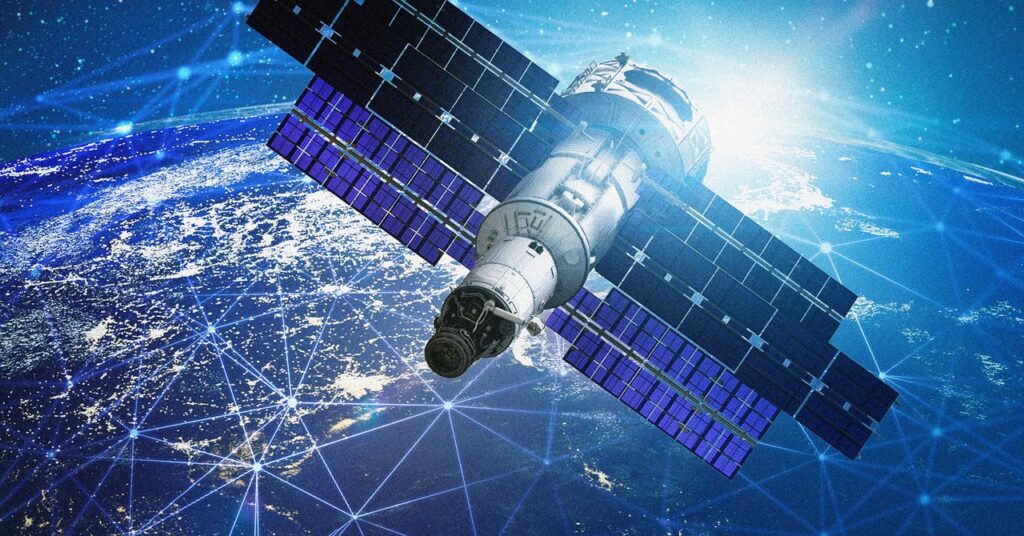
Of course, you could incorporate external radiation panels, similar to those on the International Space Station. But how large would these need to be? Assuming your data center operates on 1 megawatt (compared to existing AI data centers on Earth using 100 to 1,000 megawatts), you’d require a radiating area of at least 980 square meters. This is becoming increasingly impractical.
Additionally, these radiators function differently from solar panels connected by wires; they require systems to transport heat away from the processors to the panels. The ISS utilizes ammonia circulated through a network of pipes for this purpose. This requirement leads to even more material, significantly raising the costs of launching everything into orbit.
Let’s summarize the situation. Despite beginning with optimistic assumptions, the outlook isn’t favorable. We haven’t even factored in the solar radiation that could further heat the computer, necessitating greater cooling. Additionally, intense solar radiation could potentially damage the electronics over time. And what about repairs?
However, one conclusion is clear: due to the inefficiency of cooling in space, your “data center” would need to consist of a network of small satellites with improved area-to-volume ratios, rather than a few large ones. This aligns with the suggestions of many advocates, including Google’s Project Suncatcher. Elon Musk’s SpaceX has already sought FCC approval to launch a million small AI satellites into orbit.
However, keep in mind that Low Earth Orbit is already overcrowded, hosting around 10,000 active satellites and approximately 10,000 metric tons of space debris. The potential for collisions, possibly resulting in catastrophic Kessler cascades, is a genuine concern. And we plan to add a hundredfold of satellites? All I can say is, “Look out below.”

Rajat Sharma
https://in.linkedin.com/in/rajat-mediaHelping D2C Brands Scale with AI-Powered Marketing & Automation 🚀 | $15M+ in Client Revenue | Meta Ads Expert | D2C Performance Marketing Consultant