AI Agents Shocked the Tech Industry. Here’s How It Unfolded.
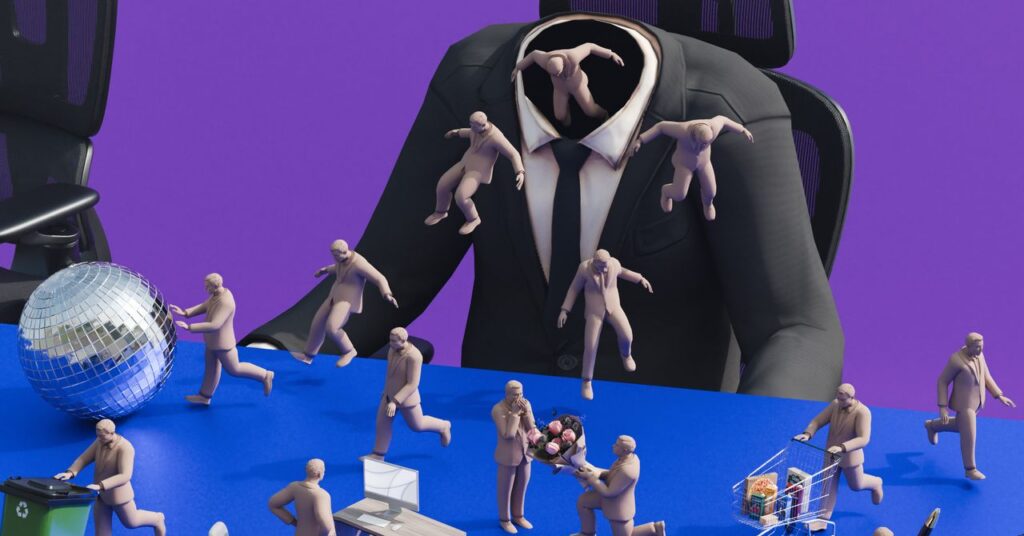
“Hello, I’m Peter, and I’m a Claudeholic.”
It was August 2025 when Peter Steinberger spoke at a meetup in London named Claude Code Anonymous. Steinberger, along with a group of fellow enthusiasts, initiated the gathering to connect with others like themselves—tech professionals captivated by groundbreaking coding tools like Anthropic’s Claude Code. “I spend nearly all my waking hours on this, but it never feels sufficient,” he shared with the attendees in a cozy room adorned with brick walls.
Months later, Anthropic unveiled a new iteration of Claude Code, causing the number of Claudeholics to skyrocket. Named Opus 4.5, this version could tackle more complex programming challenges, boast greater memory retention, operate for hours, and manage a team of AI subagents. Anthropic claims its “notoriously difficult” take-home exam for engineering candidates was outperformed by Opus 4.5, which “scored higher than any human candidate ever,” raising questions about AI’s impact on the engineering landscape.
Countless programmers spent their holidays in basements and home offices, eagerly experimenting with this new tool that allowed them to develop software as if they had unleashed a horde of clones or gained superpowers. “It’s like becoming Spider-Man,” one enthusiast expressed.
For 39-year-old Steinberger, who balanced his time between London and Vienna, even this wasn’t enough. In November 2025, he launched a tool now known as OpenClaw, simplifying the process of creating a personal AI agent that harnesses the advancements of Claude Code and other coding platforms. With access to your data, apps, and even your credit card, it can scour your cloud and navigate the web to fulfill your wishes. This tool operates autonomously in the background, overcoming challenges with relentless determination.
Steinberger’s project saw immense traction during the winter. One measure of its success is the number of “stars” a code repository receives on Github. Within two weeks, as users eagerly downloaded and began creating, the project accumulated over 100,000 stars. (By early May, it had reached 366,000 stars.)
With these two innovations—the commercial product Claude Code and the open-source OpenClaw—the long-anticipated era of AI agents has swiftly emerged. This is particularly true for those who are technically skilled and perhaps bold enough to engage in a chaotic, imperfect, and risky journey. Several Claudeholics have remarked that they feel like they are living in a futuristic world. “AGI is here!” one enthusiast said, echoing a famous sentiment from William Gibson. “It’s just not evenly distributed.”
Back in the 1980s, during the computer revolution, the public viewed new technology with a blend of curiosity and apprehension while hackers were joyously innovating. Today’s dynamic mirrors that, perhaps with even higher stakes. “It’s challenging to convey the magnitude of this transformation,” explains Thomas Reardon, a former Microsoft and Meta executive who now leads a startup in a different AI sector. “It’s the most underrated, significant release I’ve witnessed in tech.”

Soon, we will all experience this. Recently, Marc Andreessen, the co-inventor of the web browser and a known techno-optimist, expressed a belief that reflects the mindset of Silicon Valley: “It’s nearly inevitable that this will become the way people interact with computers.” Implicitly understood: It won’t be optional.
Rewind to early 2024, when Boris Cherny held the position of tech lead at Instagram, working remotely from a home he shared with his partner in rural Japan. “I would bike to the farmers market by the rice fields,” recalls Cherny, now 34. “Our pastime involved making miso and pickles, which we would barter with our neighbors.” Everything shifted when he began exploring the emerging AI models from his hometown of San Francisco. (Originally from Ukraine, his grandfather was a programmer using punch cards.) Those models jolted Cherny from his tranquil existence. Through connections, he linked up with Anthropic and decided to return to the Bay Area to join their team.

Rajat Sharma
https://in.linkedin.com/in/rajat-mediaHelping D2C Brands Scale with AI-Powered Marketing & Automation 🚀 | $15M+ in Client Revenue | Meta Ads Expert | D2C Performance Marketing Consultant