DOGE Utilizes AI for Housing Policy, But Government Remains Silent on Details
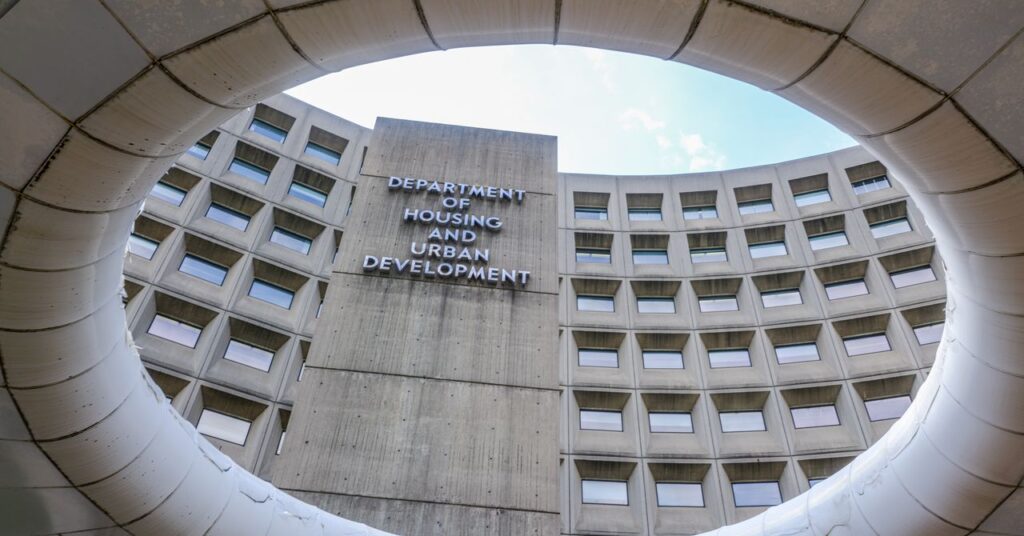
Members of the so-called Department of Government Efficiency (DOGE) at the Department of Housing and Urban Development (HUD) utilized artificial intelligence to guide policy decisions. However, the agency now seems to be denying Freedom of Information Act requests regarding the development and application of AI tools, as well as how they influenced policy decisions, based on documents obtained through a FOIA request by Democracy Forward, a nonprofit legal entity.
Previously, WIRED reported that Christopher Sweet, a third-year student at the University of Chicago, joined the DOGE team at HUD, along with Scott Langmack, who transitioned from a property technology startup named Kukun. According to HUD employees who spoke to WIRED, Sweet primarily focused on employing artificial intelligence to identify agency rules that could be rescinded or contracts canceled, aligning with broader governmental efforts.
At that time, HUD staff informed WIRED that employees were being included to provide feedback on regulations flagged by the AI for possible rescission. However, some employees described the initiative as unnecessary.
Sweet graduated from the University of Chicago in June with a degree in economics, while Langmack is now the executive director of deregulation AI at the Office of Management and Budget (OMB), part of the Executive Office of the President, as noted on his LinkedIn profile.
Democracy Forward requested over 100 documents regarding HUD’s use of AI for decision-making, but HUD withheld them. The agency cited reasons such as a nonexistent AI privilege and a real privilege for presidential communications, typically reserved for the president and close advisers. Some withheld documents, whose titles are provided in the FOIA but whose content remains undisclosed, suggest that the DOGE team at HUD employed AI tools to assist in policy decisions.
Sweet, Langmack, HUD, OMB, and the White House did not respond to requests for comments.
One withheld document, titled “GPT defined Econ Analysis approach 11 10 25.docx,” owned by Langmack, was exempted from FOIA as it was marked as “deliberative AI input.” Another document, named “RegulatoryAnalysisPrompt.pdf,” also belonging to Langmack, suggests that the DOGE team was interested in formulating prompts for regulatory analysis. Several other withheld documents were categorized as various forms of “regulatory analysis” related to different HUD programs, though it remains unclear if AI contributed to their creation.
Tori Noble, a staff attorney at the Electronic Frontier Foundation, expresses concern over the lack of transparency regarding AI tool usage in policy formulation or alteration, noting that such tools can hallucinate, exhibit bias, or simply make errors. “We might not always be aware of how these tools are being utilized,” she states. “Therefore, access to the prompts is essential for understanding how officials use these tools and the potential harm associated with those uses.”
Currently, no laws in the US mandate the government disclose the use of AI in crafting rules, policies, or regulations.
“If AI is utilized for policy assessment as one of several tools, I believe it’s wise at this stage of AI development and application to note that,” remarks Mark Fagan, a lecturer at the Harvard Kennedy School. “This transparency is partly aimed at fostering confidence in the government’s AI utilization.”

Rajat Sharma
https://in.linkedin.com/in/rajat-mediaHelping D2C Brands Scale with AI-Powered Marketing & Automation 🚀 | $15M+ in Client Revenue | Meta Ads Expert | D2C Performance Marketing Consultant