6 Frightening Forecasts for AI by 2026
With OpenAI declaring a “code red” this month to refocus its efforts on competing with Google, it prompted me to reflect on December three years ago when the roles were reversed. Back then, Google was the one sending out alarms to catch up to OpenAI. This led to the monumental layoffs in January 2023, marking the first significant job cuts in Google’s history. “A tough choice to prepare us for the future,” as the company referred to it then.
I can’t help but wonder if the ChatGPT developer might consider similar layoffs early next year. This thought spurred me to develop a complete set of predictions for what lies ahead in the coming year. Here’s a breakdown of six ideas, refined with input from my insightful colleagues at WIRED.
Data Center Disinformation
Around the globe, communities are resisting the establishment of data centers. In the US, numerous activists are rallying on social media platforms like Facebook Groups. Meanwhile, the Chinese and Russian governments persist in leveraging social media to spread disinformation under the guise of genuine news and opinions. A slowdown in data center development in the US could benefit China and Russia as they aim to outpace the US in industrial and military AI prowess.
Austin Wang, a researcher at the nonprofit think tank RAND who has looked into China-controlled propaganda efforts, indicates that there are currently no signs of alarming activity. “Many newly established anti-data-center pages appear to be managed by actual US citizens so far,” Wang mentions.
However, as the anti-data-center movement gains momentum, China and Russia may try to latch onto the grassroots initiatives. The task has become simpler, thanks to AI that can swiftly produce images and videos to provoke public sentiment on social media.
Robot Demos Everywhere
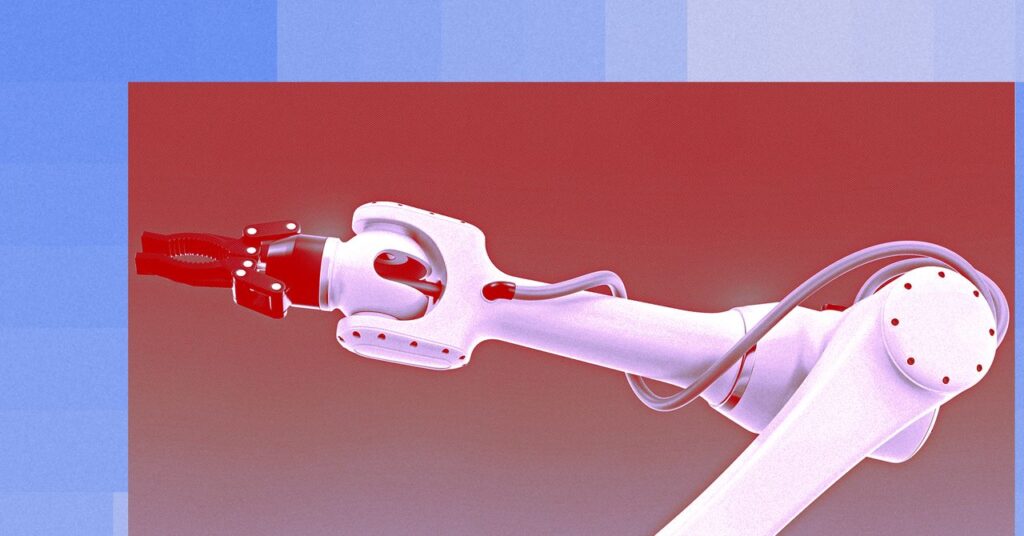
By 2026, tech conferences, from the Consumer Electronics Show to Amazon’s hardware event, are expected to be abuzz with AI-powered robots. Companies like Google have invested years into training robots for household tasks through repetitive practice. Now, we’re seeing a new wave of excitement. The AI models powering services like ChatGPT and Gemini are being integrated into robots, aiming for them to complete chores, such as folding laundry, with improved training efficiency and accuracy.
Last September, Google unveiled a video showcasing a robot sorting trash, compost, and recycling based on user voice commands. At the next I/O conference, I anticipate Google executives will demonstrate a robot tasked with sliding a pizza into an unfamiliar oven while simultaneously fetching a half-full Diet Coke from a crowded fridge.
Barak Turovsky, the recently departed chief AI officer at General Motors and a former leader within Google’s AI division, notes that advancements in robotic capabilities stem from large language models’ ability to understand a dishwasher manual, learn to operate it through video observation, and identify specific parts by deciphering illustrations. “The physical world is the next frontier for large language models,” he asserts.

Rajat Sharma
https://in.linkedin.com/in/rajat-mediaHelping D2C Brands Scale with AI-Powered Marketing & Automation 🚀 | $15M+ in Client Revenue | Meta Ads Expert | D2C Performance Marketing Consultant