Silicon Valley Is Deeply Split on Chinese Artificial Intelligence
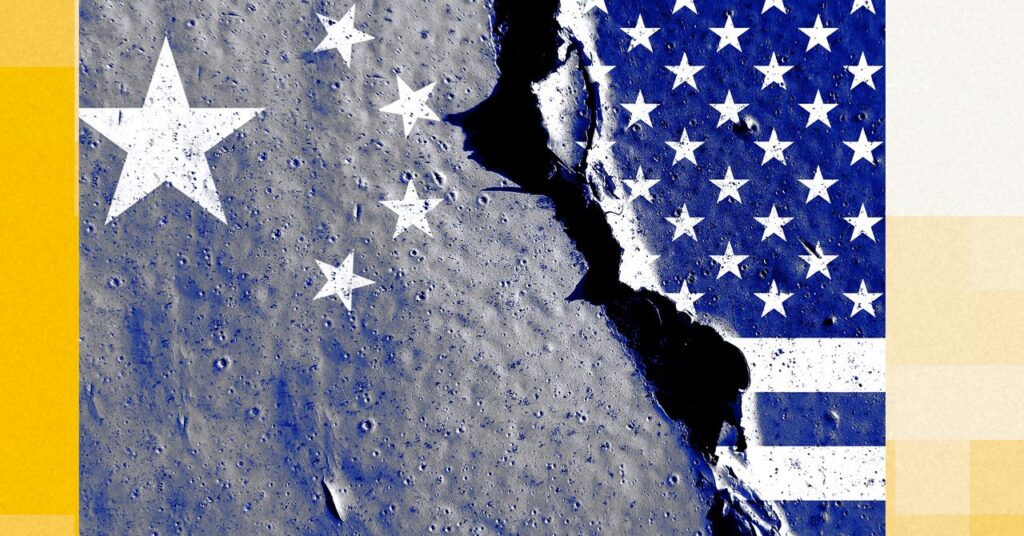
A significant debate is unfolding in Silicon Valley regarding the rise of Chinese-produced artificial intelligence tools, especially “open-weight” AI systems that, by certain benchmarks, can rival or even exceed some of the leading US models. My WIRED colleague Hugo Lowell has covered the internal discussions within the Trump administration on how to respond to these Chinese technologies. The topic is proving to be even more polarizing among AI firms in the Valley.
One major concern for both Washington and Silicon Valley pertains to distillation, where a less potent AI model is trained using outputs from a more advanced one. In June, Anthropic accused the Chinese tech firm Alibaba of wrongfully acquiring its intellectual property via distillation attacks. Then, just earlier this week, the White House expressed its belief that Beijing-based Moonshot AI developed its Kimi K3 model by distilling Anthropic’s Fable 5 model.
Another pressing issue is the rapid emergence and distribution of Chinese AI models. An open-weight AI model makes its core components publicly available, allowing for customization to meet user demands. However, these models often lack the safeguards that Anthropic has established its reputation upon. Yasir Atalan, deputy director and data fellow at the Center for International and Strategic Studies, notes that the primary advantage of open-weight AI models lies in their swift diffusion. They can disseminate particularly easily “through Hugging Face, GitHub, cloud providers, local deployments, and third-party inference platforms,” he points out. For companies like Anthropic, which have cultivated a reputation around safety and charge for access to their expensive proprietary models, there is ample reason to advocate for regulation.
Conversely, some startups in Silicon Valley—not the trillion-dollar giants like OpenAI and Anthropic—are strongly opposed to the US government imposing restrictions on these AI models. On Wednesday, over 200 startups banded together under the Little Tech Association, sending a letter to Michael Kratsios, science advisor to President Donald Trump, and US Commerce Secretary Howard Lutnick, lobbying against a total ban on open-weight AI models. This group, which includes renowned startup incubator YCombinator, has suggested certain safeguards but contends that restricting Americans’ access to international AI models would undermine US startups and foster monopolistic practices among the AI behemoths.
Bill Gurley, the esteemed tech investor and long-time partner at Benchmark Capital, has publicly advocated for allowing “the free market to function.” In an extensive blog post providing an insightful history of open-source software, Gurley asserts that open-weight models prevent lock-in, promote authentic academic research, and are vital for startups with limited capital.
“Every AI startup, every independent developer, every small team creating a product atop AI infrastructure relies on having access to quality models at reasonable prices,” Gurley states.
Chamath Palihapitiya, one of the All-In podcast hosts, remarked on X that “manipulating the US Government to safeguard frontier labs’ business model by invoking a China scare is misguided…It protects the interests of 5,000 investors in OAI and Ant at the expense of everyone else. This would be a profoundly foolish decision.” His cohost and fellow VC Jason Calacanis chimed in. “Daddy Trump protect us!!!!” he quipped on X, accompanied by a concerning number of crying-laughing emojis.
This perspective from some of Silicon Valley’s most cutthroat capitalists may initially seem counterintuitive. Why allow a foreign adversary’s technology to thrive in the US? It’s as if the US is leading 1-0 in the AI World Cup, a somewhat precarious advantage, while the crowd urges for the opposing team to get a free kick.

Rajat Sharma
https://in.linkedin.com/in/rajat-mediaHelping D2C Brands Scale with AI-Powered Marketing & Automation 🚀 | $15M+ in Client Revenue | Meta Ads Expert | D2C Performance Marketing Consultant