Chinese AI Company SenseTime, Now Under Sanctions, Launches Rapid Image Model
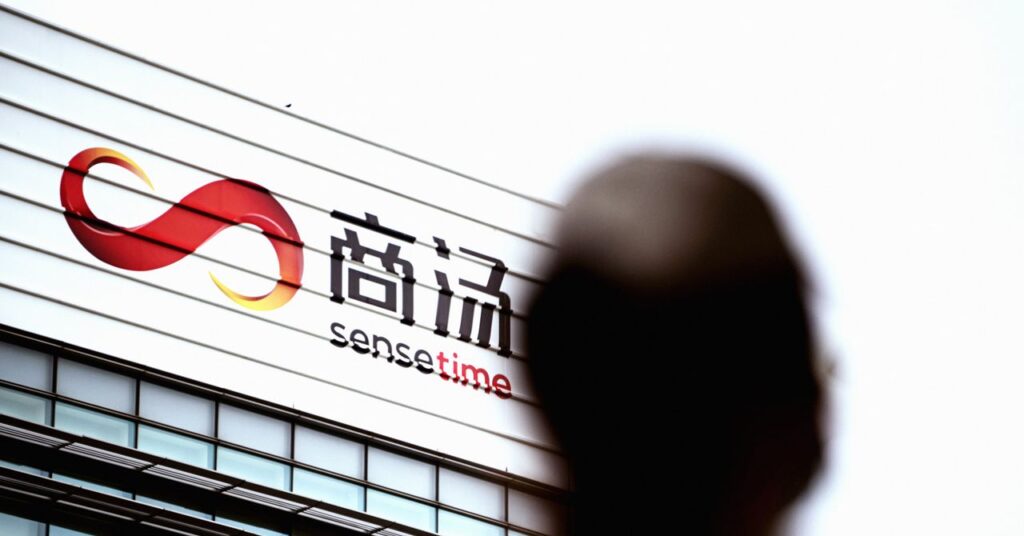
SenseTime, a Chinese AI firm recognized primarily for its facial recognition innovations, introduced a new open-source model on Tuesday, asserting that it can generate and interpret images significantly quicker than leading models created by US firms. The SenseNova U1 might enable the company to regain footing after losing its status among the frontrunners in China’s AI advancement race.
The model’s distinguishing feature is its capacity to “read” images directly without the need for preliminary text conversion, enhancing speed and minimizing the computational resources required. “The model’s whole reasoning process isn’t confined to text anymore; it can also reason with images,” said Dahua Lin, cofounder and chief scientist at SenseTime, during an interview with WIRED.
Lin, who is also a professor of information engineering at the Chinese University of Hong Kong, mentions that models that can directly process images will aid robots in better comprehending the physical environment in the future.
Similar to DeepSeek’s latest flagship offering, SenseTime claims that U1 can operate using Chinese-manufactured chips. “Multiple domestic chipmakers in China have concluded optimizing their compatibility with our new model,” Lin states. On the launch day, 10 Chinese chip manufacturers, including Cambricon and Biren Technology, declared support for U1 through their hardware.
This adaptability is significant due to US export restrictions that hinder Chinese companies from accessing the most advanced AI chips worldwide, particularly those designated for training, which are predominantly produced by Western companies like Nvidia. “We will keep pushing for training on a wider array of chips,” Lin commented. However, he acknowledged that SenseTime “might still require the best chips to guarantee swift iterations.”
SenseTime made U1 available for free on Hugging Face and GitHub, highlighting how Chinese companies are becoming some of the most engaged contributors to open-source AI.
Founded in 2014, SenseTime rose to prominence in computer vision, which applies to technologies like facial recognition and autonomous vehicles. However, as ChatGPT and other natural language processing-driven AI systems became the industry’s centerpiece, SenseTime began facing profitability challenges, falling behind newer Chinese startups like DeepSeek and MiniMax.
SenseTime aims to catch up with both local and Western AI competitors by making SenseNova-U1 publicly available. Lin reveals that the decision to focus on open source was made last year due to the valuable feedback the company receives from researchers, which allows for quicker iterations. “These days, whether a system is open or closed source is not the decisive factor; it’s the speed of iteration that matters,” Lin elaborates.
Transitioning to an open-source model also enables SenseTime to continue its collaboration with international researchers, free from geopolitical constraints. The company has faced numerous sanctions from the US government in recent years due to allegations that its facial recognition technology supports surveillance systems monitoring and detaining Uyghurs and other minority groups in Xinjiang, China. Consequently, US companies are prohibited from investing in SenseTime and selling certain technologies to it without a license. (SenseTime has denied these allegations.)

Seeing Clearly
In a related technical report, SenseTime asserts that SenseNova-U1 produces higher-quality images than any other open-source models available today. Its performance parallels that of leading closed-source models in China, such as Alibaba’s Qwen and ByteDance’s Seedream, but it still trails behind industry frontrunners like GPT-Image-2.0, released just a week prior.
Nonetheless, the model’s primary appeal lies in its capability to generate images at a significantly faster rate than all competing models. It employs an innovative technical framework known as NEO-Unify, which SenseTime previewed earlier in the year.

Rajat Sharma
https://in.linkedin.com/in/rajat-mediaHelping D2C Brands Scale with AI-Powered Marketing & Automation 🚀 | $15M+ in Client Revenue | Meta Ads Expert | D2C Performance Marketing Consultant