The True Victims of the Musk vs. Altman Court Case
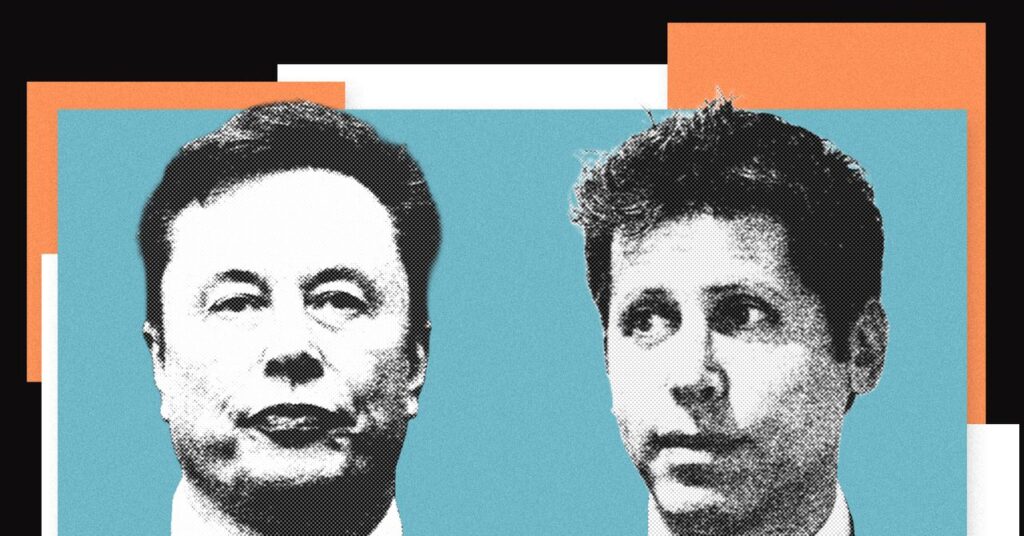
Attorneys presented their closing arguments during the Musk v. Altman trial on Thursday, making a final bid to persuade the judge and jury that their clients, Elon Musk and Sam Altman, are the most honorable defenders of OpenAI’s founding nonprofit mission. A ruling could come as early as next week, concluding a protracted clash between two of technology’s most prominent figures.
However, regardless of the verdict, there are significant losers in this scenario. Evidence suggests that those most affected include employees, policymakers, and the public who once believed in the mission of a nonprofit research organization and supported OpenAI accordingly. At nearly every decision point, it became apparent that Musk and OpenAI’s co-founders prioritized establishing the world’s leading AI lab, even if this necessitated forming a multibillion-dollar for-profit entity.
“It’s difficult to ascertain how the public interest is being safeguarded by either party, which is the crux of a case concerning a nonprofit,” remarks Jill Horwitz, a Northwestern University law professor specializing in nonprofits and innovation, after attending the closing arguments. “The public interest tied to the nonprofit remains jeopardized, no matter the outcome.”
OpenAI’s declared mission is to guarantee that artificial general intelligence (AGI) serves humanity, but humanity itself is not represented in this litigation. Over the past decade, OpenAI has focused on competing with multitrillion-dollar corporations like Google to be the first to achieve AGI. Furthermore, Musk and Altman have aggressively sought to maintain control over OpenAI.
“Musk and Altman appear to be racing to develop superintelligence, each fearing the consequences if the other succeeds. The rest of us should be concerned about both of them,” comments Daniel Kokotajlo, a former OpenAI researcher who joined in 2022 and has voiced worries regarding the company’s safety protocols. He participated in a group of former OpenAI researchers who submitted an amicus brief opposing OpenAI’s shift to a for-profit model, emphasizing that the nonprofit framework influenced their choice to join the organization.
During the trial, OpenAI’s nonprofit was treated as though it were simply another corporate investor. OpenAI’s attorneys argued that granting the nonprofit a $200 billion stake in the for-profit entity demonstrates OpenAI’s commitment to its mission. Public advocacy groups contend that mere funding is inadequate.
“I am among those pleased to see the extensive philanthropic resources available to the OpenAI foundation for meaningful initiatives,” states Nathan Calvin, VP of state affairs for the AI safety nonprofit Encode, which submitted an amicus brief opposing OpenAI’s restructuring earlier in this case. “However, it’s crucial to remember that the nonprofit also has a governance responsibility, and its mission is not aligned with that of a conventional foundation; it’s specifically to guarantee that AGI is beneficial for all humanity. Funding plays a role in achieving that objective and is beneficial when conditions are equal, but it is not the ultimate aim.”
Origin Story
Evidence presented during this case indicates that Altman and Musk were united in their vision for OpenAI to launch as a nonprofit modeled after a typical startup. They aspired to outpace Google DeepMind in the AGI race. However, establishing OpenAI as a nonprofit proved to be an extremely cumbersome approach to succeeding in that competition.
Musk has accused Altman, OpenAI’s CEO, and Greg Brockman, its cofounder and president, of deviating from the nonprofit’s original mission. He alleges that the founders utilized his $38 million investment to transform OpenAI into an $850 billion entity, consequently making several cofounders billionaires.

Rajat Sharma
https://in.linkedin.com/in/rajat-mediaHelping D2C Brands Scale with AI-Powered Marketing & Automation 🚀 | $15M+ in Client Revenue | Meta Ads Expert | D2C Performance Marketing Consultant