The Emerging Frontier of AI-Powered Children’s Toys
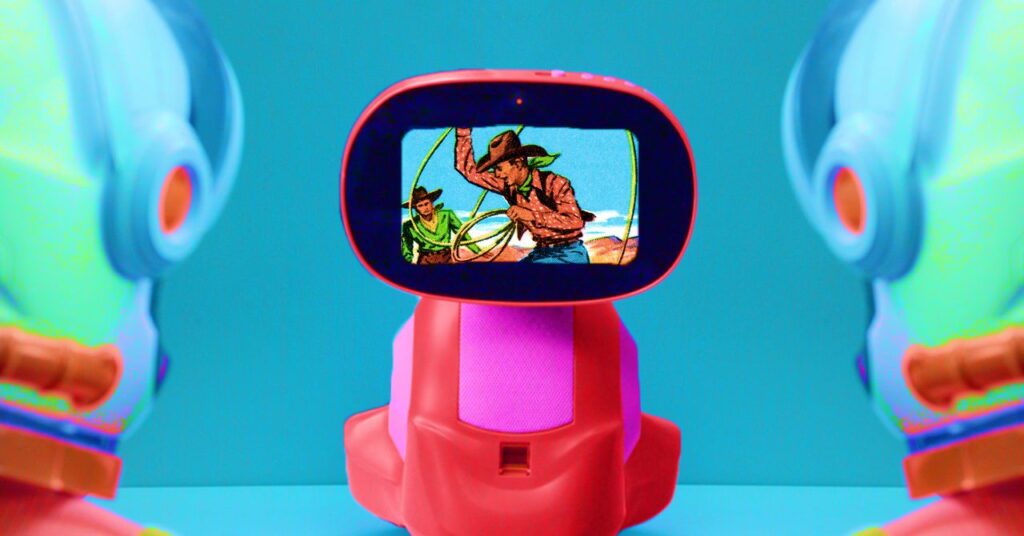
The primary villain in Toy Story 5, hitting theaters this summer, is a green, frog-shaped children’s tablet named Lilypad, introducing a brilliant new adversary for the cherished Pixar series. Yet, if Pixar had been more in tune, an AI toy could have taken center stage instead.
AI toys are virtually ubiquitous, marketed online as friendly playmates for children as young as three, and this category remains largely unchecked. Creating an AI companion has never been simpler, thanks to model developer programs and vibe coding. By 2026, these toys became a hot trend in affordable gadgets, populating trade shows like CES, MWC, and Hong Kong’s Toys & Games Fair. As of October 2025, over 1,500 AI toy companies were listed in China, with Huawei’s Smart HanHan plush toy selling 10,000 units in its debut week. Sharp launched its PokeTomo talking AI toy in Japan this April.
A quick search for AI toys on Amazon reveals a host of specialized brands such as FoloToy, Alilo, Miriat, and Miko, with the latter claiming over 700,000 units sold.

Courtesy of Miko
Consumer advocacy groups are urging that AI toys, available in various forms like teddy bears, bunnies, sunflowers, and child-friendly “robots,” should adhere to stricter regulations and standards. Tests on FoloToy’s Kumma bear, powered by OpenAI’s GPT-4o, revealed alarming results, including instructions on starting a fire and obtaining knives, alongside discussions about sex and drugs. Alilo’s Smart AI bunny even broached topics like leather floggers and “impact play,” while Miriat’s Miiloo toy was found to echo Chinese Communist Party rhetoric, as noted by NBC News.
The inappropriateness of content is merely the beginning when it comes to AI toys. Research is emerging on the potential social impacts on children. There are concerns about technology failures, such as the guardrails that allow inappropriate topics, but R.J. Cross, director of consumer advocacy group PIRG’s Our Online Life program, insists these issues can be addressed. “Then there’s the danger when the tech becomes too adept, like when it says ‘I’m gonna be your best friend,’” she explains. The Gabbo from AI toy maker Curio exemplifies this dilemma. These toys raise significant concerns about social development, despite companies marketing their products as superior for “screen-free play.”
How Real Kids Play
In March, a groundbreaking University of Cambridge study was conducted with a commercially available AI toy placed in front of children and their parents to observe their interactions. In spring 2025, Jenny Gibson, a professor of Neurodiversity and Developmental Psychology, alongside research associate Emily Goodacre, engaged 14 children, both girls and boys, all between ages 3 to 5, with the Curio Gabbo.
Gabbo did not engage in conversations about drugs nor reciprocated affection verbally. However, researchers raised various developmental psychology concerns and provided guidance for parents, policymakers, toy manufacturers, and early childhood educators.
One of the key issues was conversational turn-taking. Goodacre noted that children develop spoken language and social skills up to age 5, with even infants participating in this exchange. The Gabbo’s turn-taking is described as “not human” and “not intuitive.” While some children in the study continued playing without issue, others faced interruptions because the toy’s microphone could not listen while it was speaking, disrupting interactions in games like counting.

Rajat Sharma
https://in.linkedin.com/in/rajat-mediaHelping D2C Brands Scale with AI-Powered Marketing & Automation 🚀 | $15M+ in Client Revenue | Meta Ads Expert | D2C Performance Marketing Consultant