A Bold Proposal Aims to Safeguard California Workers Against AI
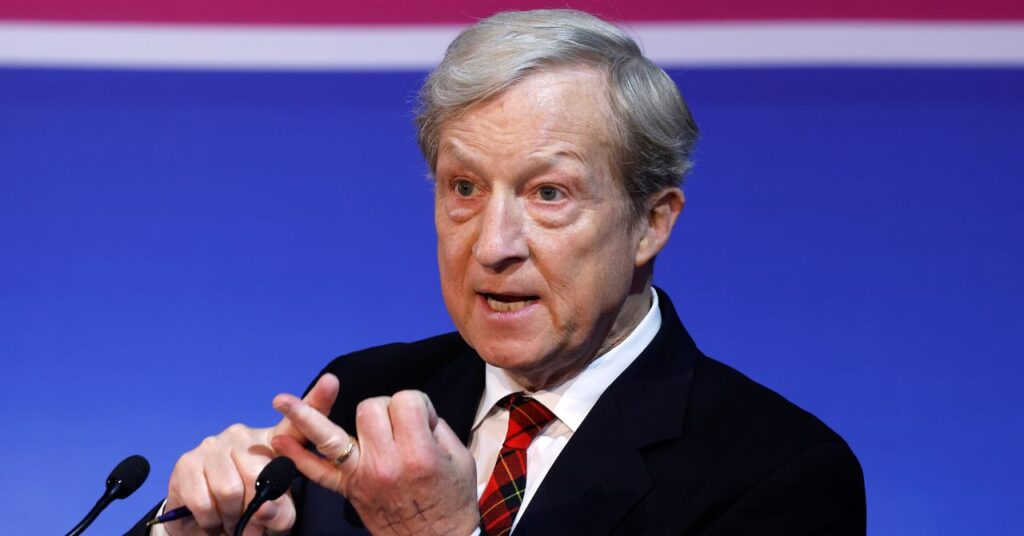
Billionaire candidate for California governor Tom Steyer is unveiling a fresh initiative aimed at providing job security and benefits for workers affected by artificial intelligence. He is the first statewide candidate to promise such support.
This proposal, which enhances a broader AI policy framework Steyer introduced in March, aims to make California “the first major economy in the world” to guarantee “well-paying” jobs for those impacted by AI. Steyer tells WIRED that his strategy builds on a prior suggestion to establish a “token tax” that would impose a minimal fee on large tech companies for every unit of data processed for AI. Revenue from this tax would fund what Steyer refers to as the Golden State Sovereign Wealth Fund, with some of that money allocated for jobs related to housing, healthcare, and the modernization of California’s energy infrastructure.
“This initiative will aim to fortify the state’s economic foundation, invest in our communities, and create beautiful, vibrant public spaces,” according to a campaign memo reviewed by WIRED. “To bolster these endeavors, Tom will also prioritize significant investments in training and apprenticeship programs statewide.”
Additionally, the new plan seeks to broaden unemployment insurance and establish a new agency named the AI Worker Protection Administration, which will include union leaders, academics, and technologists tasked with creating rules to safeguard workers’ rights, the memo indicates.
“People across this state are anxious that AI will undermine our entire economy and jeopardize their jobs. Young individuals fear they may never find employment,” Steyer tells WIRED. “We believe AI can be a remarkable transformative technology in many respects, but we aren’t about to leave anyone in California behind.”
Steyer’s job guarantee emerges as lawmakers at both state and federal levels—along with some AI leaders—move to tackle the implications of widespread AI integration within the workforce in the U.S. In New Jersey, state senator Troy Singleton has recently proposed a bill requiring companies that replace workers with AI to contribute to a fund dedicated to retraining those affected employees. In Congress, there are various proposals for grants and tax incentives encouraging companies to offer AI training to their current workforce.
Dario Amodei, CEO of Anthropic, previously suggested the idea of a token tax that Steyer is now advocating. “Clearly, this is not economically beneficial for me,” Amodei stated to Axios last year. “However, I believe it could be a fair solution to the issue.” In April, OpenAI introduced a similar concept of a public wealth fund, akin to Steyer’s proposal.
Steyer’s announcement follows closely after Democratic primary rival Xavier Becerra—former Health and Human Services secretary under President Joe Biden—presented his own AI strategy. In that plan, Becerra advocates for “workforce investment and transition support” but does not specify a funding source.
“Displacement without support equates to abandonment,” Becerra mentioned in a memo on Monday detailing his approach. “I will collaborate with the Legislature, the California public education system, and industry partners to construct accessible, stackable workforce programs that ready Californians for the AI economy and assist workers in navigating role transitions.”
In recent months, the White House has hinted at actions against states opting to regulate AI. In December, President Donald Trump signed an executive order that could revoke federal broadband funding from states implementing “onerous” AI laws. This situation is reflected in local elections as well: In New York, a super PAC supported by various Silicon Valley leaders, including OpenAI cofounder Greg Brockman, has focused on Alex Bores, a Manhattan congressional candidate who has made AI regulation central to his campaign.
“Not regulating AI seems unreasonable in every regard,” Steyer asserts. “But if California aims to take the lead, we must envision a future that encompasses more than just allowing entrepreneurs to prosper at the expense of everyone else.”

Rajat Sharma
https://in.linkedin.com/in/rajat-mediaHelping D2C Brands Scale with AI-Powered Marketing & Automation 🚀 | $15M+ in Client Revenue | Meta Ads Expert | D2C Performance Marketing Consultant