Reid Hoffman Suggests That Doctors Consult AI for Additional Insights
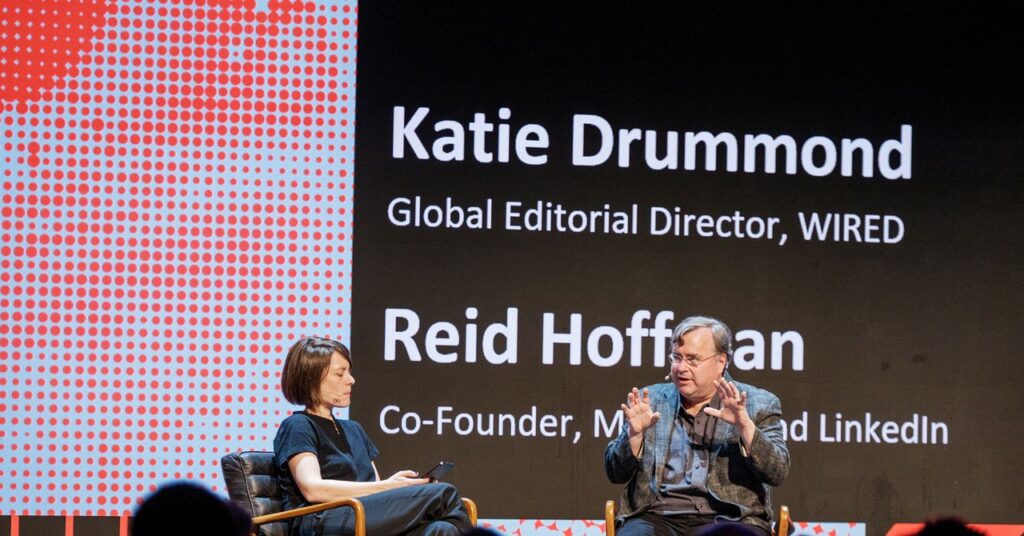
After a 30-year career leading some of Silicon Valley’s most influential companies—co-founding LinkedIn and holding board positions at PayPal and OpenAI—Reid Hoffman has recently shifted his focus to health care.
Hoffman’s venture, Manas AI, is developing an AI engine designed to accelerate the traditionally protracted process of drug discovery for various types of cancer. Sparked by a dinner conversation with esteemed cancer physician Siddhartha Mukherjee, the company’s co-founder and CEO, its mission is to “reduce drug discovery from a decade-long journey to one that spans just a few years.”
However, Hoffman’s passion for generative AI extends well beyond new drug targets and small molecules. He argues that frontier models—the most sophisticated, large-scale AI systems available from firms like OpenAI and Anthropic—should be fundamental to health care.
“If you’re a doctor and aren’t utilizing one or more frontier models for a second opinion, my belief is you’re close to committing malpractice,” Hoffman stated at WIRED Health in London on April 16. “These AI systems, even if they haven’t been specifically trained for health care, have absorbed over a trillion words of data. As a second opinion, they provide advantages that no human possesses.”
Such assertions are likely to cause unease among many physicians. Earlier this year, a significant study found that large language models pose risks to the general public seeking medical advice, mainly due to their tendency to deliver inconsistent and potentially inaccurate information.
Hoffman contends that rather than ceding critical thinking to AI models, individuals should leverage them as supplementary information sources, which he believes could reduce the chances of misdiagnosis. He personally utilizes frontier models for second opinions regarding his own health and insists that his personal concierge doctors do the same.
“You could certainly respond, ‘No, I believe you’re mistaken, it’s this instead,’” he told the WIRED health audience. “But if you aren’t using this as a second opinion, you’re making a mistake, both as a doctor and as a patient.”
With the UK’s National Health Service facing immense pressure from extensive waiting lists and workforce challenges, notably a chronic shortage of family doctors, Hoffman sees an urgent need for a large language model that could function as a free medical assistant on every smartphone. He suggests it could also act as an early triage tool for patient appointments with doctors.
“We simply lack sufficient doctors, and most people don’t have access. When considering how the NHS should be restructured, every individual should engage with this medical assistant,” he said.
Though he has a vested interest as an entrepreneur in drug discovery, Hoffman is also eager to see AI take on a broader role in aiding the FDA and other regulatory bodies in evaluating emerging therapies and speeding up the availability of particularly promising drugs to patients.
“As someone from Silicon Valley, I would be thrilled to reach a point where the FDA conducts tests with biological models, saying, ‘Oh, we should expedite this one because the risk of negative outcomes is lower,’” he stated. “Do I believe that will happen soon? Unfortunately, no.”
Regarding Manas AI, human judgment remains essential in the decisions about which targets to pursue. Mukherjee closely scrutinizes the proposals from their AI engine, filtering the genuinely intriguing candidates from those that are “ridiculously impractical.”
While the company’s initial emphasis is on cancer, Hoffman believes the potential of AI discovery engines is far-reaching, allowing for the identification of drug candidates for chronic conditions as well as extremely rare diseases that pharmaceutical companies have traditionally found unprofitable to research.
“I foresee that in a decade, every major disease will have target molecules that could at least make a substantial impact,” Hoffman said.

Rajat Sharma
https://in.linkedin.com/in/rajat-mediaHelping D2C Brands Scale with AI-Powered Marketing & Automation 🚀 | $15M+ in Client Revenue | Meta Ads Expert | D2C Performance Marketing Consultant