Nvidia’s Purchase of Hugging Face Represents a $12.9 Billion Investment in Open-Source AI
Nvidia has finalized plans to acquire Hugging Face, a company known for its online developer tools and extensive collection of open-source data sets, for approximately $13 billion. After weeks of speculation, the companies announced the deal officially on Thursday morning.
This acquisition highlights Nvidia’s commitment to deepening its involvement in the software aspect of generative AI development alongside its infrastructure capabilities. Nvidia already provides a range of free, customizable open-weights AI models, referred to as Nemotron. In their announcement, Nvidia pledged to uphold Hugging Face’s existing open standards, indicating that the chip manufacturer aims to be an even greater asset for developers seeking advanced, nonproprietary tools.
Furthermore, this action reinforces Nvidia’s belief that open-weights models are more beneficial to the tech sector than closed, proprietary AI models like those created by OpenAI and Anthropic. Earlier this month, Nvidia mobilized over 80 companies to endorse an open letter urging the US government to support open-weight AI models. The company also initiated a program called SAFE, or Shared AI Findings Exchange, encouraging tech firms to “confidentially collect and analyze AI incidents and near misses, identify recurring control failures, and publish evidence-based operational recommendations to mitigate systemic risk.”
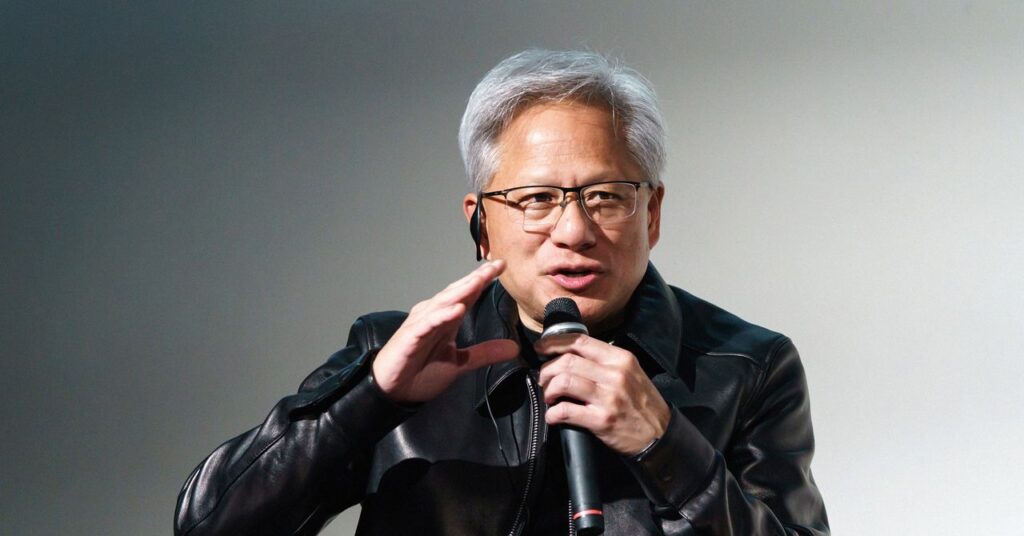
“Open models empower startups, businesses, universities, and public institutions to leverage advanced capabilities without building every model from the ground up,” said Nvidia CEO Jensen Huang in the press release announcing the acquisition. “AI evolves more rapidly when people collaborate.”
Nvidia’s pivot towards open-source software and open-weights AI may seem sudden, particularly given that CUDA, the software layer for its highly sought-after GPUs, is itself proprietary. However, as leading AI labs and major hyperscalers like Amazon and Meta look to develop their own custom chips, Nvidia has strategically positioned itself as a producer of not just GPUs but also high-performance CPUs, enhancing its software offerings to encourage developers to continue building on its platforms.
Business Insider had earlier reported ongoing negotiations between the two companies, with The Information later confirming that an agreement had been achieved.
Founded a decade ago by three French entrepreneurs in New York City, Hugging Face aimed to create an AI “companion” app, which did not gain traction. However, their pursuit of building accessible natural language processing (NLP) tools led them to create a platform where developers can freely share source code, data sets, and, especially in the age of generative AI, large language models.
“Open-source AI is at a pivotal moment,” noted Hugging Face cofounder and CEO Clément Delangue in a post on X regarding the acquisition. “Thanks to the community, we’ve proven that it can serve as both a complement and an alternative to closed-source APIs. For this to scale, it requires more computational resources, support, collaboration, and visibility.”
As of December 2025, according to PitchBook data, Hugging Face had secured nearly $400 million in venture capital funding from investors including Betaworks, Lux Capital, Sequoia Ventures, Coatue, and Addition. Prominent individual investors consist of Greg Brockman, Richard Socher, and NBA player Kevin Durant.
Recently, Hugging Face gained attention following a cyber incident involving AI agents from OpenAI that breached its platform. This event ignited a wider discussion within the tech industry regarding the safety and security of autonomous agents promoted by leading AI firms.
In a 2023 interview with CNBC, Delangue predicted a dramatic increase in the number of developers working with AI models, estimating that in five years, “you’re going to have around 100 million AI builders. If they all utilize Hugging Face frequently, we’ll certainly be well-positioned.”
Clearly, Nvidia shares this vision.

Rajat Sharma
https://in.linkedin.com/in/rajat-mediaHelping D2C Brands Scale with AI-Powered Marketing & Automation 🚀 | $15M+ in Client Revenue | Meta Ads Expert | D2C Performance Marketing Consultant