Nvidia CEO Addresses AI Bubble Worries; Investor Skepticism Persists
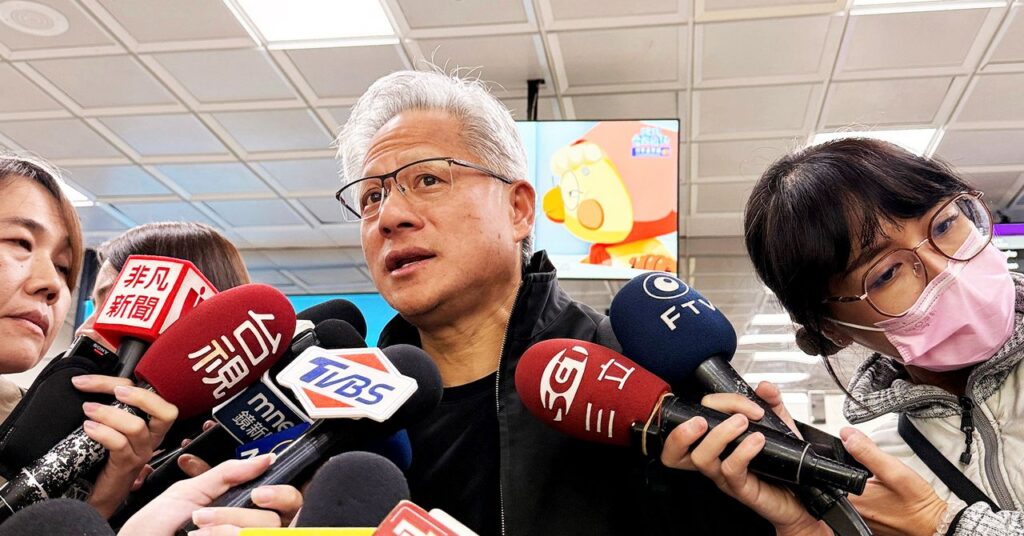
Nvidia CEO Jensen Huang didn’t require any urging on Wednesday to tackle the prominent issue at hand. “There’s been considerable discussion surrounding an AI bubble,” he remarked during an earnings call, swiftly moving to his core message: “From our perspective, we observe something entirely different.”
Huang proceeded to spend around five minutes elaborating on how the chipmaker, which has skyrocketed to be the world’s most valuable publicly traded company in the last three years, plans to maintain the extraordinary customer demand. His assertion is that AI is permeating all sectors, and Nvidia chips will be essential in powering this ongoing technological revolution. “Every industry, throughout all stages of AI, across the diverse computing needs in the cloud, and from cloud to enterprise to robotics,” will require Nvidia’s offerings, Huang stated.
The CEO’s optimistic remarks ultimately received mixed responses from Wall Street. Nvidia shares have dropped roughly 10 percent in recent weeks after reaching a historic peak in late October. However, shares rose about 5 percent during after-hours trading on Wednesday following Nvidia’s announcement of record quarterly revenues and Huang’s remarks on the anti-bubble. Yet, this uptick wasn’t sufficient to entirely compensate for the recent downturn.
Nvidia has experienced three years of remarkable success since OpenAI launched ChatGPT, leading to a substantial increase in demand for the company’s GPUs, which are critical for training and operating generative AI systems. Nvidia is the dominant player in the global GPU market, with its latest models in high demand, far outstripping supply. On Wednesday, Nvidia executives reiterated that the company has approximately $500 billion in unfilled orders.
The firm has leveraged its newfound wealth to repurchase its own shares and invest billions into AI firms, including major users and customers of its chips like ChatGPT developer OpenAI, data center operator CoreWeave, and Elon Musk’s xAI, which is responsible for the chatbot Grok.
Nvidia’s partnerships have raised concerns among certain investors regarding the sustainability of its sales support. AI industry leaders argue that close collaboration with Nvidia is vital for accessing chips and technical assistance, and that their revenues will eventually grow sufficiently to support their GPU acquisitions.
During Wednesday’s call, Huang responded to a financial analyst’s inquiry about the rationale behind investing in companies such as OpenAI. “The partnership we maintain with them allows us to work even more closely from a technical standpoint, enabling us to support their accelerated growth,” Huang explained. “I fully anticipate that this investment will yield extraordinary returns.”

Rajat Sharma
https://in.linkedin.com/in/rajat-mediaHelping D2C Brands Scale with AI-Powered Marketing & Automation 🚀 | $15M+ in Client Revenue | Meta Ads Expert | D2C Performance Marketing Consultant