Nvidia Aims to Dominate All Chips in AI Data Centers
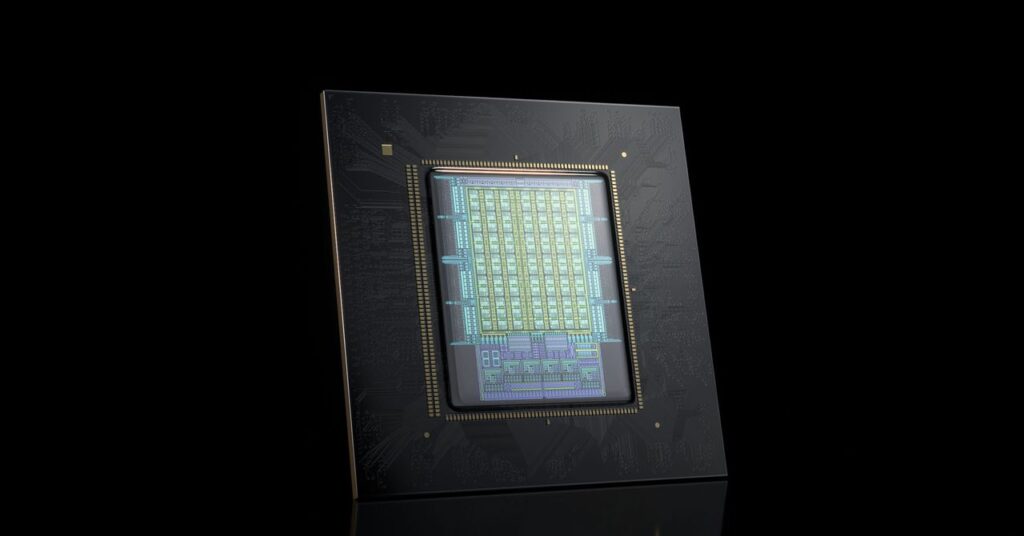
Nvidia is generating excitement for its new Vera Rubin chip system this week, unveiling fresh performance benchmarks for the GPU and CPU combination just ahead of AMD’s annual product showcase in San Francisco on Thursday.
During an extensive technical workshop last week at the company’s headquarters in Santa Clara, California, Nvidia executives proudly presented to a select group of journalists the enhanced power and efficiency features of the chip system. The key highlight: Nvidia, historically known for its GPU development, is increasingly positioning itself as a supplier of CPUs capable of powering AI agents.
Although GPUs remain the primary hardware utilized for training and running AI models, the industry’s pivot towards more complex, agentic systems has spurred demand for CPUs that can manage data flows, networking, and various software tasks. This may be why Nvidia is keen to market itself as a provider of comprehensive AI systems instead of merely AI chips.
Vera Rubin is Nvidia’s successor to the hybrid superchip system Grace Blackwell and serves as the cornerstone of its immediate future in the AI industry. It is engineered to provide one CPU for every two GPUs. A single Vera Rubin NVL 72 superchip system comprises 36 Vera CPUs for 72 Rubin GPUs. Additionally, Nvidia is offering the Vera CPU as a standalone product, with reports indicating that it may be available to Chinese customers as early as August.
.jpg)
Nvidia executives highlighted that its new Vera Rubin NVL72 racks—a collection of chips contained within a single liquid-cooled platform—are significantly more “plug-and-play” compared to some of its earlier solutions. During a short tour of a Nvidia data center lab in Silicon Valley, executives shared that OpenAI is already deploying one Vera Rubin rack.
Nvidia CEO Jensen Huang did not attend the Santa Clara workshop last week; he was in Japan unveiling new partnerships with several Japanese companies to develop AI for robotics. The sessions were instead led by Ian Buck, Nvidia’s longtime vice president of accelerated computing and the architect behind the company’s CUDA software.
“We’re on a roadmap to crank out new architectures, not just GPUs but CPUs,” Buck stated to reporters. “We’re committed to continuous innovation, as it’s a do-or-die situation in Silicon Valley.”
The meetings took place in Huang’s executive briefing center, where numerous desks nearby were stacked with bags of Taiwanese snacks that the CEO had brought back from his recent trip to Computex, a major annual semiconductor trade event held in Taipei, an Nvidia spokesperson informed WIRED.

Rajat Sharma
https://in.linkedin.com/in/rajat-mediaHelping D2C Brands Scale with AI-Powered Marketing & Automation 🚀 | $15M+ in Client Revenue | Meta Ads Expert | D2C Performance Marketing Consultant