Musk vs. Altman: Insights into Microsoft Executives’ Views on OpenAI
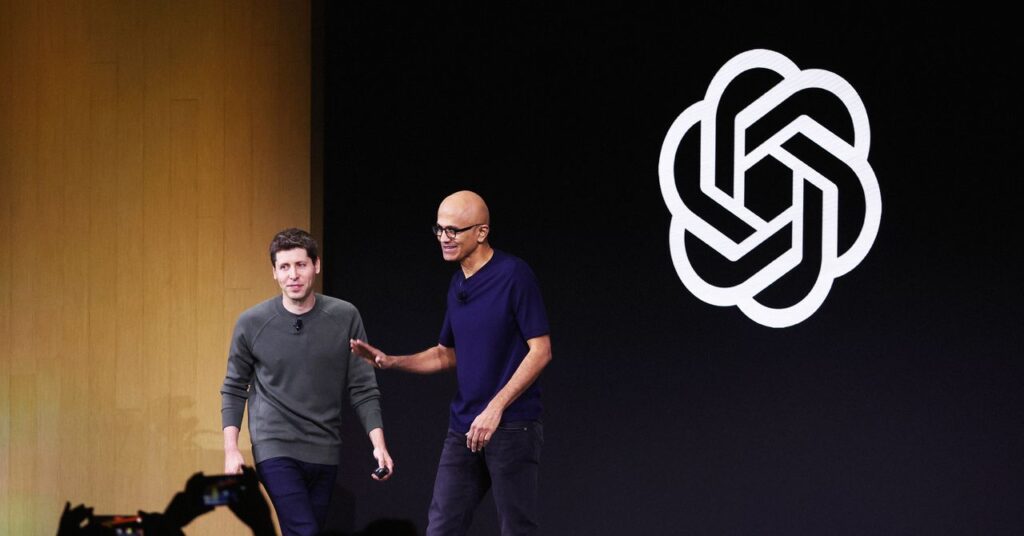
The dynamic between OpenAI and Microsoft, a long-standing investor and cloud collaborator, has become more intricate over the years as the creator of ChatGPT has transformed into a formidable rival.
According to emails revealed in a federal court during the Musk v. Altman trial on Thursday, Microsoft executives expressed concerns about additional funding for OpenAI as early as 2018, when it was still a small nonprofit research organization. These emails involved more than a dozen Microsoft leaders, including CEO Satya Nadella.
The correspondence illustrates Microsoft’s hesitance at a time when its partnership with OpenAI would later be recognized as a landmark in technology. Several executives noted in the emails that visits to OpenAI did not hint at any significant advancements toward achieving artificial general intelligence. In 2017, most of OpenAI’s efforts centered on creating AI systems capable of playing video games, which initially showed promise. However, OpenAI found it required five times more computing power from Microsoft than it had originally obtained to move the project forward.
Microsoft was concerned that withholding support could drive OpenAI towards Amazon, at that point the leading cloud service provider. Approximately 18 months after these emails were exchanged, Microsoft unveiled a historic $1 billion investment in OpenAI, following the lab’s establishment of a for-profit division that offered the possibility of a $20 billion return for the tech giant.
Microsoft chose not to comment.
Elon Musk’s legal team presented the emails to highlight the shifting relationship between Microsoft and OpenAI. Following Musk’s outreach to Nadella, Microsoft agreed in 2016 to extend $60 million worth of cloud computing services to OpenAI at a significant discount, but OpenAI utilized the resources twice as quickly as anticipated.
The email exchange commenced on August 11, 2017, when Nadella reached out to OpenAI CEO Sam Altman to commend the lab for winning a video game competition through AI designed to imitate a human player. Ten days later, Altman replied, requesting $300 million worth of Microsoft Azure cloud services.
“We could figure out how to fund some of it but not that much,” Altman noted, seemingly asking for both financial assistance and technical expertise. “I think it will be the most impressive thing yet in the history of AI.”
Three days later, Nadella sought feedback from four executives regarding the response. According to Jason Zander, Microsoft’s executive vice president, the AI team felt there was “no value in engaging.” The research team believed its own efforts were “more advanced,” while the public relations teams were uneasy about supporting a group advocating for “machines beating humans.” Ultimately, Zander posited that while Azure could gain from its association with Musk and Altman, he wouldn’t want to “take a complete bath,” or substantial financial loss, in the process.
A later evaluation indicated that Microsoft could incur around $150 million in losses over several years if it acquiesced to Altman’s demands, according to one email. “Unless he can assist us in drawing a more direct networking effect with OpenAI -> Microsoft business value, we will find ourselves having to pass,” Zander stated.
The discussion went silent for several months, only to be reignited on January 10, 2018, with an email to Nadella from Brett Tanzer—who ended his emails with “Brettt”—then a director in the Azure cloud division. Altman had informed Tanzer that OpenAI was willing to license its gaming AI to Microsoft’s Xbox division for “$35-50 million in Azure Credits.” However, Xbox could not commit such a large sum. Microsoft intended to inform Altman that no further discounts would be available after that March, as per Tanzer’s email.

Rajat Sharma
https://in.linkedin.com/in/rajat-mediaHelping D2C Brands Scale with AI-Powered Marketing & Automation 🚀 | $15M+ in Client Revenue | Meta Ads Expert | D2C Performance Marketing Consultant