Mira Murati Advocates for AI That Involves Humans in the Process
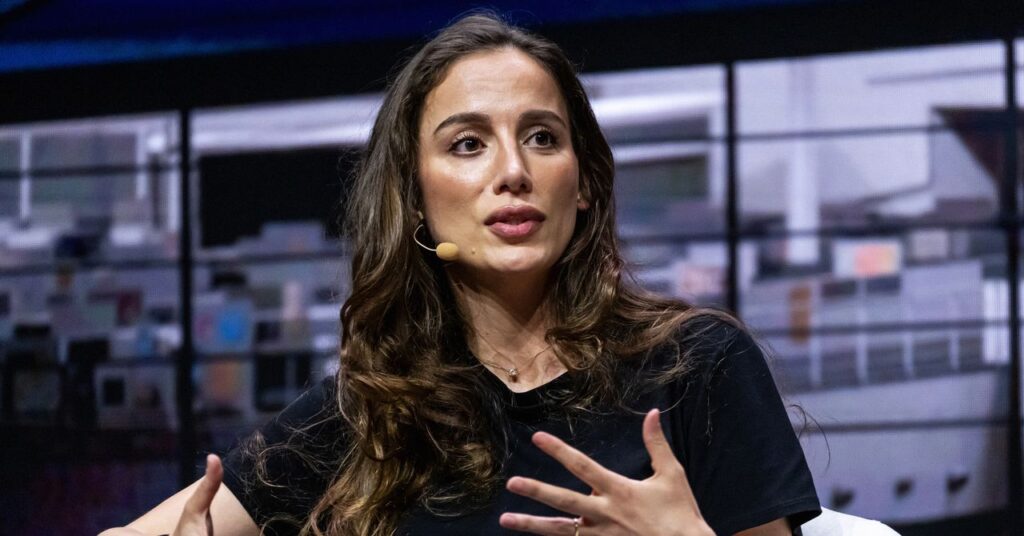
Mira Murati still aims to create AI superintelligence, viewing human intelligence as a key element of the puzzle.
In an era of growing concerns about AI’s potential to displace jobs and empower a handful of corporations, Murati’s startup, Thinking Machines Lab, presents a radically different vision for technology.
“At some point, we will have super-intelligent machines,” Murati tells WIRED. “However, we believe that the best path toward a variety of positive futures is to keep humans involved.”
Murati argues that AI doesn’t have to remove humans from the equation. Instead, she proposes a more hopeful approach where individuals are able to construct and tweak their own frontier AI models, collaborating with those models to fulfill their objectives.
This week, Thinking Machines unveiled a novel type of AI model that suggests a more human-inclusive future. The company’s “interaction models” are designed to engage with users through a camera and microphone. Unlike many current voice-based interfaces, the new models inherently understand fluid, imperfect human communication—enabling them to comprehend pauses, interruptions, and tonal variations better. This adaptability allows them to respond dynamically when a speaker clarifies or shifts the subject. The company showcased several videos demonstrating these features, although the models are not yet publicly available.
Murati’s approach contrasts sharply with the strategies of major AI firms like OpenAI, Anthropic, and Google, which are creating larger models capable of increasingly intricate tasks, such as generating complete software applications from simple text prompts, requiring minimal human involvement.
Thinking Machines is not alone in envisioning a more inclusive future. Other organizations, such as Humans&, also strive to create AI systems that emphasize human collaboration. Numerous influential economists have advocated for researchers and companies to design systems prioritizing human empowerment over replacement.
Murati left her position as chief technology officer at OpenAI in 2024, co-founding Thinking Machines with several renowned engineers. The startup has secured billions in funding to develop frontier AI.
However, the company has only introduced one product so far. Tinker, launched in October 2025, enables users to enhance a frontier AI model with custom data. It is currently available as an API for researchers and engineers to fine-tune open-source models.
Alexander Kirillov, a founding team member and expert in multimodal AI—technology that processes audio, video, and text—notes that the lab’s new interaction models also hold promise for more personalized and tailored AI experiences.
“The model continuously observes your actions and is always ready to respond, provide information, search for details, or utilize other tools,” says Kirillov. “This is something none of [today’s other] models can actually achieve. Conversation turns are dictated by far less intelligent systems.”
Mira believes this is all part of a broader AI vision.
“This illustrates our first commitment to human collaboration,” she clarifies. “The ultimate goal is to enhance individuals’ preferences and values, with AI truly grasping and anticipating intent.”

Rajat Sharma
https://in.linkedin.com/in/rajat-mediaHelping D2C Brands Scale with AI-Powered Marketing & Automation 🚀 | $15M+ in Client Revenue | Meta Ads Expert | D2C Performance Marketing Consultant