Introducing Ojai: Waymo’s Latest Robotaxi Manufactured in China
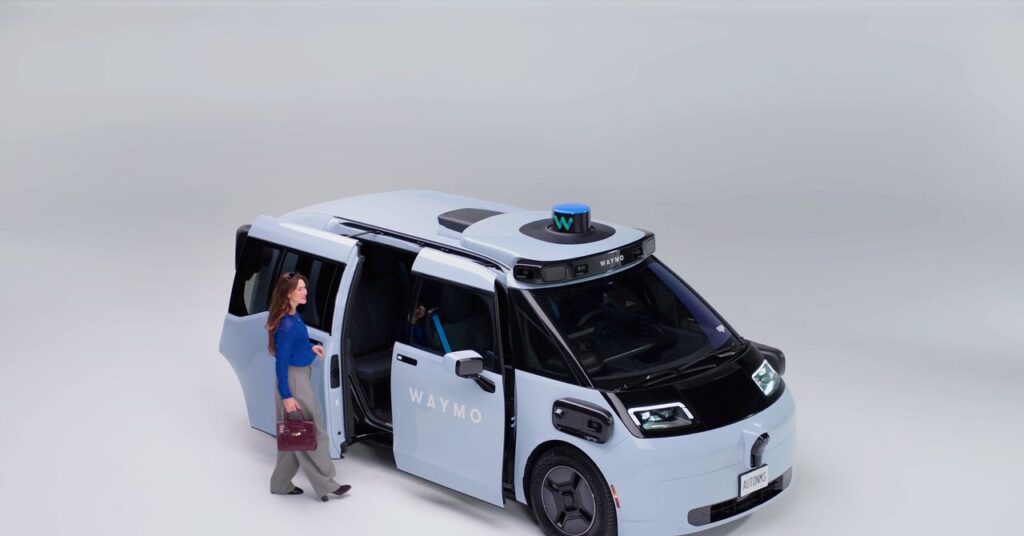
A new autonomous vehicle has arrived, now operating in Los Angeles, San Francisco, and Phoenix. In the coming weeks, Waymo, a self-driving vehicle developer from Alphabet, will begin transporting the public in its latest Ojai models (pronounced “oh hai”)—pale blue, boxy minivans adorned with sensors and equipped with steering wheels, even though they are intended for driverless operation. Initially, rides in these vehicles, which can be requested via Waymo’s app, will be complimentary.
The journey to this vehicle’s debut has been lengthy, with Waymo first announcing it in 2021 and testing it on public roads since 2024. It’s a tumultuous time for the company: Waymo, aiming for swift expansion across the US and internationally, recently ceased operations in six US cities due to problems regarding how its vehicles handle flooding. Additionally, it has paused its highway driving initiatives due to concerns related to construction zones.
WIRED explores the fresh and intriguing features of Ojai, as well as the intricate system behind it.
Why?
For almost ten years, Waymo has piloted and implemented its autonomous driving technology in vehicles tailored for human operators. The company initially started with the Chrysler Pacifica hybrid before transitioning to the all-electric Jaguar I-Pace in 2018. The Ojai, however, represents a new frontier: a vehicle designed explicitly for autonomy.
Ojai’s introduction heralds the launch of Waymo’s latest hardware and software systems. According to Waymo, this update “leverages breakthroughs in AI,” integrating inputs from three types of sensors: cameras, lidar, and radar, similar to past systems.
Waymo sees the updated technology as essential for its ambitious expansion. Currently, the company operates in 11 US markets and plans to extend its services to at least 20 more regions, including London and Tokyo. As stated by Satish Jeyachandran, the vice president of engineering, the system is “designed for long-term growth across multiple vehicle platforms.” He noted that the new design aims to enable the company to adapt to diverse environments, even those with harsh winters—a traditional challenge for robotic systems.
About the name: Ojai draws its name from the laid-back yet upscale Ventura County village famed for its vibrant arts scene.
What’s Different About This One?
Ojai presents a distinct look compared to earlier Waymo models. With a larger cabin and increased legroom than its Jaguar predecessor, it also features charging ports and cup holders. Waymo claims the vehicle enhances accessibility for those with disabilities owing to its flat floors, low step-in height, and grab bars. (However, the vehicles are not wheelchair-accessible.) Moreover, the vehicle cabin is designed for easier cleaning. According to the company, these features should enhance operational efficiency by allowing quicker charging and a modular design for easier repairs.
Clearly, the Ojai is not a normal car; it is outfitted with an array of sensors enabling it to navigate autonomously: 13 cameras, six radar systems, and four lidar sensors.

Courtesy of Waymo
Who Made This Car?
Here’s the interesting part: The Ojai is a customized version of a “mobility platform” developed by Geely, a leading Chinese new-energy vehicle manufacturer. More specifically, the car’s exterior is crafted by Geely’s sub-brand Zeekr, which has been selling cars globally since 2023 and operates across Europe, Asia, the Middle East, and Latin America. Notably, Zeekr does not currently sell vehicles in the US, where these Ojai models will be deployed.
Waymo states that the basic vehicles are built in China and then transported to its Arizona facility, where US-made autonomous systems are incorporated. As Waymo spokesperson Sandy Karp explains, the aim is to produce tens of thousands of driverless-ready vehicles each year.
Wait—I Thought Chinese Cars Weren’t Allowed in the US?
This is still somewhat true. In January, the Biden administration established regulations prohibiting Chinese- and Russian-affiliated vehicle technology from US roads starting in 2027, citing national security risks, along with the competitive threat posed to American automakers by well-made Chinese vehicles. Additionally, tariffs have effectively barred Chinese-made cars from the US market.
However, these prohibitions don’t apply to Waymo, as the company explains, because Zeekr only produces the “base vehicle” without integrating any telematics or connected software systems; these components are added in the US.
Nonetheless, Waymo has faced criticism from politicians regarding its partnership with Geely and Zeekr. In a February congressional hearing, a Republican senator admonished the company for collaborating with a Chinese firm.
Regardless of public sentiment about this partnership, the launch of Ojai may offer many US riders their first experience with Chinese-designed vehicles.
You Say Rides Are Free?
For now, yes. According to Waymo spokesperson Sandy Karp, a period of gratis rides is intended to help the company “gather rider feedback and continue refining the experience.”
There’s another reason for the complimentary rides, especially in California: Although Waymo has received authorization to operate the driverless Ojai vehicles in the state, it has not yet been cleared to transport paying passengers. The California Public Utilities Commission (CPUC) is still reviewing that request, having sought clarification from Waymo on addressing issues like unaccompanied minors riding without authorization and handling significant disruptions, such as the power outage in San Francisco in late 2025 that left Waymo vehicles stranded. The CPUC is expected to make a decision about the Ojai and a proposed expansion into other areas by June 27, according to spokesperson Terrie Prosper.
“We are awaiting the CPUC’s permission to charge fares for those rides,” Karp adds.
What’s Next in the ‘Car’ Part of Autonomous Cars?
Waymo is also gearing up to introduce Hyundai Ioniq 5 models to its fleet of robotaxis. This addition stems from a partnership between Hyundai and Waymo that dates back to 2024. The Jaguar I-Pace will continue to be part of the fleet for the time being.

Rajat Sharma
https://in.linkedin.com/in/rajat-mediaHelping D2C Brands Scale with AI-Powered Marketing & Automation 🚀 | $15M+ in Client Revenue | Meta Ads Expert | D2C Performance Marketing Consultant