Flock Introduces an Advanced AI Tool for Law Enforcement: We Obtained the Source Code.
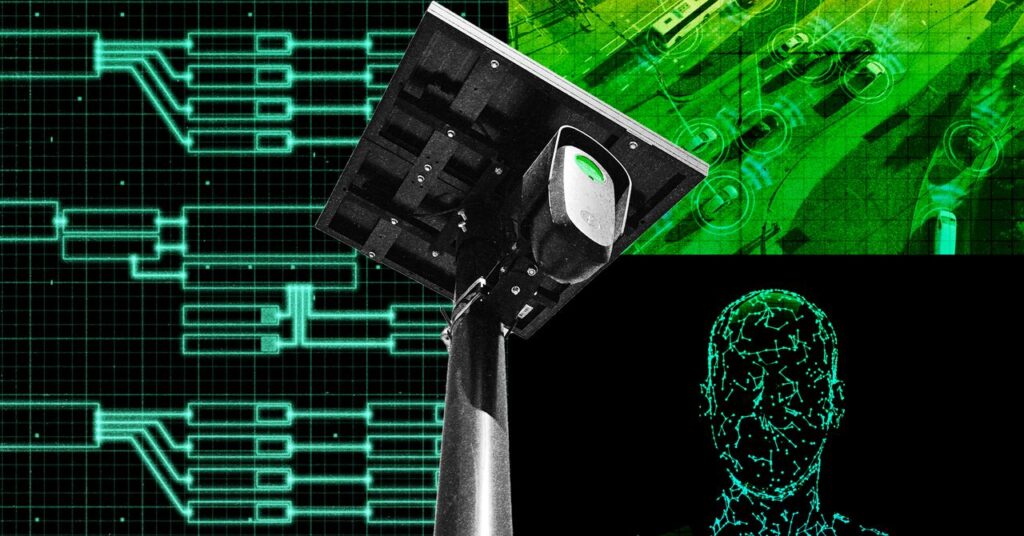
WIRED investigated the software by analyzing code from Flock’s login portals. Accessing these pages revealed a user interface for screens that normally appear only after a police user logs in. This allowed reporters to reconstruct segments of the authenticated applications, including prompts, search fields, tools, and controls, without needing direct access. The files seemed to include everything necessary to rebuild the interface entirely.
Before conducting a search, the software requests a justification. The code indicates that an officer must enter a reason for the search by default; however, the form imposes no restrictions on the content of that reason or its length. If a department mandates a case number, the form only verifies that it consists of at least three characters. WIRED could not ascertain whether Flock imposes additional checks on its servers after the information is submitted.
WIRED shared its observations with Buchodi, a pseudonymous independent security and privacy researcher with over a decade of experience in reverse engineering consumer software and surveillance technologies. Buchodi separately reviewed Flock’s code and replicated critical aspects of the analysis.
The reviewed code contains references to the tools offered by Flock, the data they can seemingly access, and the prompts authored by Flock for police use. However, the code does not illustrate how the system functions in practice. It includes no instructions given to the model and does not disclose what Flock’s servers do with a request once submitted, what responses they provide, or whether any commands are denied.
Flock has been relatively quiet about the tool in public, but executive Garrett Langley once compared it to a crime analyst who is “always awake, always watching out for you.” At a demonstration for police chiefs in Denver last year, Langley highlighted the capability to search every city camera for vehicles following an armored truck, retrieving the registered owners of those cars and checking their arrest histories in under a minute.
Investigators who try it, he noted, become “addicted.”
The company Langley founded in Atlanta, which began with a camera inside a waterproof box, now records 20 billion license plate scans each month. Andreessen Horowitz, Founders Fund, and other venture capital firms have invested heavily in the company, which was valued at $7.5 billion in its most recent funding round. Its original tagline was “the first public safety operating system that eliminates crime;” Langley also mentioned to Vanity Fair that Flock would have solved the disappearance of Nancy Guthrie, Savannah Guthrie’s mother, if its cameras had been present at the location of her vanishing.
Flock has around 140,000 monthly active users. At the company’s new Atlanta headquarters, a gold-painted camera adorned with signatures marks an earlier tradition of celebrating each additional $1 million in revenue with a new camera. “Now we do more like a million a day,” Langley told Vanity Fair recently.
Andrew Guthrie Ferguson, a law professor at George Washington University, asserts that a system like this was bound to emerge. “To utilize all the collected data, you need to enable querying capabilities,” he states. “To assist police officers who are unlikely to create their own agentic tools, you must preprogram the system with some natural language prompts and automated workflows.”

Rajat Sharma
https://in.linkedin.com/in/rajat-mediaHelping D2C Brands Scale with AI-Powered Marketing & Automation 🚀 | $15M+ in Client Revenue | Meta Ads Expert | D2C Performance Marketing Consultant