Emergency First Responders Claim Waymo Vehicles Are Becoming More Problematic
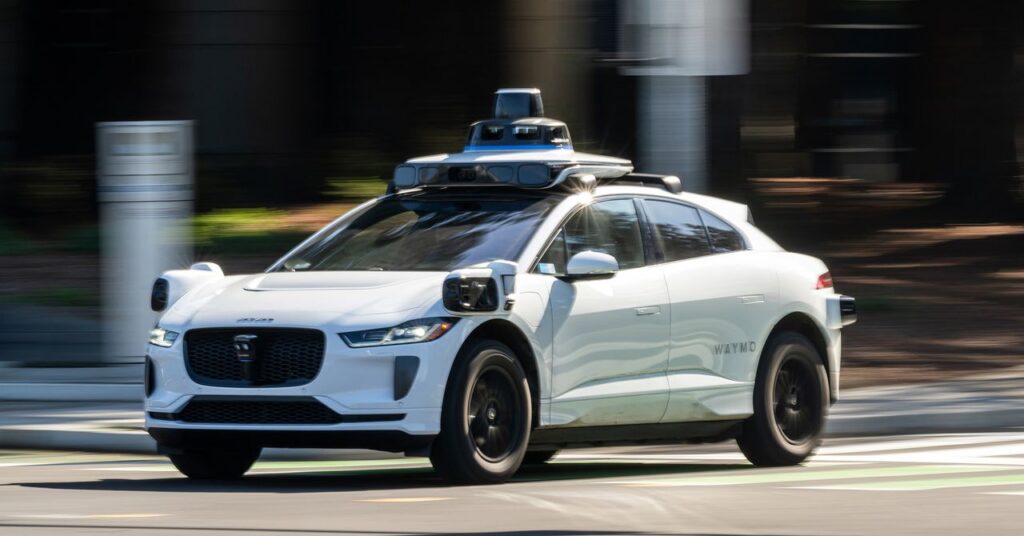
Leaders of emergency first-responder teams expressed their frustrations to federal regulators last month regarding the performance of autonomous vehicles on urban streets. City firefighters, police, EMTs, and paramedics have found themselves spending precious time during emergencies dealing with cars that are stuck or unresponsive. One fire official labeled these vehicles “a safety issue for both our teams and the individuals in crisis.” An audio recording of the meeting was obtained by WIRED.
Officials from San Francisco and Austin, where Waymo has been providing driverless rides for over a year, noted a decline in the performance of these vehicles. “Interestingly, we are witnessing a regression in some areas that had previously shown improvement,” stated Mary Ellen Carroll, the executive director of San Francisco’s Department of Emergency Management, during discussions with the National Highway Traffic Safety Administration (NHTSA). “There are more traffic violations occurring.”
“We’re observing behaviors we hadn’t seen for years… Waymo is increasingly obstructing access to our fire stations,” remarked Chief Patrick Rabbitt of the San Francisco Fire Department. “Their tendency is to freeze.” This issue can delay firetrucks from arriving at incidents in a “timely and appropriate” manner, he highlighted.
In Austin, first responders have frequently encountered issues with Waymos “freezing up,” according to Lieutenant William White, the head of Highway Enforcement Command at the Austin Police Department. White indicated that, contrary to Waymo’s assurances, the vehicles often do not respond to police hand signals, which can create cascading delays during emergencies or atypical road situations.
“I believe the technology was rolled out too swiftly and in too large a scale, with hundreds of vehicles deployed before it was truly ready,” White stated. NHTSA did not respond to WIRED’s request for commentary.
These grievances arise as Waymo embarks on an ambitious expansion across the US and globally. Currently, the company operates driverless rides in parts of ten US cities and plans to launch services in ten additional locations, including London, by year-end. Waymo announced last month that it is now providing 500,000 paid rides each week—a figure that is still overshadowed by human-driven ride-hailing services (Uber provides approximately 400 times that number weekly) but has increased tenfold since the previous year.
However, the feedback from cities where the service is already operational poses risks to the advancement of driverless technology, which, according to Waymo’s data, decreases serious accidents compared to vehicles driven by humans. The company faces political pushback, particularly from organized labor, in several dense, blue, and potentially profitable cities, including Boston, New York City, Seattle, and Washington, DC.
In a statement, Waymo spokesperson Julia Ilina stated: “We highly value our collaboration with first responders and our mutual commitment to safety. Their ongoing assessments have been crucial in fostering significant enhancements to the Waymo service.” The company claims to have conducted in-person training sessions for over 35,000 emergency responders nationwide.
Public Comment Periods
The remarks made during the private gathering are more straightforward than typical public statements from government officials. Yet, they mirror longstanding and occasionally outspoken frustrations voiced by city leaders since at least late last year. Given that autonomous vehicle operations are regulated at the state level in California and Texas, local first-responder departments can generally only request specific operational changes from developers like Waymo.
On Wednesday, Austin first responders presented before the City Council to discuss Waymo’s response to an incident last month when a driverless vehicle obstructed an ambulance for two minutes while it was responding to a shooting downtown, resulting in three fatalities and at least 14 injuries. Although officers managed to connect with Waymo operators quickly to relocate the vehicle, they noted that it previously took up to three minutes to reach a remote agent. They reiterated that Waymos do not consistently respond effectively to hand signals, particularly those from police on motorcycles.
Waymo opted not to attend the meeting, and two front-row seats marked “RESERVED FOR: WAYMO” remained unoccupied throughout the two-hour session.

Rajat Sharma
https://in.linkedin.com/in/rajat-mediaHelping D2C Brands Scale with AI-Powered Marketing & Automation 🚀 | $15M+ in Client Revenue | Meta Ads Expert | D2C Performance Marketing Consultant