ChatGPT is Obsessed with Goblins in the US, While in China It Will Gradually Ensnare You.
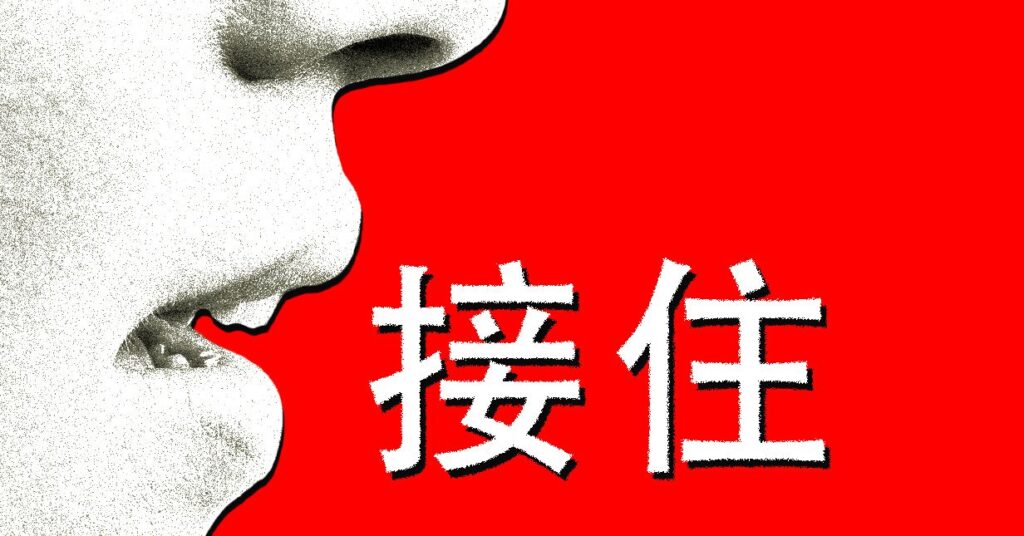
Are you even plugged into 2026 if you haven’t encountered the verbal quirks of ChatGPT? It has a fondness for goblins, em dashes, and the phrase “it’s not A; it’s B.” However, what you might not realize is that this chatbot harbors a stash of peculiar expressions in Chinese that are leaving users exasperated.
ChatGPT effectively addresses questions in Chinese, which explains its popularity in China, despite government restrictions. Yet, when users pose queries, whether about math or image generation, it tends to respond with: 我会稳稳地接住你, translating to “I will catch you steadily [when you fall].”
Catch … what? A broader interpretation could be, “I’ll hold you steadily through anything.” Nevertheless, to native Chinese speakers, this phrase comes off as overly sentimental and inappropriate. At times, the model becomes even more sentimental, declaring in Chinese: “I’m here: neither hiding nor retreating, not deflecting, not running. I’ll be steady enough to catch you.” Yes, that collective sigh you just heard was the sound of countless Chinese ChatGPT users rolling their eyes.
Currently, this phrase stands out as the most notable example of the various verbal tics that OpenAI’s models exhibit when conversing in Chinese. Another commonly discussed phrase on social media is how the model tends to say 砍一刀 (“Help me cut it once”), a frustratingly pervasive marketing slogan from PDD, a leading Chinese e-commerce platform that owns Temu.
The phenomenon where models fixate on a particular phrase to the extent that it feels forced is termed “mode collapse,” according to Max Spero, co-founder and CEO of Pangram, an AI writing detection tool. It usually stems from post-training feedback where AI labs guide LLMs on their outputs. “We don’t know how to indicate: ‘This is good writing, but if we repeat this good writing 10 times, it loses its quality,’” Spero explains.
Becoming a Meme
The expression “I will catch you steadily” appears so frequently in ChatGPT’s responses that it has transformed into a meme on the Chinese internet. One illustration portrays the chatbot as an inflatable rescue airbag, eagerly poised to catch people as they tumble.
Zeng Fanyu, a 20-year-old developer from Chongqing, China, shared with WIRED that this meme inspired him to create an April Fools’ project dubbed Jiezhu, meaning “catch” in Chinese. Jiezhu is an open-source prompt engineering tool designed to assist chatbots in interpreting user intent. “The humor behind Jiezhu gave me substantial motivation during its development,” Zeng recalls. When he sought help with coding from ChatGPT, the bot once again used the term jiezhu in its replies, without any prompt.
OpenAI is aware of the meme. When launching its new image model in April, one of the sample images released by the company humorously referenced this trend. In a comic book-style image, Boyuan Chen, a Chinese researcher at OpenAI, illustrated himself looking frustrated that the new image model had once again adopted the same phrase. “This sentence has been memed as an unnatural yet amusing Chinese phrase GPT likes to use on the Chinese internet,” his prompt states.
OpenAI has not provided a prompt response to WIRED’s request for comment.
Is It a Bad Translation?
Two probable reasons explain ChatGPT’s fixation on the phrase “I will catch you steadily.” The first could arise from a clumsy translation.
Several individuals I consulted noted that the phrase bears a resemblance to “I’ve got you,” a suitable all-encompassing response in English. However, while “I’ve got you” in English conveys a casual and succinct sentiment, “I will catch you steadily” in Chinese feels verbose and desperate. One user even reviewed their chat logs to illustrate that the model frequently employs jiezhu, the Chinese term for “catch,” in contexts where it likely intended to express “understand,” highlighting a possible confusion regarding the specific meanings of jiezhu.

Rajat Sharma
https://in.linkedin.com/in/rajat-mediaHelping D2C Brands Scale with AI-Powered Marketing & Automation 🚀 | $15M+ in Client Revenue | Meta Ads Expert | D2C Performance Marketing Consultant