Can OpenAI’s ‘Master of Disaster’ Mend AI’s Image Problem?
Three months ago, OpenAI cofounder Greg Brockman expressed his worries about a growing public relations issue confronting artificial intelligence firms: Despite the popularity of tools such as ChatGPT, a significant portion of the population has developed a negative perception of AI. Since then, this backlash has only increased.
Commencement speakers at colleges are now facing boos for optimistic remarks about AI. Recently, an individual threw a Molotov cocktail at OpenAI CEO Sam Altman’s home in San Francisco and authored a manifesto promoting violence against AI executives. OpenAI has the most at stake in this reputational crisis.
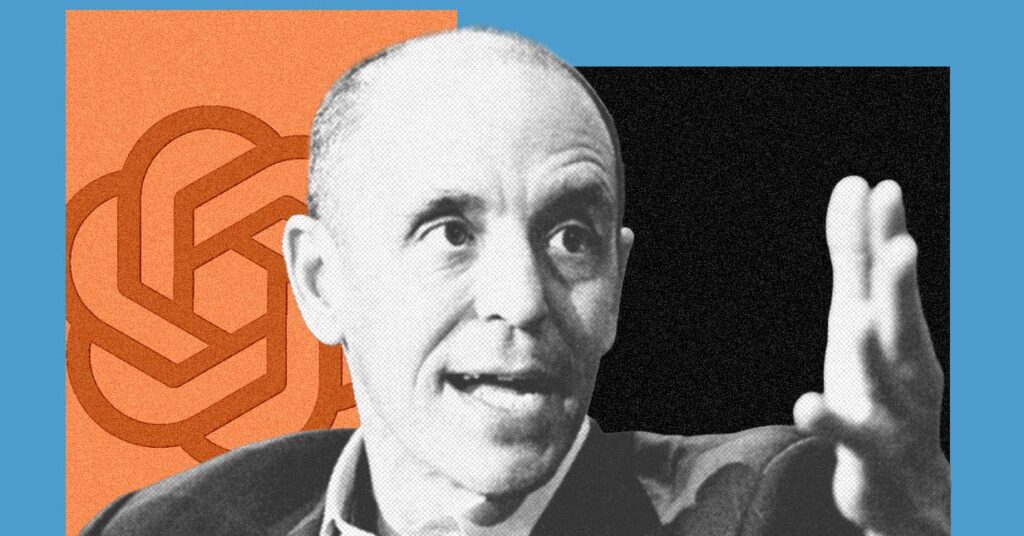
The challenge of addressing this issue falls to Chris Lehane, OpenAI’s chief of global affairs and an experienced political strategist. I spoke with him this week regarding what I consider his two predominant challenges: persuading the public to embrace OpenAI’s technology while simultaneously encouraging lawmakers to implement regulations that will not hinder the company’s growth. Lehane believes these aims are interconnected.
“During my time in the White House, we often discussed that good policy equals good politics,” Lehane remarks. “You need to consider both of these aspects working together.”
After serving in crisis communications during Bill Clinton’s presidency, Lehane dubbed himself the “master of disaster.” He later assisted Airbnb in navigating regulations in cities that viewed short-term home rentals as operating in a legal gray area, or as he describes it, “ahead of the law.” Lehane was also pivotal in creating Fairshake, a powerful super PAC in the crypto sector that sought to legitimize digital currencies in Washington. Since he joined OpenAI in 2024, he has swiftly risen to become one of the company’s most influential figures, now overseeing its communications and policy divisions.
Lehane points out that public narratives about how AI will transform society are often “artificially binary.” On one end lies the “Bob Ross view of the world” predicting a future where no one has to work, living instead in “beachside homes painting watercolors all day.” On the opposite end is a dystopian vision where AI’s immense power leaves only a select elite in control. In Lehane’s view, neither scenario is particularly realistic.
OpenAI has previously been implicated in promoting such polarizing narratives. CEO Sam Altman warned last year that “entire job categories” would disappear once the singularity occurs. However, he has recently moderated his stance, stating that “jobs doomerism is likely long-term incorrect.”
Lehane aims for OpenAI to convey a more “calibrated” perspective on AI’s promises, steering clear of both extremes. He emphasizes the need for the company to present tangible solutions to concerns about widespread job loss and the adverse effects of chatbots on children. For example, Lehane referred to a policy proposal list recently published by OpenAI, which includes suggestions for a four-day workweek, improved healthcare access, and a tax on AI-driven labor.
“If you’re going to highlight the challenges involved, you also bear the responsibility—especially if you’re creating these technologies—of proposing ways to address those concerns,” Lehane states.
Conversely, some former OpenAI employees have accused the firm of downplaying the potential risks associated with AI implementation. WIRED previously reported that members of OpenAI’s economic research unit resigned over fears that it was evolving into an advocacy group for the company. These ex-employees argued that their warnings about the economic ramifications of AI were perhaps inconvenient for OpenAI, but they accurately reflected findings from the company’s research.
Packing Punches
As public skepticism toward AI escalates, politicians are feeling pressure to demonstrate to voters their capability to regulate tech firms. In response, the AI industry has established new super PACs aimed at supporting pro-AI political candidates and influencing public opinion regarding the technology. Critics contend that this strategy has backfired, leading some candidates to campaign against the opposition from AI super PACs.
Lehane played a key role in founding one of the largest pro-AI super PACs, Leading the Future, which launched last summer with over $100 million in financial commitments from key figures in the tech industry, including Brockman. The group has opposed Alex Bores, author of New York’s most stringent AI safety legislation, who is running for Congress in the state’s 12th district.

Rajat Sharma
https://in.linkedin.com/in/rajat-mediaHelping D2C Brands Scale with AI-Powered Marketing & Automation 🚀 | $15M+ in Client Revenue | Meta Ads Expert | D2C Performance Marketing Consultant