Apple Engineers Are Analyzing Bacon Packaging to Enhance US Manufacturing Standards
Fouch recognized that automated sensors could be beneficial in pinpointing the environmental factors behind the hole-punching problems, but with an overwhelming number of options available, he felt unsure about where to begin. “The worst thing you can do, especially in a smaller business, is to struggle through pilot purgatory, hoping to find a viable product,” he mentions. “When someone else has already navigated this path, they understand the viable route and can save you both time and money.”
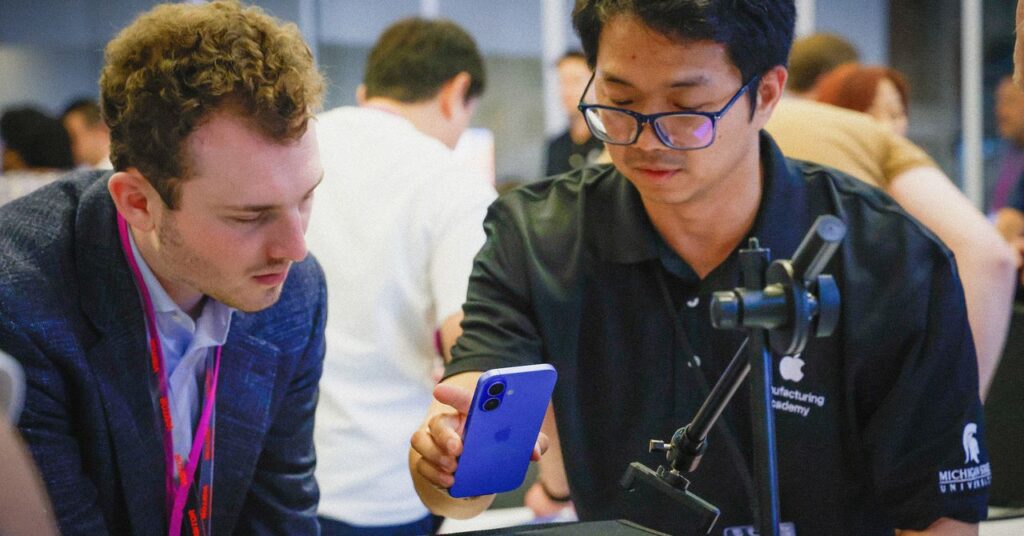
This was precisely the assistance provided by three directors and managers from Apple’s engineering and operations teams when Fouch and Quinn Shanahan, who oversees the production of medical devices and special products at Polygon, visited the manufacturing academy in October and November. Over an estimated five hours, the Apple team assessed Polygon’s challenges and utilized the industrial engineering principle of Little’s Law—which identifies capacity bottlenecks—to formulate solutions.
The outcome was a comprehensive strategy outlining sensors and software that could economically monitor production and signal any anomalies. Polygon can now track the number of times the tube passes through the grinder and will soon be able to determine whether an overheated motor or other issues might explain the flawed hole punching, Shanahan explains.
If everything goes smoothly, Polygon aims to implement a functional system to tackle its major bottlenecks for under $50,000, significantly less than the $500,000 a consultancy might have charged, according to Fouch. The Apple team plans to revisit Polygon to discuss additional upgrades. “They have walked these paths before,” Fouch notes. “Without their guidance, our progress will be much slower.”
Apple’s Herrera emphasizes that providing small manufacturers with insights into the advantages of automation and other technologies could eventually encourage them to collaborate with consultants and invest in more advanced systems.
Two other participants from the academy shared with WIRED that they haven’t received extensive help from Apple—Herrera mentions it depends on which companies present a clear “problem statement” that Apple can assist with—but they are eager to apply what they learned in their own factories. Jack Kosloski, a project engineer at Blue Lake, a startup specializing in plastic-free packaging, expressed that hearing about Apple’s rigorous product testing was an eye-opening experience for him.

Rajat Sharma
https://in.linkedin.com/in/rajat-mediaHelping D2C Brands Scale with AI-Powered Marketing & Automation 🚀 | $15M+ in Client Revenue | Meta Ads Expert | D2C Performance Marketing Consultant