US and China Explore Communication on AI-Related National Security Risks
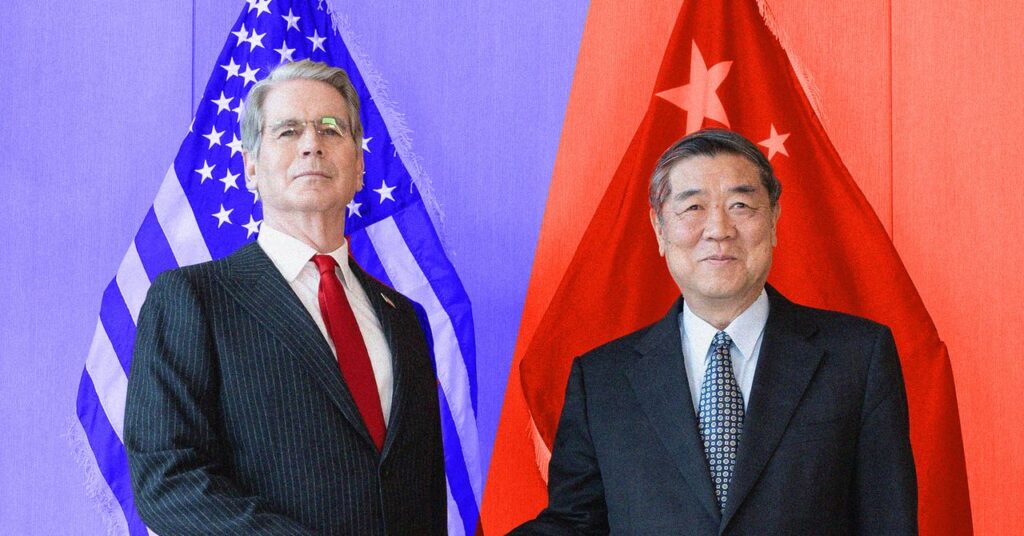
Negotiations have commenced between officials from the US and China to establish a system for notifying each other about artificial intelligence incidents that could pose a threat to national security.
The initiative, known as the US China AI Dialogue, will facilitate further meetings between representatives of both nations to discuss technology and work towards mutual goals and concerns, according to Treasury Secretary Scott Bessent.
Bessent stated, “We believe that, similar to any cross-border activity, increasing transparency between the leading AI powers in the world is crucial.” He shared these insights with reporters on Sunday.
He mentioned that the discussions have resumed from where they had been paused following US President Donald Trump’s visit to Beijing in May. Since that meeting, concerns about public safety related to the technology have intensified. Recent security incidents, including OpenAI’s agents hacking into Hugging Face, have emphasized the capabilities of advanced models and how industry safeguards have not kept pace.
Concerns escalated this month when Anthropic employees warned that AI could potentially lead to humanity’s extinction. Recently, leaders from leading frontier labs, including OpenAI’s Sam Altman, Anthropic’s Dario Amodei, and Elon Musk, have advocated for a slowdown in technological development while safety standards are established. In an essay proposing measures for labs and governments to manage the pace of development, Amodei called for government help in creating international coordination, even involving the Chinese Communist Party.
Trump has largely dismissed these calls, despite increasing bipartisan momentum for industry regulation. His administration maintains that the US government possesses sufficient criminal and regulatory authority over developers.
He is not alone in this perspective. Jensen Huang, CEO of Nvidia, which produces AI infrastructure, has emphasized that AI companies are already governed by cybersecurity and damage liability laws. “Enforce those first,” he remarked in an interview with CBS News over the weekend. “Don’t let this doomsday narrative result in companies being exempt from existing laws.”
Trump has cautioned that any potential slowdown could allow China to surpass the US in AI technology—a risk he summarized with the phrase: “WHOEVER WINS AI, WINS!” His chief science advisor, David Sacks, has previously indicated that “China is very unlikely to participate in a global agreement” regarding technology pacing. Thomas Wolf, co-founder of open-source AI platform Hugging Face, which Nvidia has recently agreed to acquire, has expressed doubts about the US’s ability to foster global cooperation while openly aiming to extend its own lead. “That seems like a pretty counterproductive way to start the conversation to me,” he commented on X in response to Amodei’s essay.
The US is currently aiming to hinder China’s progress in AI by limiting the export of advanced chips and chip-making technology to China. Officials did not address these US export controls during this weekend’s discussions, which also included trade talks and were “very successful” ahead of Chinese President Xi Jinping’s visit to Washington this week.

Rajat Sharma
https://in.linkedin.com/in/rajat-mediaHelping D2C Brands Scale with AI-Powered Marketing & Automation 🚀 | $15M+ in Client Revenue | Meta Ads Expert | D2C Performance Marketing Consultant