The Unexpected Hub Driving China’s AI Revolution
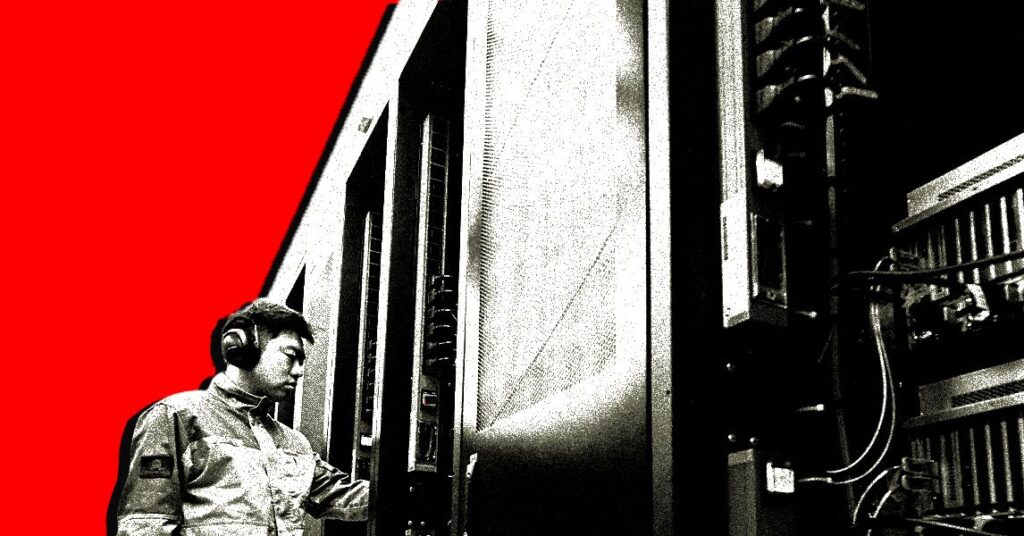
Travel just two hours by train to the west of Beijing, and you’ll be immersed in the sweeping grasslands and historic volcanic cones of Inner Mongolia. This expansive, arid region has traditionally been China’s center for sheep farming and coal extraction, but in recent years, it has emerged as the most sought-after location for constructing AI data centers.
In Ulanqab, a city in Inner Mongolia with approximately 1.5 million residents, nearly 100 data centers have either opened or begun construction since 2016. Chinese firms have pledged to initiate projects with an estimated combined capacity of 12.5 gigawatts in this city, with over 70 percent of these commitments announced in the past year, making it one of Asia’s fastest-growing compute clusters, according to a recent research note from Goldman Sachs. For context, OpenAI’s ambitious $500 billion Stargate Project is expected to achieve a total capacity of just 10 gigawatts upon completion.
The influx of Chinese companies to Ulanqab can be attributed to several factors. The city is situated at a high elevation on the Inner Mongolian Plateau and experiences long, cold winters, allowing data centers to conserve energy for cooling needs. Additionally, its proximity to Beijing enables efficient data transmission to China’s densely populated areas with minimal latency. However, the most compelling reason concerns expenses: electricity in Inner Mongolia is significantly cheaper than in nearly any other part of China, thanks in part to the growth of wind and solar energy alongside a plentiful coal supply.
What’s particularly noteworthy is who is establishing these data centers. For the first time, Chinese AI companies are investing heavily in their own infrastructure rather than relying on cloud services. Companies such as DeepSeek, ByteDance, Alibaba, and Xiaohongshu are reportedly constructing substantial AI data centers in Ulanqab. Historically, Chinese AI firms have invested much less in physical infrastructure compared to their American counterparts, even though they have developed several popular AI models with remarkable capabilities. The current boom in Ulanqab’s data centers indicates that they are beginning to close this gap.
Yet, there’s one major hurdle: securing enough water. Ulanqab is as arid as Denver, receiving approximately 14 inches of rain annually. The local government is already finding it difficult to meet the water needs of residents, even before many of the planned data center projects become operational. Last month, the local water authority in Ulanqab had to shut off several waterworks for seven hours each night to manage peak demand. While the data centers under construction will require less water during winter months—based on local government weather data indicating additional cooling water is needed only two months a year—the overall infrastructure development could create significant environmental challenges in the region.
The Boonies
Inner Mongolia has been a data center hotspot for over a decade, well before the current AI surge. Huawei established its first data center in Ulanqab in 2016, followed by Apple three years later. In 2021, the area was recognized as a main hub in a national initiative known as “Eastern Data, Western Compute,” which aims to develop data centers in China’s Western regions.
However, there was a notable downside. Because these data centers are situated far from the populous eastern coast of China, they initially experienced high latency rates when delivering data to most users. Consequently, they were primarily used for backup storage—until the advent of AI gave them a new role. “With the emergence of AI in 2022, it became clear that these remote data centers could be effectively utilized for model training,” explains Andrew Stokols, a professor at Singapore Management University who examines China’s compute infrastructure. Training an AI model can take months and requires little real-time adjustment, making latency less of a concern.
On a relative scale, Ulanqab isn’t as far away as one might think. Inner Mongolia is considerably closer to Beijing and other major urban centers in China than any Western data center hub. Furthermore, it is linked by two dedicated fiber optic cables laid in 2017 and 2019, which have reduced average latency speeds to under five milliseconds, sufficient for facilitating real-time data exchanges like AI inference.

Rajat Sharma
https://in.linkedin.com/in/rajat-mediaHelping D2C Brands Scale with AI-Powered Marketing & Automation 🚀 | $15M+ in Client Revenue | Meta Ads Expert | D2C Performance Marketing Consultant