Physical AI is Set to Revolutionize Your Vehicle
Physical AI seems contradictory. A computer, yet a body?
For marketing architects, it’s the newest buzzword designed to guide us toward a bright technological future.
In practical terms, the phrase is valuable for understanding how automotive companies view themselves today: as tech innovators. It also illustrates the appeal of the automotive industry for chip manufacturers—projected as a $123 billion market by 2032, which represents an 85 percent increase from 2023. The recent CES technology showcase in Las Vegas featured its usual array of quirky robot demonstrations, but this year highlighted the increasing intersection of robots, automobiles, and chipsets.
To clarify (marketing) terminology: “Physical AI” refers to the vision tech developers have for autonomous systems effectively interacting with the real world. This includes utilizing camera and sensor data to comprehend their surroundings and execute complex tasks. Physical AI embodies humanoid robots working in Hyundai factories, as announced by Google DeepMind, Boston Dynamics, and the Korean automaker. It also describes cars navigating themselves through intricate traffic or effortlessly switching control between human and automated drivers. Physical AI empowers cameras, robots, and self-driving cars to perceive, interpret, reason, and execute intricate actions in real-world scenarios.
It’s no coincidence that chipmakers, such as Nvidia and ARM, are leading the charge on physical AI. Nvidia recently unveiled a new line of open-source AI models aimed at autonomous systems, while ARM introduced a Physical AI division at CES. Both stand to benefit financially from this trend.
Take note of the wave of autonomy-related announcements at CES, all of which will necessitate powerful onboard computing resources.
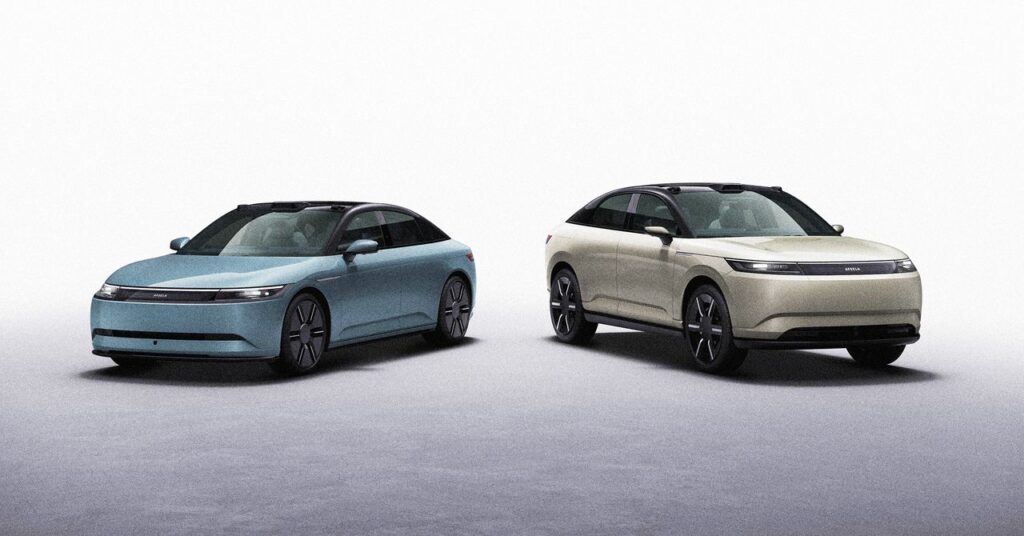
Ford plans to offer a system by 2028 that allows drivers to operate vehicles without looking at the road. The Afeela, a collaboration between Sony and Honda, aims to drive autonomously under most conditions, with a release date yet to be announced. Nvidia will supply chips for Geely’s new “intelligent driving system,” which will evolve into what the company describes as “high-level autonomous driving.” Nvidia is also collaborating with Mercedes-Benz on a hands-free driving system expected to launch in the US this year, with aspirations of enabling driving from home to work autonomously. “This is already a major business for us,” Nvidia CEO Jensen Huang stated regarding self-driving cars during his CES address.
“The vehicle’s central brain will be exponentially larger—hundreds of times as big—and that’s what [chipmakers] are marketing,” explains Mark Wakefield, the global automotive market lead at AlixPartners. “They anticipate a significant future in these vehicles.”
No surprise that their marketers have discovered an appealing new way to characterize it.

Rajat Sharma
https://in.linkedin.com/in/rajat-mediaHelping D2C Brands Scale with AI-Powered Marketing & Automation 🚀 | $15M+ in Client Revenue | Meta Ads Expert | D2C Performance Marketing Consultant