UK Invests in a Billion-Dollar AI Supercomputer to Reduce Reliance on US Technology
The UK government has announced a $1.47 billion initiative aimed at reducing its reliance on foreign artificial intelligence hardware.
As part of this plan, unveiled on Monday, over $1 billion will be allocated to a national AI supercomputer. This will include $530 million for hardware, with $200 million specifically designated for specialized inference chips for AI processing tasks. Up-and-coming British companies will be prioritized in the procurement process; Olix and Fractile, two startups innovating in inference chip technology, are highlighted as potential recipients. British researchers and startups are expected to have access to the supercomputer starting in 2030.
These initiatives are a component of the UK government’s larger strategy to reduce dependence on foreign nations for AI products and services, a response heightened by the deteriorating relationship between the US and Europe. Recently, the European Union proposed a similar “tech sovereignty” agenda. The past year has seen European leaders at odds with the Trump administration over various issues, raising concerns about the stability of the NATO alliance. In this context, reliance on American technology may serve as a vulnerability, used by the US as leverage against European nations.
“The geopolitical settlement of the last 40 years has ruptured—and many would argue is gone for good,” stated UK technology secretary Liz Kendall during an April address at the Royal United Services Institute, a defense think tank. “For Britain, AI sovereignty is about decreasing overdependencies and enhancing resilience.”
“Some claim this race is already lost—that it is too late to rival the US or China in AI chip development—but I refuse to accept such pessimism,” she remarked.
In November, the UK initiated the establishment of “AI growth zones,” areas throughout the country with reduced administrative and regulatory hurdles for creating data centers. In April, the government introduced a $675 million venture fund, SovAI, aimed at investing in domestic AI startups involved in various fields, including model development and drug discovery. The plan for supercomputer hardware represents another significant step in this growing strategy.
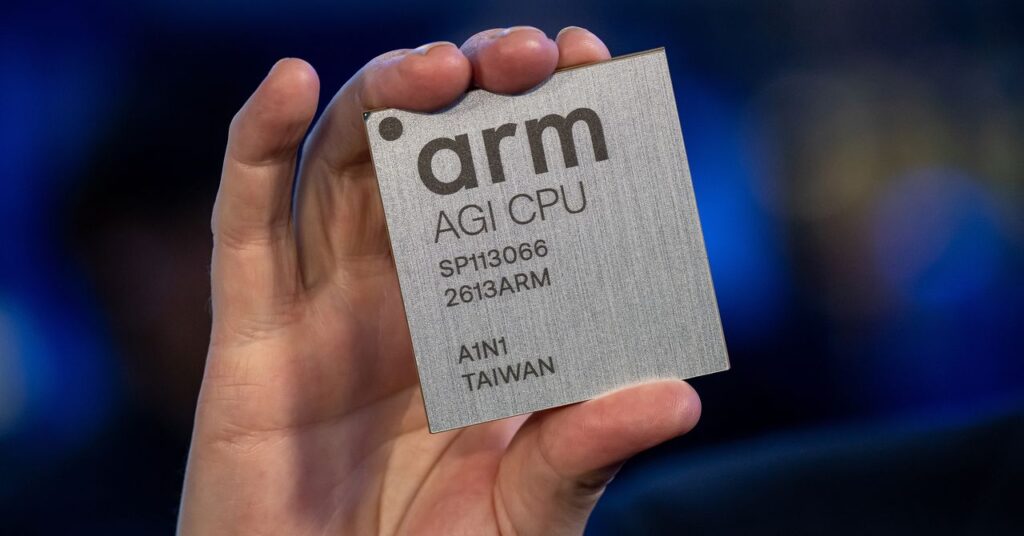
While the UK is home to notable companies like ARM, which produces widely-used chip architectures, the semiconductor field is predominantly led by American and Asian firms. By acting as a major client to local chip startups, the UK government seeks to foster their development and encourage them to establish long-term operations in the country.
“Historically, the UK government has been challenging to navigate … the commitment to support UK businesses with innovative technologies through solid contracts is a crucial milestone,” says Ed Bussey, CEO of Oxford Science Enterprises, a venture capital firm that took part in Fractile’s seed funding for 2024. “Building a pipeline of revenue through procurement for these companies will help anchor them here.”
The changes taking place in AI data center design—shifting away from uniform fleets of chips toward a diverse array of specialized hardware—present an opportunity for the UK to establish a strategically significant niche.
“You can’t do everything alone, so you need to be deliberate about the areas in which you want to specialize,” advises Keegan McBride, director of science and technology at the Tony Blair Institute, a think tank founded by the former UK prime minister. “The UK is navigating this landscape smartly … If they play their cards right, there’s a tremendous opportunity. Should other companies begin to rely on British chips, it grants you leverage.”

Rajat Sharma
https://in.linkedin.com/in/rajat-mediaHelping D2C Brands Scale with AI-Powered Marketing & Automation 🚀 | $15M+ in Client Revenue | Meta Ads Expert | D2C Performance Marketing Consultant