This Startup Aims to Develop Rapid Self-Driving Vehicle Software
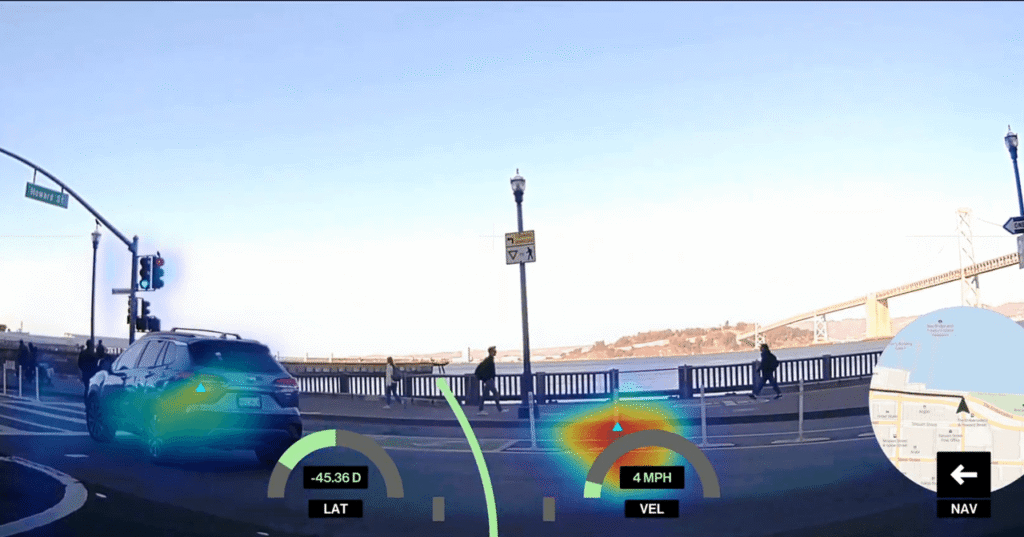
For the past year and a half, two modified white Tesla Model 3 sedans equipped with five additional cameras and a compact supercomputer have been quietly navigating the streets of San Francisco. In a city grappling with questions regarding the capabilities and limitations of artificial intelligence, the startup behind these altered Teslas is seeking to resolve a fundamental inquiry: How quickly can a company develop autonomous vehicle software today?
The startup, which is making its initiatives publicly known for the first time today, is named HyprLabs. This 17-person team (only eight of whom are full-time) operates between Paris and San Francisco, led by autonomous vehicle expert and Zoox co-founder Tim Kentley-Klay, who departed the Amazon-owned company in 2018. Despite securing relatively modest funding of $5.5 million since 2022, Hypr has expansive ambitions. The team ultimately aims to create and operate its own robotic units. “Imagine the offspring of R2-D2 and Sonic the Hedgehog,” Kentley-Klay states. “It’s going to create a new category that doesn’t exist yet.”
Currently, the startup is unveiling its software product, Hyprdrive, which it promotes as a significant advancement in how engineers train vehicles for autonomous driving. Such breakthroughs are frequent in the robotics field, driven by advancements in machine learning that lower the costs and human effort required for training autonomous software. This evolution in training has rejuvenated a sector that previously encountered a “trough of disillusionment,” during which tech developers failed to meet deadlines for operating robots in public settings. Now, robotaxis are transporting paying customers in an increasing number of cities, and automakers are making bold claims about delivering self-driving features to personal vehicles.
However, transitioning from “driving fairly well” to “driving far more safely than a human” with a small, nimble, and cost-effective team presents its own challenges. “I can’t promise you, hand on heart, that this will succeed,” Kentley-Klay admits. “But what we’ve developed is a robust signal. It simply needs to be scaled up.”
Old Tech, New Tricks
HyprLabs’ approach to software training marks a departure from the methodologies employed by other robotics startups in teaching their systems to operate independently.
To provide some context: For many years, a significant debate in the realm of autonomous vehicles revolved around the use of only cameras for software training—like Tesla!—versus utilizing other sensors as well—like Waymo and Cruise!—which include once-costly lidar and radar. However, more profound philosophical differences were at play beneath the surface.
Adherents to a camera-only strategy, such as Tesla, aimed to cut costs while planning to deploy a vast fleet of robots; for a decade, CEO Elon Musk’s vision has been to convert all his customers’ vehicles to self-driving ones with a single software update. The benefit of this approach was the substantial amount of data these companies amassed, as their not-yet self-driving cars captured images throughout their journeys. This data fed into what’s known as an “end-to-end” machine learning model through reinforcement. The system receives images—a bike—and generates driving commands—turn the steering wheel left and ease off the acceleration to avoid a collision. “It’s akin to training a dog,” says Philip Koopman, an autonomous vehicle software and safety researcher at Carnegie Mellon University. “In the end, you say, ‘Bad dog,’ or ‘Good dog.’”

Rajat Sharma
https://in.linkedin.com/in/rajat-mediaHelping D2C Brands Scale with AI-Powered Marketing & Automation 🚀 | $15M+ in Client Revenue | Meta Ads Expert | D2C Performance Marketing Consultant