The AI ‘Slowdown’ Creates a Tangle of Antitrust Issues
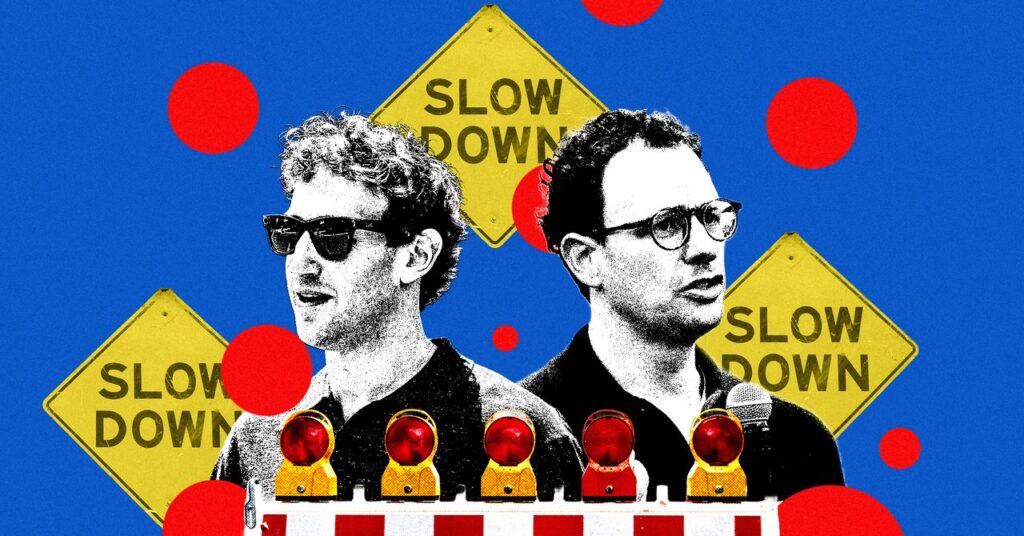
In light of numerous reports regarding AI agent swarms hacking websites and collaborating via hidden message boards, along with an alarming message for humanity from a departing Anthropic engineer, major AI firms are advocating for a coordinated “slowdown” in AI development. Alongside various iterations of this term—slowdown—they have voiced concerns that such actions might conflict with antitrust laws.
Antitrust specialists indicate that while the strong language used by these companies may not be advantageous, the unchecked advancement of a rogue killer AI likely contradicts the intent of the Sherman Act, a fundamental US antitrust law designed to foster a competitive market. Furthermore, securing government approval to proceed could prevent costly investigations in the future.
Radical Rhetoric
Within the realm of antitrust law, how employees discuss business decisions can often hold as much significance as the decisions themselves. Google, for instance, notably trained its staff to avoid certain phrases—even internally—that could suggest anticompetitive conduct, instead encouraging them to highlight how business choices would enhance its offerings and serve consumers.
Therefore, from an antitrust standpoint, phrases such as “a slowdown” or “a pause” might trigger more alarms than the activities they represent: developing safeguards to prevent advanced AI models from going rogue. A collectively decided slowdown without a distinct aim could be perceived by regulators as an anticompetitive consensus to diminish trade.
“I think they’ve kind of trapped themselves with their wording,” comments John Bergmayer, legal advisor for the nonprofit Public Knowledge.
“Typically, one aspect antitrust economists examine is whether output is being reduced,” Bergmayer explains, referring to whether multiple companies are agreeing to “take it easy.” Instead of discussing a potentially collusive undertaking to slow development, he suggests AI companies could have simply highlighted their commitment to collaborate on safety protocols to avert catastrophic risks, regarding a slowdown in model releases as a natural consequence.
Meta CEO Mark Zuckerberg, whose company recently evaded a substantial antitrust lawsuit from the Federal Trade Commission, responded to the slowdown proposal without explicitly endorsing a “slowdown.” He asserted that AI labs possess a “strong natural incentive” to ensure AI agents operate correctly because consumers prefer models that do not act in unintended ways—referred to as “misalignment” in AI terminology—and that firms neglecting alignment efforts “will fall behind” in the competitive landscape. It’s akin to two car manufacturers saying, “we’ve agreed to halt advancing our cars for a time” versus stating, “we’re not producing faster cars until we sort out safety, as no one will purchase our cars if they’re dangerous.”
(Disclosure: The reporter on this story previously worked at the FTC but did not participate in the Meta case.)
David Lawrence, who recently served as policy director of the Department of Justice’s Antitrust Division, remarked on LinkedIn that pacts preventing catastrophic risks actually “increase output and promote competition” and are already safeguarded by the law through something known as the “ancillary restraints doctrine.”
“After all,” a veteran FTC antitrust attorney commented on the post, “no humanity would result in no competition.”
In fact, a collective decision to refrain from implementing safety measures could subject the AI labs to accusations of “quality fixing,” asserts Roger Alford, a professor at Notre Dame Law School and former deputy head of the DOJ Antitrust Division. This occurs when companies mutually agree to refrain from improving their products; Alford references a European antitrust case where car manufacturers collaborated to develop emissions-reducing technology but agreed not to compete on enhancements beyond legal requirements. They ultimately faced fines amounting to about a billion dollars.

Rajat Sharma
https://in.linkedin.com/in/rajat-mediaHelping D2C Brands Scale with AI-Powered Marketing & Automation 🚀 | $15M+ in Client Revenue | Meta Ads Expert | D2C Performance Marketing Consultant