Reasons Apple Could Include Cameras in Its Upcoming AirPods
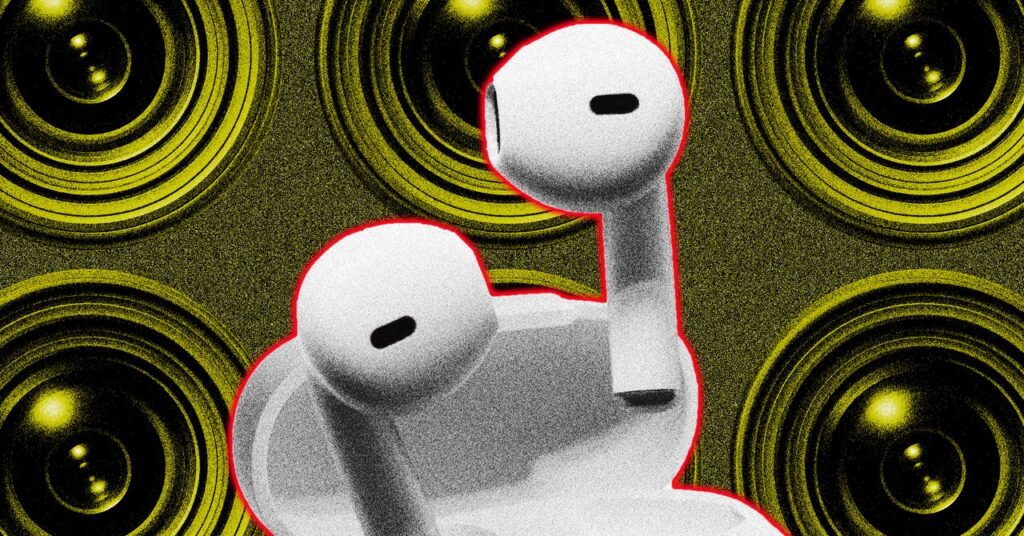
Imagine if Apple’s reputation for privacy took a hit with the introduction of AirPods featuring cameras. Regardless of their market release, all of Apple’s current widely used earbuds would raise suspicions among those nearby: Are they recording me right now?
Bloomberg’s reliable source, Mark Gurman, reports that Apple has created AirPods with built-in cameras to enable Siri to “see” what’s around the wearer. These are currently in advanced testing phases involving Apple staff as part of an “AI device initiative.”
Nevertheless, an anonymous informant, who is not authorized to discuss the topic publicly, has informed WIRED that Apple is expected to postpone the release of camera-equipped AirPods. Although the hardware is ready, Siri’s visual capabilities aren’t quite there yet. Executives at Apple are also concerned about the substantial privacy risks associated with cameras in earbuds, especially without strong use cases. WIRED reached out for comment but Apple did not respond promptly.
This leads us to the pivotal question: What benefits would Apple pursue by integrating cameras into its AirPods—particularly when consumer privacy apprehensions about casual surveillance through smart glasses, doorbell cameras, and smartphone cameras are escalating?
Enhanced Navigation, Shopping, and an Upgraded Siri
According to Bloomberg, these AirPods feature larger stems to accommodate low-resolution cameras, serving as visual aids for Siri’s context in responding to voice commands. They are not designed for capturing photos or videos like smart glasses. Among the noted use cases are navigating based on landmarks and recognizing food items to assist with grocery shopping.
“Vision-based location services are the most apparent application,” comments Anshel Sag, principal analyst at Moor Insights & Strategy. “It has to be a very passive experience, which is why using it for location accuracy to enhance GPS makes sense.” Google is also deploying cameras in its forthcoming smart glasses to understand user position during walking navigation with Google Maps.
Potential features would be recognizable to anyone familiar with smart glasses. Peter Richardson, vice president at Counterpoint Research, envisions standing in front of the refrigerator and asking the AI assistant for dinner ideas, illustrating how data from various devices could collaborate.
“That’s dependent on visual input,” Richardson explains. “There’s a lot of context: Is it midweek? Do I have training scheduled in the morning? Is it a Friday when I might enjoy a glass of wine? Are my friends visiting?” In synergy with the Apple Watch, visual data could enhance Siri’s intuitiveness. “If I’m at Paddington Station and rushing, perhaps I should skip incoming calls,” he adds.
Similar to many specialized wearables, there are intriguing accessibility features to consider. 9to5mac posits that a constantly aware Siri via AirPods, possibly equipped with infrared technology, could elevate the capabilities of Apple’s Image Explorer and Voice Over functionalities for visually impaired users. A crucial detail still undisclosed is whether the cameras will be front-facing or world-facing. Gurman suggests that a “small LED light” will activate when visual data is transmitted to the cloud.
Visual Data for AI Training
At first glance, the logic appears straightforward: capturing real-world data. As major tech companies and innovative startups advance beyond text-based models into imagery, mapping, and robotics, Apple’s popular accessories could evolve into the 2026 counterpart of Google’s StreetView vehicles.
“Acquiring new visual or acoustic information has previously been untapped for training AI,” Richardson remarks. “Yet, it’s only beneficial if it can subsequently be utilized for training.”

Rajat Sharma
https://in.linkedin.com/in/rajat-mediaHelping D2C Brands Scale with AI-Powered Marketing & Automation 🚀 | $15M+ in Client Revenue | Meta Ads Expert | D2C Performance Marketing Consultant