Misguided Arrest Unveils Flaws in One of the US’s Oldest Police Facial Recognition Systems
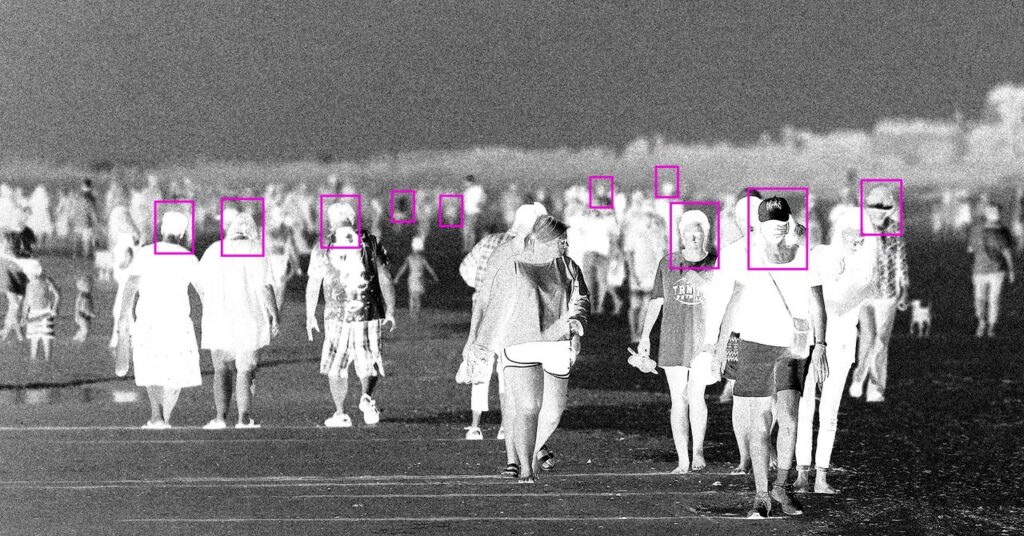
A Florida man was erroneously arrested for allegedly trying to lure a child illegally after police based their actions on an inaccurate facial recognition match, as stated in a lawsuit filed on Wednesday. He lived over 300 miles away from the incident and claims he had never been to the city where the crime occurred.
Robert Dillon, a 52-year-old commercial crabber from Fort Myers, was taken into custody after FACES—a facial recognition system used by Florida’s Pinellas County Sheriff’s Office—matched his face with a photo taken on a cellphone. The system reported a “93 percent match on facial features,” according to police notes. This score indicates the algorithm’s assessment of similarity between images, not how likely they are to depict the same individual.
FACES contains tens of millions of mugshots and driver’s license photos in Florida and is one of the longest-running police facial recognition databases in the U.S.
The American Civil Liberties Union, which initiated the lawsuit, asserts that Dillon was arrested at home in front of his wife, held overnight in a frigid cell, and transported in a caged, unlit vehicle. He had to pledge his truck’s title to make bail. The arrest occurred during peak stone crab season, leading him to struggle with rent and nearly lose his home. His mugshot remained online for almost a year, only removed from the county site after a TV reporter stepped in.
According to the complaint, strangers now approach Dillon in public to inquire about the case, and he has lost his comfort in speaking to children.
This incident happened shortly before midnight on November 2, 2023, at a McDonald’s in Jacksonville Beach, where a man was reported to have approached an underage girl and repeatedly asked her to accompany him. After she refused, the man left before police arrived.
The complaint highlights several details that exonerated Dillon, which never reached the judge who issued the arrest warrant. A McDonald’s manager informed investigators that the suspect was a “regular customer” she had observed multiple times. Per the complaint, Dillon had never been to Jacksonville Beach, residing hundreds of miles away.
A Jacksonville Beach police officer assigned to the case later circulated an identification bulletin to nearby agencies in November using cellphone images captured by McDonald’s surveillance. A sergeant with the Jacksonville Sheriff’s Office (JSO) ran these images through FACES and returned the “93 percent match” to Dillon’s name. The investigating officer subsequently requested a search of license plate readers for two vehicles registered to Dillon around the time of the incident. Neither of these vehicles was found in the county, according to the complaint, which states that these findings were excluded from the warrant application.
The complaint notes that six months passed with no additional investigation. In July 2024, the officer submitted the warrant. A judge approved it, leading to Dillon’s arrest the following month. He secured a criminal defense lawyer and pleaded not guilty that October. A few weeks later, the State Attorney’s Office dropped all charges. Nonetheless, the investigating officer received a promotion by year’s end.
“I will never get over how terrified and worried I was, wondering if I’d ever go home to my wife and daughter again,” Dillon stated in a message shared by his attorneys. “Over a year later, I’m still trying to piece my life back together, all because the police relied on this flawed technology instead of conducting a proper investigation.”

Rajat Sharma
https://in.linkedin.com/in/rajat-mediaHelping D2C Brands Scale with AI-Powered Marketing & Automation 🚀 | $15M+ in Client Revenue | Meta Ads Expert | D2C Performance Marketing Consultant