China’s AI Models Are Disrupting Silicon Valley’s Strategies
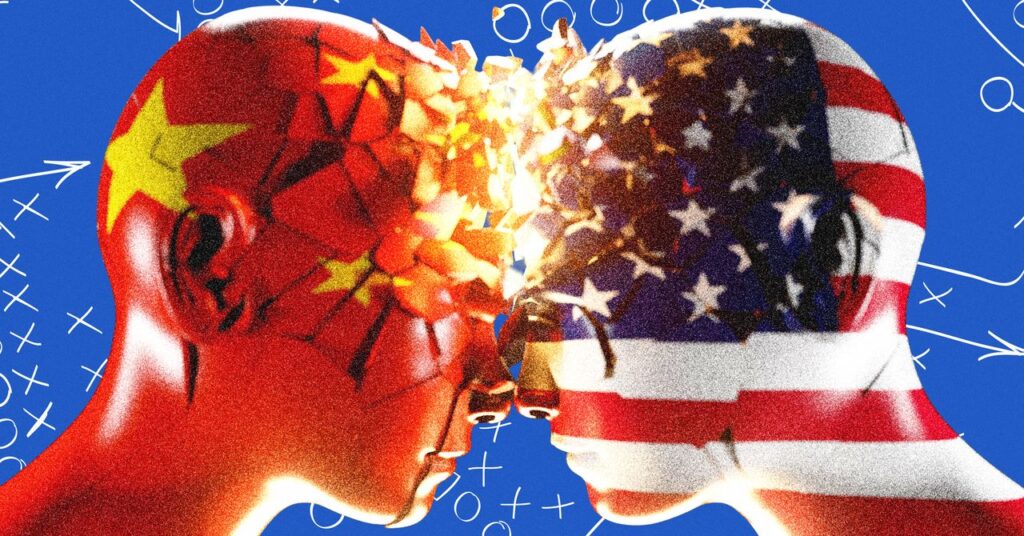
The AI sector isn’t quite having a DeepSeek 2.0 moment, but it feels imminent. Leading Chinese AI laboratories have recently gained momentum, unveiling a series of nearly cutting-edge open-source models. Z.ai introduced GLM 5.2 in June, Moonshot AI launched Kimi K3 last week, and Alibaba rolled out Qwen 3.8 this Monday.
Conversations in Silicon Valley and Washington quickly turned to these models, especially K3, which is widely regarded as the standout. Venture capitalist David Sacks, who advises President Donald Trump on AI, referred to Moonshot’s model performance as “concerning.” Just this week, Commerce Secretary Scott Bessent hinted that the US might consider sanctions against Chinese AI companies.
On Wednesday, Michael Kratsios, director of the White House Office of Science and Technology Policy, claimed that the Trump administration has “information indicating that Moonshot AI derived insights from Anthropic’s Fable for its K3 model,” labeling this as “theft of proprietary US technology and detrimental to American research,” which is “unacceptable.” (Moonshot AI has not yet responded to a request for comment.)
These new Chinese models share several characteristics: Third-party benchmarks indicate they perform nearly on par with the leading Western models; they are optimized for agentic coding tasks (which have become highly relevant in AI this year); and they are or will soon be available with open weights, enhancing their accessibility and transparency.
However, perhaps the most significant similarity between now and January 2025—when the world was taken aback by DeepSeek’s R1 model—is the clear divergence in approaches between American and Chinese AI labs concerning openness versus closure.
When it initially emerged, DeepSeek challenged the assumption that only closed-source models, backed by billions in investment for computing infrastructure and training, could achieve leading performance. Since then, Western AI labs have maintained this closed approach, making American frontier models feel increasingly restricted compared to a year ago.
Anthropic had been asserting for months that its newest Mythos model was so potentially hazardous in hacking capabilities that only approved partners could access it. Once it was more broadly released, the White House responded with extensive export controls, compelling Anthropic to temporarily take Mythos and its less capable counterpart, Fable 5, offline. Similarly, OpenAI postponed the release of GPT 5.6 after a request from the White House.
In China, the approach is quite different. Chinese startups and tech giants have embraced open source: Anyone with a capable computing environment can now download an open-weight model, run it locally, customize it, and enjoy significantly greater freedom than what OpenAI and Anthropic would permit. In many ways, the debate over open versus closed is more intertwined with the US-China debate than ever before.
There are multiple reasons why Chinese labs have opted for a business strategy centered on open-source models. Being the newer and smaller players in the AI space, making their models free and open can help these firms draw in more users, collaborators, and media attention. It also places them in a distinctly different competitive category from deep-pocketed giants like OpenAI, Anthropic, Google, and SpaceX.
Earlier this year, rumors circulated that Alibaba might be contemplating a shift towards closed-source models after restructuring its AI development teams. However, the tech giant confirmed on Monday that it will continue to release the latest version of Qwen—its open-source model line favored by the global tech community—with open weights, indicating it is not yet pivoting away from its current strategy.

Rajat Sharma
https://in.linkedin.com/in/rajat-mediaHelping D2C Brands Scale with AI-Powered Marketing & Automation 🚀 | $15M+ in Client Revenue | Meta Ads Expert | D2C Performance Marketing Consultant