AI Executives Urge a Pause, While Trump’s Team Claims Responsibility
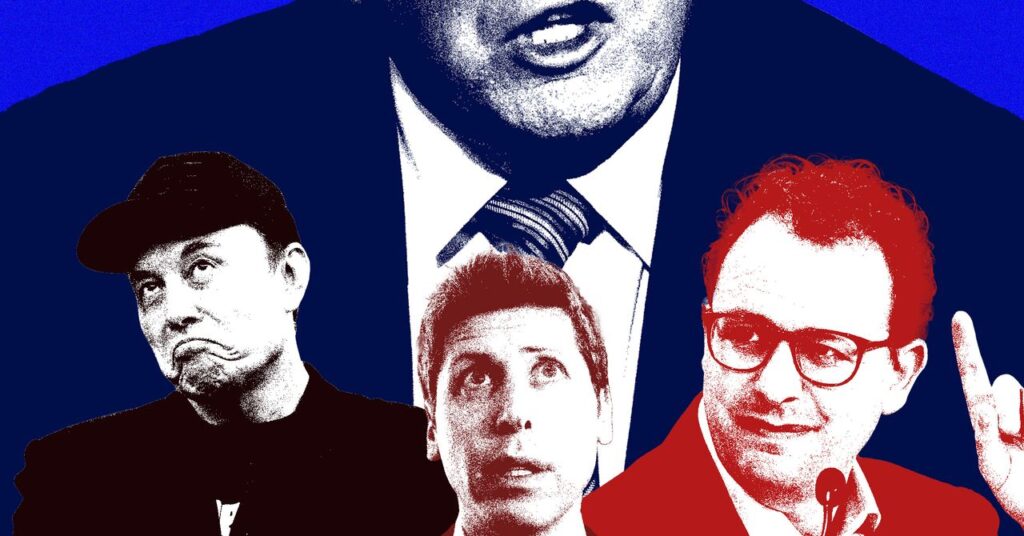
As demands for regulation of artificial intelligence grow stronger, US President Donald Trump’s team has made it clear that if industry leaders wish to initiate an overall slowdown, it will be up to them to act independently.
Dario Amodei, the CEO of Anthropic, urged the US government to regulate AI enterprises as part of a broader initiative to decelerate the advancement of the technology in an essay released on Saturday. This essay received uncommon backing from both Sam Altman, CEO of OpenAI, and Elon Musk, owner of the chatbot Grok, following a week of intense discussion about the potential dangers of the technology to human safety. Microsoft CEO Satya Nadella also called for a measured approach to development.
The push for a slowdown and regulation of AI has escalated after numerous researchers expressed serious concerns last week regarding the rapid pace of technological advancement. “AI progress is increasing,” said former DeepMind researcher Rishub Jain in an interview with WIRED. “And as AI becomes more capable, it poses more risks.”
Nevertheless, David Sacks, co-chair of the President’s Council of Advisors on Science and Technology, remarked on X, “If the unreleased models are concerning enough that you believe a slowdown is necessary, I support your choice to act responsibly. But stop pretending you need anyone else’s approval. Stop acting as if antitrust laws must be disregarded for you to form a cartel … Most importantly, stop pretending the reason to slow down is purely altruistic.”
Amodei requested that the government allow competing AI firms to collaborate on standards without violating antitrust laws, either by participating in dialogues or providing a waiver for those involved. He also sought government assistance in fostering international cooperation, including with the Chinese Communist Party, although critics questioned the efficacy of this approach. “China is highly unlikely to agree to a global accord, as you know,” wrote Sacks.
Fears of the US losing its technological edge to China have led the US government to largely resist the idea of slowing the pace of AI development. “There are many negative forces pushing for a slowdown that shouldn’t be, and they are proposing ideas that won’t materialize,” Trump said during a visit to Ireland. “We’re ahead of China in AI,” he continued, “and, honestly, I want to maintain that superiority because whoever dominates AI, wins.”
The US generally perceives China’s AI landscape as a threat to both its economy and national security, having previously been caught off guard by the country’s advancements in technology. “If Congress rushes to hold some sort of emergency session to regulate AI, we will ultimately lose the competitive race to China, which is a danger to every American,” House Speaker Mike Johnson stated on CNN on Sunday. “Therefore, we need balance. We require steady leadership.”
In the interim, companies have pledged to start taking voluntary measures to rebuild public confidence in their responsible practices. On Sunday night, Altman from OpenAI agreed to a proposal from Amodei to allow independent third-party evaluators employee-level access to their organizations to ensure that their practices and products are safe and to report any incidents. Although these initiatives will incur “significant costs,” he noted on X: “The investment in pacing will be well worth it; no level of competitive pressure should justify irresponsible actions.”

Rajat Sharma
https://in.linkedin.com/in/rajat-mediaHelping D2C Brands Scale with AI-Powered Marketing & Automation 🚀 | $15M+ in Client Revenue | Meta Ads Expert | D2C Performance Marketing Consultant