Explicit Deepfake Websites Aim at Over 100 Politicians Across Europe
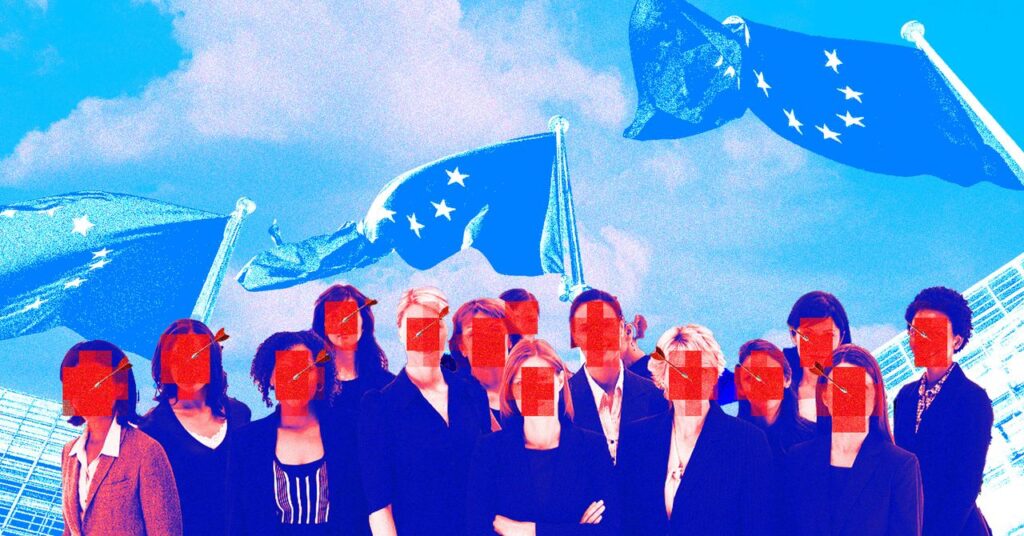
Nearly 150 politicians throughout Europe have been identified on harmful deepfake pornography websites in recent years, as revealed in new research provided to WIRED. Many of these politicians, predominantly women, have had their images featured in explicit videos, while others have been listed with names and photos in unsettling database-like entries that link to deepfake creation tools.
Benjamin Shultz, a researcher, analyzed around 160 domains hosting deepfake abuse and other non-consensual sexual content, discovering that at least 138 women members of parliament (MPs) from 22 European Union countries have been featured or mentioned on these sites. In stark contrast, only nine male MPs were referenced at all. According to Shultz, women MPs are 33 times more likely to be targeted by deepfake ecosystems.
“Deepfake porn is part of a broader trend of online hate and intimidation directed at women and female politicians,” states Suzanne Kröger, a member of the Dutch parliament from the Progressive Netherlands group, who has been affected. Expressing her outrage at the findings, Kröger calls the results “deeply disturbing” and emphasizes their significance in uncovering the extent of the abuse. “We are politicians with a platform to speak up,” she notes. “Yet, there are millions of women victims of these criminal acts.”
The research, conducted by the German digital democracy think tank Agora Digitale Transformation, focuses on national members of parliament from all 27 EU countries. Shultz, a fellow at Agora and lead researcher at the American Sunlight Project, gathered details on over 5,800 members of parliament across Europe in July and employed custom search engines to pinpoint their appearances on deepfake websites. (This study does not include European Parliament members).
According to the findings, politicians from Germany, the Netherlands, Italy, and France are the most prevalent on these websites, with senior politicians more likely to be targeted. Shultz notified each MP individually and provided advice on how to have the content removed. He notes that the sites also feature depictions of celebrities, journalists, and other public figures. WIRED will not disclose the names of the websites to avoid drawing attention to the abusive images.
Several researchers and lawmakers assert that while politicians have been targeted with deepfakes for years, this trend can undermine democratic practices and create chilling effects that deter women and girls from pursuing public roles. “This discourages women from entering office and effectively excludes them from public life,” Shultz explains. “There is substantial evidence showing the psychological harm this causes, as well as reputational damage if they wish to leave politics for other careers.”
“Deepfake videos serve to intimidate politicians and also to demean women,” remarks Sarah Dobbe, a Dutch Socialist Party MP who has been affected. “It is crucial that if a woman or girl falls victim to this, she can access immediate support and that the content is swiftly removed.”
Across the monitored sites, Shultz categorized various types of abusive behavior and content. His findings include instances where MPs appeared in content actively hosted by the sites, indexed results of removed content, and several profiles and “gateways” where new content could potentially be generated.
Many of the websites hosted pages displaying MPs’ names, official photos, and, in some instances, links to their social media accounts or personal information. Some featured sections “rating” the women’s bodies, according to Shultz’s report. Frequently next to these biographies were links to nudifier apps or the sites’ own tools that claimed to digitally undress individuals. “It has all the images, all the information, and a direct link to the tool, enabling someone to generate content in just three clicks,” Shultz notes. “That’s just as harmful as actually hosting the content.”
Since the emergence of AI-generated deepfakes in late 2017, the technology to create them has become far more accessible, and the realism of the output has significantly improved. Over time, millions of non-consensual AI images and videos have been produced, primarily by men and boys, often to harass, intimidate, or blackmail women and girls, affecting nearly 100 schools globally.
“These platforms operate like businesses,” states Henry Ajder, an AI adviser and deepfake expert who has monitored the ecosystem since 2018. While not surprised that politicians are targeted in this manner, he believes the findings offer valuable insights for European officials to grasp the gravity of the situation. “The entire infrastructure is designed to facilitate this process at scale and with ease,” he adds.

Rajat Sharma
https://in.linkedin.com/in/rajat-mediaHelping D2C Brands Scale with AI-Powered Marketing & Automation 🚀 | $15M+ in Client Revenue | Meta Ads Expert | D2C Performance Marketing Consultant