The Trump Administration Concludes Its Involvement with Anthropic CEO Dario Amodei
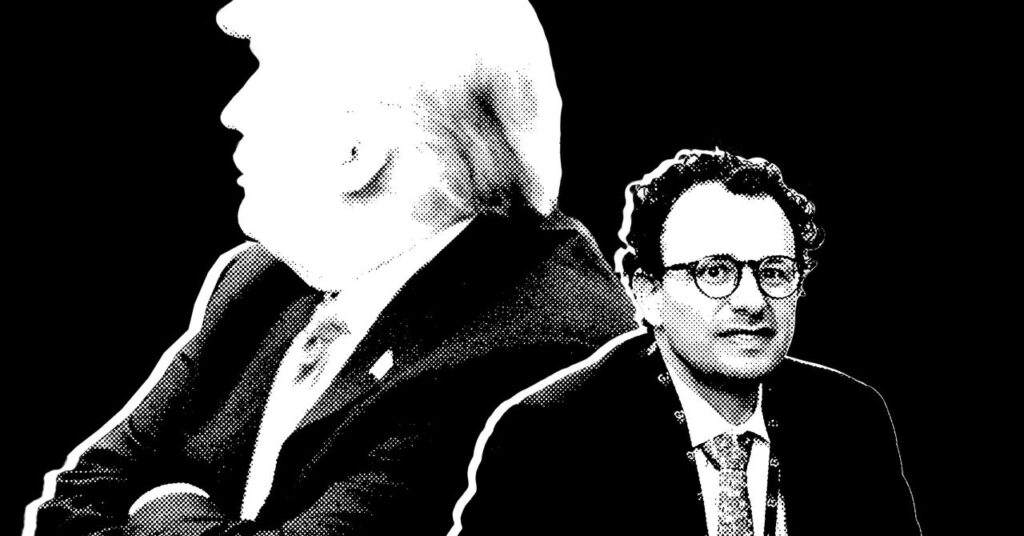
The Trump administration has recently shown a preference for engaging with Anthropic, as insiders report that they no longer have to negotiate with CEO Dario Amodei; instead, cofounder Tom Brown has taken his place in discussions regarding the re-release of the Claude Fable 5 AI model.
“Tom Brown is more approachable and can actually engage effectively,” commented a source familiar with the discussions.
The administration has not yet removed the export controls that benched Anthropic’s top models on June 12, after the National Security Agency indicated vulnerabilities that could allow disabling of guardrails to access the more advanced features of the company’s restricted Mythos model.
However, the administration has had several conversations with Anthropic recently, encouraged by Tom Brown and the company’s public policy lead, Sarah Heck, spearheading the outreach. According to sources, Amodei was considered challenging to communicate with and often disregarded their concerns.
These discussions have occurred at both strategic and working group levels, involving technical teams from both entities. Some dialogues have focused on what proof from Anthropic might ease the administration’s worries about potential jailbreaks of Fable 5.
As previously highlighted by Inner Loop, both parties face conceptual hurdles. Independent cybersecurity experts increasingly argue that AI model guardrails are merely temporary solutions, as skilled users and future AI developments are likely to find ways to bypass restrictions.
A representative from the White House opted not to comment on the situation. Anthropic’s spokesperson did not respond to requests for comment.
The timeline for Anthropic’s ability to redeploy Fable 5 remains unclear. Nonetheless, the requirements to lift the export controls may become more evident soon.
Recently, a bipartisan group of lawmakers sent a list of inquiries to Commerce Secretary Howard Lutnick regarding the future for Anthropic, who has taken a proactive role in addressing jailbreak risks, particularly since the Commerce Department’s Bureau of Industry and Security manages export controls.
Among the inquiries in the letter was one concerning redeployment: “What specific criteria does the Department use to determine whether to restore public access to the model by revising this decision? What is the timeline for that decision?”
The letter, signed by representatives Sam Liccardo, Jay Obernolte, C. Scott Franklin, and Ted Lieu, requested responses by June 26. A Commerce Department spokesperson did not clarify whether the agency would meet that deadline.
The Algae Is Always Greener
At the White House, President Donald Trump has been vocally addressing negative reports about the Lincoln Memorial reflecting pool on Truth Social, which has been struggling with algae blooms and loose blue sealant that seems to have detached from the pool’s floor following his $16.4 million renovation.
After Trump alleged that several individuals were arrested for purported vandalism of the renovations, an administration official refrained from specifying what actions around the reflecting pool might constitute a crime. On Tuesday, the administration also began constructing a fence around the pool.
The National Guard assigned to the reflecting pool were instructed last week to detain anyone who touches the water—particularly any sealant flaps—so that US Park Police could take them into custody on vandalism-related charges, according to two knowledgeable sources.
The regulation cited for prohibiting these actions is 36 Code of Federal Regulations, Chapter 1, Section 2.1(a)(6), which forbids “possessing, destroying, injuring, defacing, removing, digging, or disturbing a structure or its furnishing or fixtures, or other cultural or archaeological resources.”
Additionally, 36 CFR 7.96 prohibits “bathing, swimming, or wading in any fountain or pool” except for the Rainbow Pool at the World War II memorial and the German-American Friendship Garden fountains, adjacent to the Lincoln Memorial reflecting pool.
It remains uncertain whether merely placing a hand in the water would breach either of these regulations. However, Inner Loop believes it is not worth risking a misdemeanor citation to find out.
This is an edition of Hugo Lowell’s Inner Loop newsletter. Read previous newsletters here.

Rajat Sharma
https://in.linkedin.com/in/rajat-mediaHelping D2C Brands Scale with AI-Powered Marketing & Automation 🚀 | $15M+ in Client Revenue | Meta Ads Expert | D2C Performance Marketing Consultant