The UK Plans to Use Facial Recognition on Asylum Seekers to Verify Ages, Aware of Technology’s Limitations
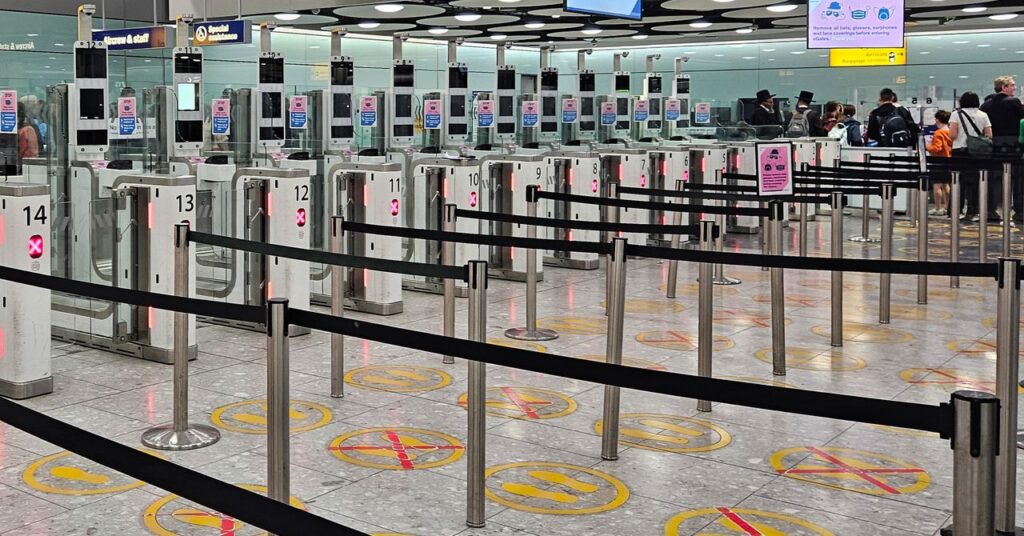
The Home Office claims that face scanning is intended as an “additional” resource for border officers and will not “replace or overrule human judgment.” However, it has not provided clarity on how this technology will be implemented in real-world settings. A spokesperson mentioned, “In cases of uncertainty, individuals will always be treated as children until a further assessment is conducted.”
Expanding Estimates
In July 2025, the UK government initially revealed its intentions to incorporate face age estimation alongside the assessments made by border staff to evaluate migrants. Subsequently, the Home Office postponed the implementation of these systems until 2027, stating that it would utilize “cutting-edge AI tech” to “combat false claims” and prevent “adults from manipulating the system.”
Over the last five years, AI face scanning has become integral to controversial online age verification schemes, spurred by legislation requiring social media platforms, adult websites, and specific retailers to verify users’ ages. Trials have also taken place in certain bars and shops across the UK. This technology works by examining facial features, using systems trained on millions of age-labeled faces to estimate age. In controlled lab scenarios, the most advanced algorithms can predict an individual’s age within about 2.5 years.
Nevertheless, results can differ significantly based on the algorithm, the individual’s gender, demographic characteristics, and other variables. Poor image quality, such as those taken in inadequate lighting, can severely hinder the accuracy of these systems. For instance, some systems have been fooled using images of video game characters. The Home Office seems to have acknowledged potential issues with the technology yet has continued with its plans.
A leaked report from the Home Office, completed in April 2025 before the acquisition of face-scanning technology, outlines tests involving seven FAE algorithms and over 2.5 million images. However, the report indicates that the unnamed “best performing algorithm” exhibited “substantial deviations” when analyzing images of Sub-Saharan Africans. On average, this algorithm tended to predict that a 17-year-old would be classified as over 18, with poorer performance noted for females.
Each year, tens of thousands of individuals submit asylum claims in the UK, many arriving after perilous journeys in small boats across the English Channel. Currently, border staff can assess the physical appearance, responses to interview questions, and overall demeanor of anyone claiming to be under 18, to make an initial age estimation. According to Home Office guidelines, these assessments are conducted during the “first encounter.” Since 2010, statistics show that 40 percent of individuals subjected to age assessments have been categorized as adults.
The leaked Home Office document notes that its findings primarily draw from tests involving high-quality images of documented individuals, suggesting that the actual accuracy of the algorithms may be even lower in real-world applications. The Home Office has suggested that FAE technology would assist immigration officers with age assessments at the point of first contact.

Rajat Sharma
https://in.linkedin.com/in/rajat-mediaHelping D2C Brands Scale with AI-Powered Marketing & Automation 🚀 | $15M+ in Client Revenue | Meta Ads Expert | D2C Performance Marketing Consultant