AI Makes Its Way into the World Cup Through Google Gemini
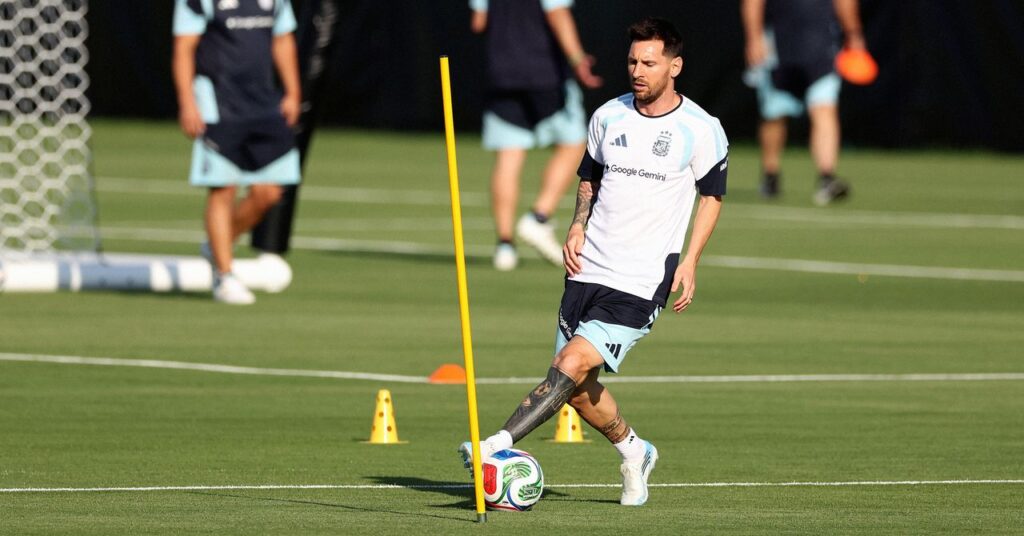
Gradually, artificial intelligence is making its presence felt in the world of sports. The latest stage? This year’s World Cup, where Google is teaming up with the reigning champions Argentina to exhibit Gemini both on and off the field.
The partnership with the Argentine Football Association (AFA) designates Gemini as the primary global sponsor of the national team. As part of this collaboration, the Google Gemini logo will feature on the Albiceleste’s training apparel, and the AI tool will be employed to assess the team’s strategies, performance, and statistics.
“This initiative is not merely about embracing AI,” states Google representative Flor Sabatini, “but also about comprehending its actual limitations while enhancing the overall experience.”
Throughout the tournament, both players and coaching staff will have access to AI models that can dissect plays, evaluate opponent statistics, and theoretically reduce the time needed to implement this analysis during matches. While specific internal tools used by Argentina remain unspecified, the objective is clear: The World Cup will serve as a stress test for Google’s AI in the intense atmosphere of professional soccer.
For fans, the offering is more concrete and, in certain respects, more ambitious. Google’s search engine will be redesigned to function like a fellow supporter, providing AI-generated answers for real-time queries, analyzing key plays, and delivering detailed statistics. It will also empower fans to create songs, memes, cartoons, and various visual content, promoting social media interactions during and post matches.
Google reports that its agreement with Argentina was finalized in March but kept under wraps until May to continue discussions with other teams. Despite spotlighting Argentina—likely due to the star power of players such as Lionel Messi—the company has also secured agreements with Brazil and France, two other nations that have won the World Cup.
Sabatini emphasizes that the World Cup represents the most significant cultural event of the year for Google. “The enthusiasm that the Argentine national team ignites goes beyond Argentines; it’s a universal emotion,” she asserts. From the AFA’s viewpoint, this agreement injects a sense of modernity into an organization that, like many other teams, balances soccer tradition with the need to monetize its brand.
However, this initiative carries risks. Introducing AI into World Cup venues subjects it to millions of simultaneous inquiries, varying cultural contexts, and the unpredictable nature of match outcomes. Should Gemini misinterpret a statistic, fabricate a lineup, or produce an image with an incorrect emblem, the error would gain worldwide attention.
World Cups have historically been events that shape cultures, accelerating the uptake of new technologies—from the advent of color television to the implementation of GPS for monitoring players’ training, to the introduction of video assistant referee (VAR) systems for resolving disputes on the field. Now, it’s AI’s turn.
The distinguishing factor here is scale. Never before has a tech company emblazoned its AI’s name on players’ uniforms while simultaneously reaching the smartphones of millions of fans.
This story originally appeared on WIRED en Español and has been translated from Spanish.

Rajat Sharma
https://in.linkedin.com/in/rajat-mediaHelping D2C Brands Scale with AI-Powered Marketing & Automation 🚀 | $15M+ in Client Revenue | Meta Ads Expert | D2C Performance Marketing Consultant