Pope Leo Educated the Tech Brothers on Tolkien
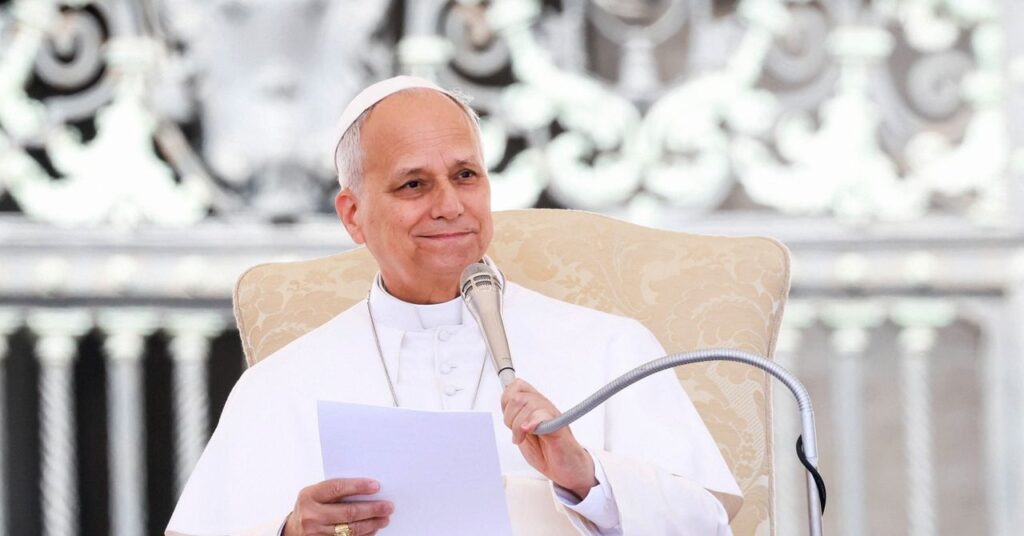
No one found it shocking that Pope Leo XIV referenced renowned saints and former pontiffs in his inaugural encyclical, or papal letter of spiritual guidance, “Magnifica humanitas,” made public on Monday.
However, the name that stood out to many readers was one closely associated with high fantasy literature: J.R.R. Tolkien, the Catholic author of The Lord of the Rings.
Leo’s letter addresses “safeguarding the human person in the age of artificial intelligence,” a significant theme during his initial year as the head of the Catholic Church. Echoing his predecessor, Pope Francis, he cautions against “the growing dominance of a technocratic paradigm,” which can “reduce creation to an object of exploitation and human beings to mere cogs in a system driven toward ever greater efficiency.” He further likens the emergence of AI to the Industrial Revolution that unfolded from the mid-18th century to the early 20th, referencing the teachings of his namesake, Pope Leo XIII, who highlighted the necessity of workers’ rights and dignity amid technological transformation and the rise of capitalism in his own 1891 encyclical.
The extensive text further reinforces Leo’s position as a skeptic of AI. Yet the mention of Tolkien is particularly poignant, considering some misguided interpretations of Middle-earth mythology by right-wing billionaires such as Peter Thiel and Elon Musk, which have been widely mocked by other Lord of the Rings enthusiasts. Some might even speculate that Leo is being provocative. (The Vatican did not immediately respond to a request for comment.)
Clearly, the pope possesses a degree of concern about the intentions of tech oligarchs hastening to create artificial general intelligence that exceeds human abilities. Do they genuinely aspire to use this technology to eradicate diseases and tackle climate change, or are they constructing instruments for unchecked profit and cultural hegemony? It is when he speaks about our individual responsibility in confronting such ominous forces that Leo invokes wisdom from Tolkien’s iconic wizard, Gandalf: “It is not our part to master all the tides of the world, but to do what is in us for the succour of those years wherein we are set, uprooting the evil in the fields that we know, so that those who live after may have clean earth to till.”
That message starkly contrasts with what Musk and Thiel seemingly perceive in Tolkien’s work.
Thiel named his data analytics company Palantir, after the crystal ball employed by the treacherous wizard Saruman for spying in the saga; he reportedly refers to his venture capital firm, the Founders Fund, as “the precious,” echoing what the twisted and greedy character Gollum calls the One Ring, a source of totalitarian power. Virtually anyone who engages with Tolkien (or adaptations of his work) can recognize that he was illustrating the corrupting influence of such power—in the novels, the temptation to rule ultimately unravels anyone who surrenders to it—yet Thiel appears to embrace the same prospects of authoritarian control and omniscience as the villains.
Musk, for his part, has suggested that Tolkien’s epic can be interpreted as an anti-immigration, build-the-wall narrative: “When Tolkien wrote about the hobbits, he was referring to the gentlefolk of the English shires, who don’t realize the horrors that take place far away,” he posted on X in October. “They were able to live their lives in peace and tranquility, but only because they were protected by the hard men of Gondor.” He offered this inaccurate interpretation of Lord of the Rings as a justification for Islamophobic far-right UK activist Tommy Robinson.

Rajat Sharma
https://in.linkedin.com/in/rajat-mediaHelping D2C Brands Scale with AI-Powered Marketing & Automation 🚀 | $15M+ in Client Revenue | Meta Ads Expert | D2C Performance Marketing Consultant