Elon Musk Faces Defeat in Significant Legal Battle with OpenAI
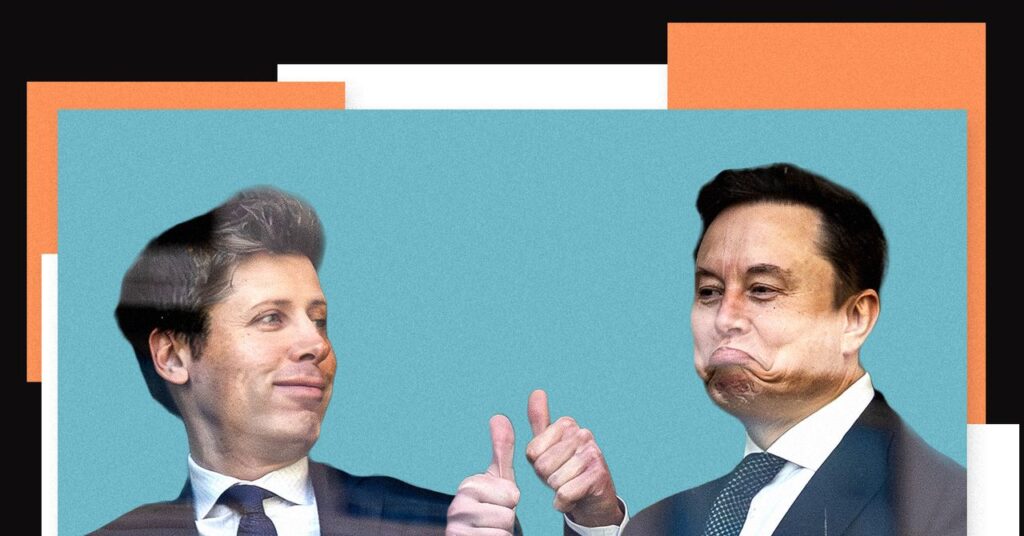
Elon Musk experienced a significant loss in his legal fight against OpenAI, as a federal jury and a judge determined that he waited too long to present his claims against the AI firm and its key leaders, Sam Altman and Greg Brockman.
Although the jury’s decision was a nonbinding recommendation submitted to US district judge Yvonne Gonzalez Rogers, she quickly accepted it as her own, rendering it final.
Musk’s lead attorney, Steven Molo, informed the judge that “our intention is to appeal.”
Another attorney for Musk, Marc Toberoff, gave reporters a succinct comment as they left the courtroom: “Appeal.” He later mentioned that the verdict reminded him of moments from the American Revolutionary War, such as the Siege of Charleston and the Battle of Bunker Hill. “These were significant losses for Americans, but who won the war?” Toberoff stated. “And this one isn’t over.”
Attorneys for OpenAI celebrated in the courtroom following the verdict announcement. William Savitt, the company’s lead lawyer, told reporters that the “overwhelming” amount of evidence presented allowed the jury to act swiftly. “The evidence that Mr. Musk’s lawsuit was a contrived attempt by a competitor was overwhelming,” he declared.
Throughout the trial, Gonzalez Rogers probed Musk’s motivations for challenging OpenAI. However, she concluded on Monday that the three-week global public spectacle had merit.
“I believed it was an important issue to be examined … for us to have a trial to provide clarity,” she remarked to lawyers from both sides. “There’s substantial evidence backing the jury’s findings, which is why I was ready to accept them and dismiss immediately.”
The nine-member jury reached a unanimous verdict in an Oakland, California courtroom on Monday, after less than two hours of deliberation. They determined that statutes of limitations had expired well before Musk filed his lawsuit in 2024. Musk had aimed to convince the jury that Altman and Brockman, bolstered by Microsoft’s financial backing, had turned OpenAI into a vastly larger entity than originally intended when they and others founded it as a nonprofit nearly 11 years ago.
Due to the jury’s finding that the case was filed too late, they did not address Musk’s three claims, which included breach of charitable trust, unjust enrichment, and against Microsoft, aiding and abetting. Losing on what is effectively a technicality could allow Musk to continue pressing his case publicly by arguing that the jury did not rule against his main assertion that a charity was misappropriated.
Savitt, the OpenAI attorney, challenged this perspective on Monday. “It’s not a technical ruling; it’s substantive,” he remarked. “It indicates you brought your claims too late, and you did so because you were holding onto them to use as a weapon against a competitor who could not thrive in the marketplace. We’re pleased with the result.”
Microsoft spokesperson Alex Haurek stated that the “facts and the timeline in this case have long been clear,” and the tech giant is “committed to our collaboration with OpenAI to advance and scale AI.”
Musk, Altman, and Brockman were absent when the jury read its verdict. Musk, under a court order not to tweet throughout the trial, has remained largely silent on the matter in recent weeks.
Despite the unfavorable outcome for Musk, the trial seems to have affected the public perception of OpenAI and its top executives. New revelations emerged regarding Brockman’s wealth and Altman’s alleged past deceit. Both executives were also drawn away from their daily activities for numerous hours to attend depositions, prepare for testimony, take the witness stand, and appear in court.

Rajat Sharma
https://in.linkedin.com/in/rajat-mediaHelping D2C Brands Scale with AI-Powered Marketing & Automation 🚀 | $15M+ in Client Revenue | Meta Ads Expert | D2C Performance Marketing Consultant