The Bloomberg Terminal Is Undergoing an AI Transformation, Whether You Approve or Not
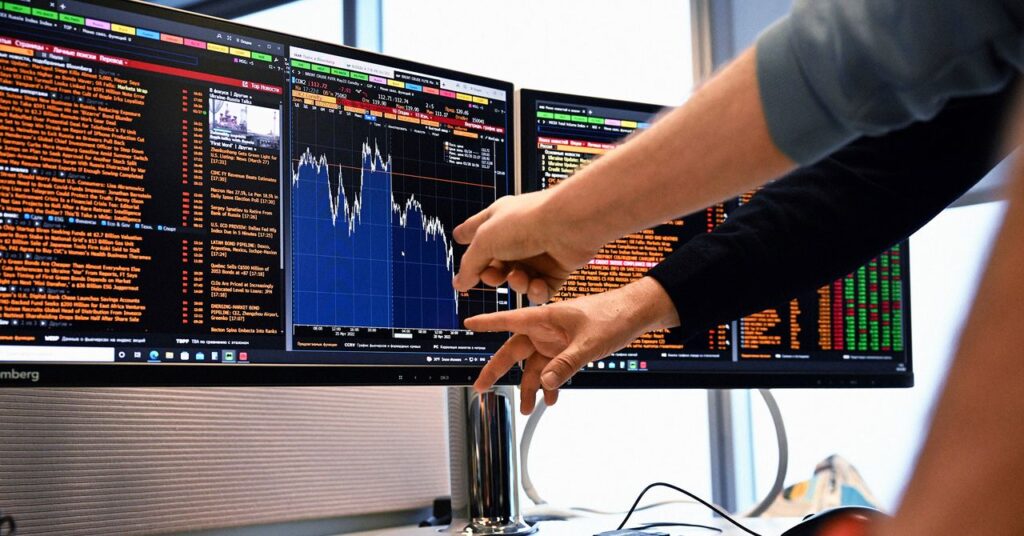
The Bloomberg Terminal, known for its challenging nature, has garnered a devoted following among users, teetering on the edge of obsession. For traders, the ability to navigate the software’s overwhelming streams of data to pinpoint obscure information signifies expertise.
However, as more data—ranging from earnings and asset prices to weather forecasts, shipping logs, factory locations, consumer spending habits, and private loans—pours into the Terminal, important insights are being overlooked. “It has become increasingly unmanageable,” states Shawn Edwards, Bloomberg’s chief technology officer. “You end up missing key information, or it takes too long to find it.”
In response to this challenge, Bloomberg is piloting ASKB (pronounced ask-bee), a chatbot-like interface for the Terminal that operates on a variety of language models. The goal is to aid finance professionals in streamlining labor-intensive tasks and enable them to evaluate abstract investment theories using natural language queries.
Currently, the ASKB beta is accessible to about one-third of the Terminal’s 375,000 users, with no announced date for a complete rollout.
In early April, WIRED interviewed Edwards at Bloomberg’s lavish London headquarters, covering the motivations for redesigning the Terminal, potential pushback from traditionalists, and Bloomberg’s strategies to address inaccuracies.
The following discussion has been condensed for brevity and clarity.
WIRED: Shawn, what motivates this transformation of the Terminal?
Shawn Edwards: Bloomberg has been continually enhancing this extensive dataset we possess. Frequently, locating the right data amid the vast information stream determines your success. It has become increasingly unmanageable: you miss insights or it takes too long.
The primary challenge we’re addressing with generative AI is assisting users in identifying crucial insights and synthesizing perspectives related to specific concepts.
The idea is that hidden alpha exists somewhere within the data, and ASKB is designed to extract it?
Exactly. Users can pose overarching questions—like the thesis in their minds—rather than simply requesting specific data points. For instance, ‘How will the conflict in Iran and changes in oil prices impact my portfolio?’ That’s a complex question with many facets. Can we provide answers in mere minutes?
In a situation where everyone can navigate the data maze, what distinguishes average traders from the top performers?
These tools are not a magic solution. They won’t transform a typical employee into a top performer overnight. The distinction lies in the quality of your ideas.
For experts, it enables enhanced analysis and thorough research—allowing them to evaluate ten compelling ideas instead of just one. If you’re an average analyst, you’ll end up with ten average ideas.
Bloomberg markets ASKB as a type of agentic AI. On the surface, it resembles a chatbot interface rather than a task automation tool. What makes ASKB agentic?
Earnings reports are released quarterly. As an analyst, my role is to be ready for whatever arises during those calls. For each company, I compare its performance to its competitors, sift through extensive documents, and examine fundamentals. During earnings season, I’m not getting much sleep.
With ASKB, I can develop workflow templates. I can craft a detailed query and say, ‘Here’s all the information I’ll need. Provide me with a summary of the bullish and bearish perspectives, what the market is saying, and the guidance offered.’ Now, I can schedule these workflows or trigger them based on specific conditions I observe in the market.

Rajat Sharma
https://in.linkedin.com/in/rajat-mediaHelping D2C Brands Scale with AI-Powered Marketing & Automation 🚀 | $15M+ in Client Revenue | Meta Ads Expert | D2C Performance Marketing Consultant