Tim Cook’s Impact: Transforming Apple into a Subscription-Based Model
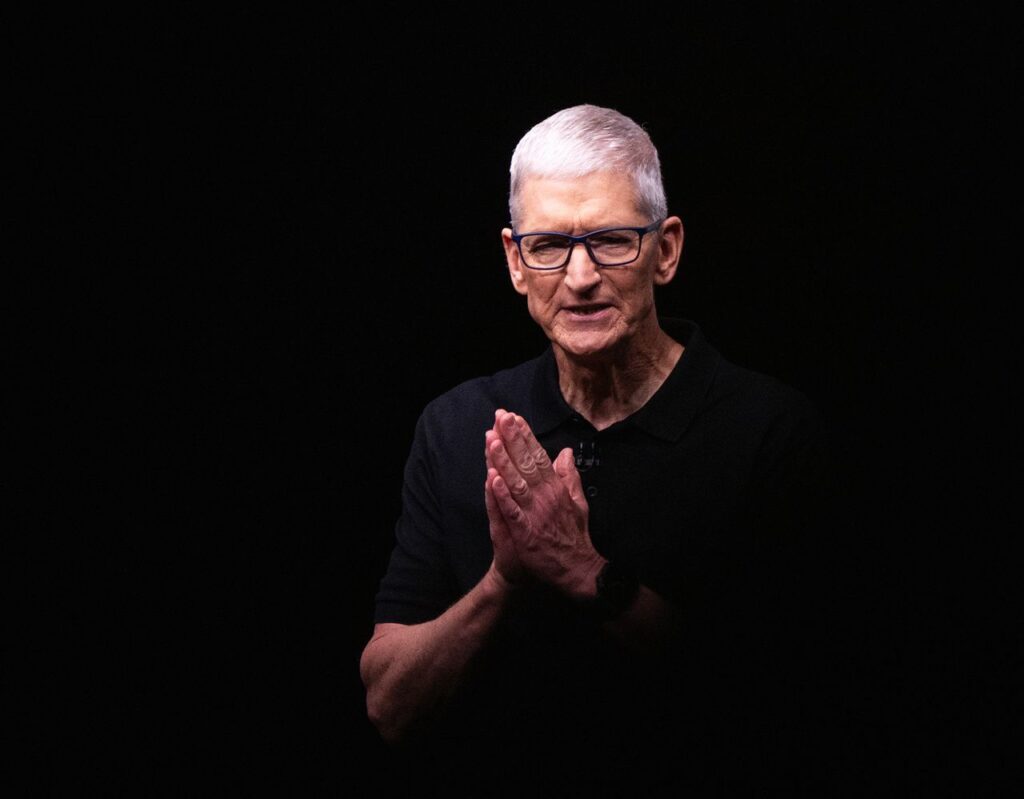
Tim Cook’s leadership at Apple, which concludes on September 1, is likely to be marked by operational excellence and financial growth, propelling Apple into its trillion-dollar chapter.
However, his most remarkable accomplishment may lie in significantly enhancing Apple’s services division, encompassing iCloud, the App Store, Apple Music, Apple TV+, News+, and more. This subscription layer built on iOS tightly integrates with Messages, which is the connective tissue that keeps users engaged with their iPhones.
In Apple’s latest earnings announcement for the quarter ending December 2025, the services sector achieved a historic revenue milestone of $30 billion. This represented a 14 percent increase compared to the same quarter the previous year; services also outperformed the combined revenue of Mac, iPad, Apple Watch, Home, and other accessories. For the entire fiscal year 2025, Apple services generated over $109 billion, reflecting a 14 percent rise from 2024.
When Cook assumed the CEO role in 2011, “services” were not even categorized as a separate revenue stream, although iTunes alone was earning about $6 billion annually.
As analyst Ben Thompson points out, some groundwork for Apple’s services was laid before Cook’s tenure. The App Store made its debut in 2008, a year after Steve Jobs introduced the iPhone, and it was Jobs’ vision to implement a 30 percent “tax” on paid apps and in-app purchases. Loyalists to Jobs, Phil Schiller, now an Apple “fellow,” and Eddy Cue, the senior vice president of services, were pivotal in this strategy. (Schiller famously adjusted the developer tax slightly in 2016, to better accommodate app creators following complaints about Apple’s practices.)
However, under Cook, Apple evolved from being the leading consumer hardware company to one of the most influential platform companies globally. This transformation was largely driven by services. The current challenge is whether Apple executive John Ternus, who will soon step into the CEO role, can navigate Apple’s platform into the generative AI era. Apple’s stance on advanced AI—particularly generative AI—has been ambiguous thus far, even though the company has employed machine learning in innovative ways over the years.
Siri, Apple’s virtual assistant, which was groundbreaking at its launch in 2011, has encountered numerous issues, limitations, and inefficiencies. In 2024, Apple unveiled “Apple Intelligence,” a new designation for AI features to be integrated into products like Siri. However, after delaying the rollout of an enhanced AI version of Siri in 2025, several key AI employees left the company. Robby Walker, a senior AI executive, departed in October of that year, and by the end of 2025, John Giannandrea, Apple’s head of AI, also resigned. Following Giannandrea’s exit, longtime software chief Craig Federighi reportedly took the reins of Siri.
Ternus has a solid background in hardware, serving as Apple’s senior vice president of hardware engineering since 2021. Before that, he was vice president of engineering and joined Apple’s product design team in 2001. Appointing a hardware executive to lead Apple’s direction on LLMs, inference learning, Siri-as-a-chatbot, hallucinations, AI privacy issues, vibe coding, and more isn’t the most conventional choice.
Yet, Ternus has been overseeing one of Apple’s vital platforms for the future: its chip division. Ming-Chi Kuo, the renowned Apple analyst, highlighted on X that Ternus’ key achievement in recent years was guiding the transition of Macs from x86 (Intel) to ARM (Apple’s proprietary Apple Silicon). This significant “system- and platform-level transition, essentially akin to a brain transplant,” demanded exceptional execution and close cross-functional collaboration. Kuo emphasizes that without this initiative, Apple would not be in its current advantageous hardware position as it prepares for AI-driven devices.

Rajat Sharma
https://in.linkedin.com/in/rajat-mediaHelping D2C Brands Scale with AI-Powered Marketing & Automation 🚀 | $15M+ in Client Revenue | Meta Ads Expert | D2C Performance Marketing Consultant