This Device Aims to Disrupt Constantly-Listening AI Wearables, But It Likely Won’t Succeed
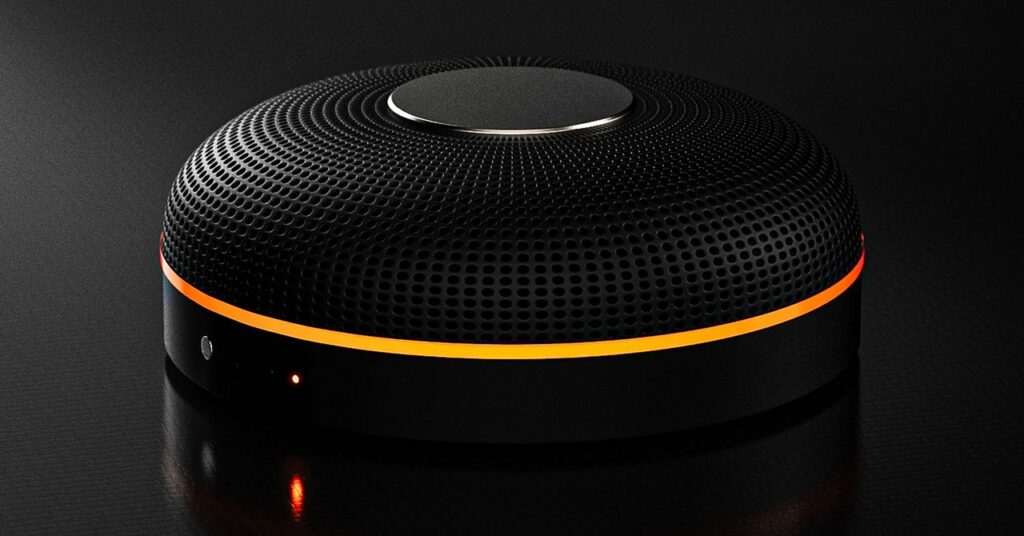
Deveillance asserts that the Spectre can detect nearby microphones by identifying radio frequencies (RF), though critics argue that locating a microphone through RF emissions isn’t practical unless the sensor is in close proximity.
“If it were possible to accurately detect and identify components via RF as Spectre claims, it would revolutionize technology,” Jordan noted in a message to WIRED after developing a device aimed at detecting RF signatures from microphones. “You could conduct radio astronomy in Manhattan.”
Deveillance is also exploring the integration of nonlinear junction detection (NLJD), a high-frequency radio signal employed by security experts to locate concealed microphones and bugs. NLJD detectors tend to be costly and are primarily utilized in professional environments, including military operations.
Even if a device could pinpoint a microphone’s exact location, surrounding objects can alter how frequencies propagate and interact. The frequencies emitted might pose an issue as well. While sufficient research on the effects of ultrasonic frequencies on human ears is lacking, some individuals and many pets can perceive them and find them bothersome or even painful. Baradari acknowledges the need for further testing to assess the impact on pets.
“They simply cannot do this,” engineer and YouTuber Dave Jones (of the channel EEVblog) stated in an email to WIRED. “They employ the typical tactic of using language that implies it can detect every type of microphone, when likely they are just scanning for Bluetooth audio devices. It’s totally lame.” Baradari emphasizes that the Spectre relies on a blend of RF and Bluetooth low energy to identify microphones.
WIRED inquired about any evidence demonstrating the Spectre’s capability to identify and block microphones nearby. Baradari provided a few brief videos showing individuals holding their phones to their ears while listening to audio clips—presumably jammed by the Spectre—but these clips offer little proof of the device’s functionality.
Future Imperfect
Baradari has welcomed the critiques, recognizing that the technology remains in development. “I appreciate those comments because they challenge me to think and see things from different perspectives,” Baradari states. “I truly believe that with the concepts we are developing and integrating into one device, these issues can be resolved.”
People quickly began to mock the Spectre I online, likening the technology to the cone of silence from Dune. Currently, the Deveillance website states, “Our goal is to make the cone of silence a reality.”
John Scott-Railton, a cybersecurity researcher at Citizen Lab who critiques the Spectre I, praised the device’s viral nature as reflecting a genuine desire for gadgets capable of reclaiming our privacy.
“The silver lining of this getting widespread attention is that it represents a moment like Ring, showing how rapidly and intensely consumer perceptions have shifted regarding pervasive recording devices,” Scott-Railton notes. “We must create products that fulfill the desirable features people want while avoiding significant privacy and consent violations. Device-level controls and regulation of the companies involved are essential.”
Cooper Quintin, a senior staff technologist at the Electronic Frontier Foundation, echoed these sentiments, despite critics viewing Deveillance’s initiatives as flawed.
“If this technology proves effective, it could be immensely beneficial,” Quintin expressed in an email to WIRED. “It’s encouraging to see a company focused on developing something to safeguard privacy rather than concocting new ways to harvest data from us.”

Rajat Sharma
https://in.linkedin.com/in/rajat-mediaHelping D2C Brands Scale with AI-Powered Marketing & Automation 🚀 | $15M+ in Client Revenue | Meta Ads Expert | D2C Performance Marketing Consultant