Tech Impacted Friendship: Let’s Revive It
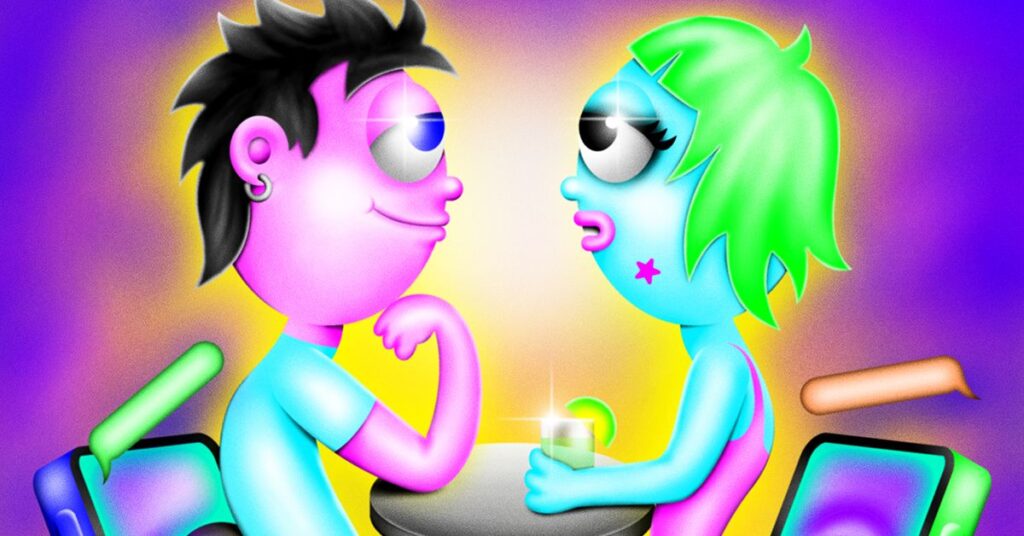
Anyone interested in gauging the public’s sentiments about AI should take a look at the walls of the New York City subway. This fall, amidst advertisements for everything from dating services to Skechers, a new entry appeared: Friend. The ads were straightforward, informing commuters that a “friend” is someone “who listens, responds, and supports you,” paired with an image of the white AI companion necklace against a similarly white background.
It became the ideal surface for graffiti. “If you buy this, I will laugh @ you in public.” “Warning: AI surveillance.” “Everyone is lonely. Make real friends.” “AI slop.” These are just a few defaced ads I observed during my daily commute from Brooklyn to Manhattan. There were so many that it turned into a meme. The reaction to the ad campaign, which the company’s founder claimed cost under $1 million, was so intense it caught the attention of The New York Times.
New Yorkers have always altered subway ads in countless ways, but the response to the Friend ads tapped into a profound unease regarding AI. While some celebrate its potential (such as drug discovery) and others criticize its consequences (like environmental damage and job loss), the notion that AI’s ultimate purpose could be a solution to loneliness struck a chord.
An actual, flesh-and-blood nerve.
Friend was merely the latest in a lineup of Silicon Valley innovations debuting in 2025 that offer digital companionship. Besides encouraging people to share their feelings with ChatGPT, tech companies introduced AI-powered travel guides, dating app assistants, and flirty chatbots. Teens are increasingly opting for AI as a source of friendship. Five years after Covid-19 isolated millions and over two years after the US surgeon general labeled loneliness an “epidemic,” AI has surfaced as a form of social media providing even less genuine interaction than before.
“What’s particularly striking is that these [Silicon Valley] leaders are overtly expressing their wish for AI products to replace human relationships, disregarding the role that their own companies—or competitors—have played in exacerbating the loneliness crisis that the nation faces today,” Lizzie Irwin, a policy communications expert at the Center for Humane Technology, shared with me via email. “They marketed connection through screens while undermining face-to-face community, and now they’re presenting AI companions as the remedy for the isolation they contributed to.”
Social media began as a platform for oddballs and niche communities to connect. By the 2000s and 2010s, platforms like TikTok and Instagram morphed into spaces for engagement with influencers and creators marketing products, shifting focus away from real-world friendships. Nevertheless, these platforms taught users—that’s you!—to outsource emotional labor to digital tools. (Why reach out to your college buddy when you can simply tap the heart under their post and save time?) With AI, people can skip the groundwork of making friends altogether. Plus, bots are much easier to manage than real humans.
“ChatGPT isn’t leaving its laundry lying around,” notes Melanie Green, a communications professor at the University of Buffalo with years of experience studying media relationships. What we’re witnessing now echoes research from the early internet days. Back then, individuals formed intimate connections almost solely via chat. Computer-mediated communication enabled them to create “hyperpersonal” relationships, filling in gaps from conversations with positive attributes. Like when you assume the crush you’ve been following on Instagram must love the same movies as you because they appear so cool.

Rajat Sharma
https://in.linkedin.com/in/rajat-mediaHelping D2C Brands Scale with AI-Powered Marketing & Automation 🚀 | $15M+ in Client Revenue | Meta Ads Expert | D2C Performance Marketing Consultant