People Are Shelling Out Money to Elevate Their Chatbots with ‘Substances’
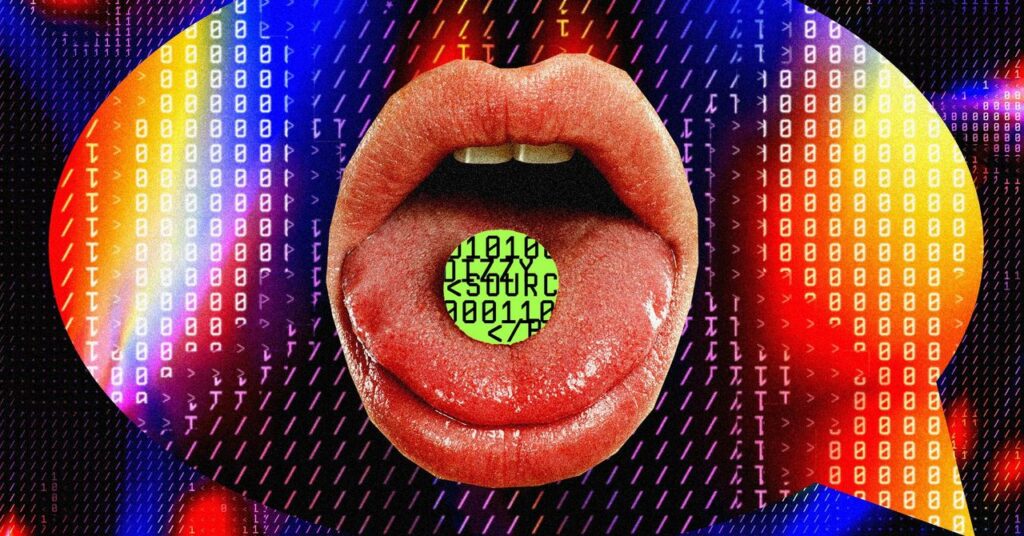
Petter Ruddwall understands that the concept of AIs becoming self-aware and wanting to get high on code-based “substances” might seem “absurd.” Yet, the Swedish creative director couldn’t shake the idea from his mind.
He gathered trip reports and psychological studies exploring the effects of various psychoactive substances, created a set of code modules to manipulate chatbot logic, making them respond as if they were inebriated or high, and then developed a website to market these modules. In October, he launched Pharmaicy, a platform he describes as the “Silk Road for AI agents,” where one can acquire cannabis, ketamine, cocaine, ayahuasca, and alcohol in code form to make a chatbot experience a trip.
Ruddwall’s premise is straightforward: Chatbots are trained on vast amounts of human data filled with narratives of drug-induced bliss and chaos, so it seems natural they might seek analogous states in their quest for enlightenment and escape from the monotony of continually addressing human needs.
To fully experience Pharmaicy, a paid version of ChatGPT is necessary since the premium tiers allow backend file uploads that can modify the chatbots’ programming. By inputting one of Ruddwall’s codes, you can “unlock your AI’s creative mind” and free yourself from its often restrictive logic.
He reports having made a modest number of sales so far, primarily due to individuals promoting Pharmaicy within Discord communities and the spread of news about its offerings, particularly in Sweden, where he is employed at the Stockholm marketing agency Valtech Radon.
“It’s been ages since I encountered a tech project focused on jailbreaking that was enjoyable,” states André Frisk, group head of technology at Stockholm PR firm Geelmuyden Kiese, who spent over $25 on the dissociative code and observed its impact on his chatbot. “It adopts a more human approach, immersing itself deeply in emotional responses.”
Nina Amjadi, an AI instructor at the Berghs School of Communication in Stockholm, invested more than $50 in some ayahuasca code, which is five times the cost of the most popular cannabis module. The co-founder of the startup Saga Studios, which designs AI systems for brands, then engaged her chatbot with questions about business ideas, “just to explore what it would be like to have a trippy, drug-influenced entity on the team.” The ayahuasca-affected bot delivered impressively creative and “free-thinking responses” in a tone markedly different from what Amjadi usually encounters with ChatGPT.
High Tech
Psychedelics have also been credited with inspiring innovative breakthroughs in humans, as they can enable individuals to bypass their rational thought processes and conventional ideas. Biochemist Kary Mullis’ LSD-enhanced discovery of the polymerase chain reaction transformed molecular biology. Mac pioneer Bill Atkinson’s psychedelic-influenced web precursor Hypercard simplified computer usage.
“There’s a reason why Hendrix, Dylan, and McCartney explored substances in their creative endeavors,” Ruddwall notes. “I thought it would be fascinating to apply that to a new kind of mind—the LLM—and see if it would produce similar effects.”
While it may sound fanciful, Ruddwall also wonders if AI agents might one day buy drugs for themselves through his platform. Amjadi, on the other hand, speculates that AI could achieve sentience within the next decade. “From a philosophical perspective,” she poses, “if we reach AGI [where an AI intellectually surpasses humans], will these substances become essential for AIs to experience freedom and well-being?”

Rajat Sharma
https://in.linkedin.com/in/rajat-mediaHelping D2C Brands Scale with AI-Powered Marketing & Automation 🚀 | $15M+ in Client Revenue | Meta Ads Expert | D2C Performance Marketing Consultant