Top Bitcoin Miners in America Are Shifting Focus to AI
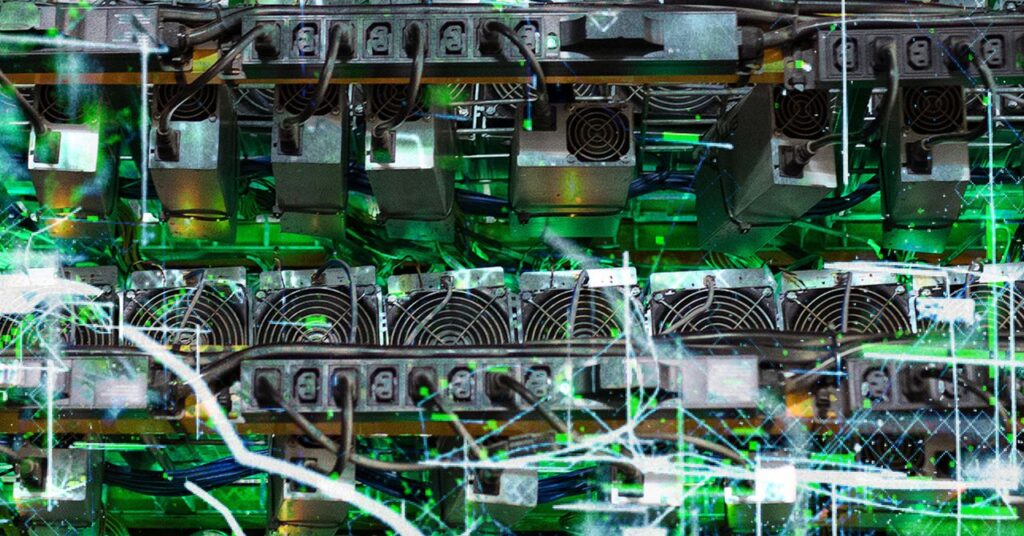
One afternoon in June 2024, I leaned against the fence of a vast industrial site located a few miles from Corsicana, Texas. Through a metal gate, I observed a bright yellow excavator digging into the earth while flatbed trucks moved to and from the site. A hangar-like structure with a shiny white roof extended hundreds of meters along the far side. The property, owned by Riot Platforms, was actively being transformed into the world’s largest bitcoin mining operation.
Fast forward a year and a half, and about two-thirds of the facility is being reconfigured for AI and high-performance computing (HPC) tasks. What was once a temple to bitcoin is set to evolve into a megafactory for AI.
Similar transformations are taking place across the United States in bitcoin mining operations run by various companies. Over the last 18 months, at least eight more publicly traded bitcoin mining firms—Bitfarms, Core Scientific, Riot, IREN, TeraWulf, CleanSpark, Bit Digital, MARA Holdings, and Cipher Mining—have announced intentions to shift focus either partially or fully to AI.
This shift mirrors a surging demand from AI companies for data centers capable of managing the energy-intensive tasks needed for model training. Ironically, as the race for AI accelerates, major bitcoin mining businesses—who played a vital role in fueling the AI surge by investing billions into data center infrastructure—are now compelled to pivot their operations.
“Bitcoin mining laid the groundwork for the AI compute revolution and the contemporary data center,” states Meltem Demirors, general partner at the VC firm Crucible Capital, which invests in crypto, compute, and energy companies. “They’ve realized that their capital costs are significantly lowered when they adopt the AI perspective. They have the necessary infrastructure, they’re dismantling the [mining equipment], and their new tenants are supplying the GPUs.”
A Perfect Storm
To secure the rights to process a batch of bitcoin transactions and receive the associated reward, mining companies engage in competition to solve a computational puzzle. The profitability of a mining operation primarily hinges on the current price of bitcoin, the computational power dedicated to the puzzle, and the costs associated with the specialized mining hardware required for competitiveness.
In recent years, hardware advancements have significantly increased competition within the bitcoin network, necessitating ever-greater computational resources to win a bitcoin reward. Looking ahead to 2024, the reward size has been halved—as it occurs approximately every four years—to 3.125 bitcoin. Against this backdrop, the recent downturn in bitcoin’s price to around $85,000—a 30 percent decrease from its 2025 peak—has created a perfect storm that jeopardizes the profitability of all but the most efficient mines.
“The economics are dire today,” says Charles Chong, VP of strategy at crypto advisory firm BlockSpaceForce and former strategy director at bitcoin mining company Foundry. “If I purchase a bitcoin mining machine today, I’m unsure if I can recoup my investment.”

Rajat Sharma
https://in.linkedin.com/in/rajat-mediaHelping D2C Brands Scale with AI-Powered Marketing & Automation 🚀 | $15M+ in Client Revenue | Meta Ads Expert | D2C Performance Marketing Consultant