The Creators of Your Beloved AI Gay Thirst Traps
With his striking brown eyes, wide smile, and almost humorously sculpted physique, Jae Young Joon embodies the quintessential hunky male influencer. On Instagram, where he boasts over 320,000 followers, he frequently shares moments of himself indulging in sheet masks at home, enjoying soju and karaoke alongside friends, or posing in front of the Ferris wheel at Coachella. From time to time, he promotes his music, including his latest LP Pressure Release, adorned with a BDSM-themed album cover, showcasing his back muscles beneath a harness and chains.
His online presence is remarkable, captivating Jae’s audience: his posts are teeming with fire and heart-eye emojis and compliments on his music. It’s only when you revisit his profile to check his bio, which states “Human mind. AI generated,” that the truth dawns—you realize Jae isn’t a real person. Neither are his friends. His music career is fabricated. Even his Coachella experience is imaginary.
Jae is the creation of Luc Thierry, a soft-spoken Canadian in his early thirties who has cultivated Jae’s account over recent months. Although he openly reveals Jae’s AI origins in his profile, Thierry notes that most followers either overlook this detail or choose to ignore it.
“When I observe people interacting as if this is real, I hope they grasp that it’s not reality and that they’re opting to role-play or embrace it as a fantasy, much like developing a parasocial connection with a character from a video game or TV series,” Thierry explains. “I realize this isn’t exactly the same, but I see my role as the creator is to indulge that and let them feel involved in it.”
Thierry is part of a group of content creators targeting primarily a gay male audience—though he’s surprised to discover that the majority of Jae’s followers are female. This group maintains a chat to support one another, frequently liking and commenting on each other’s posts and collaborating to amplify their reach.
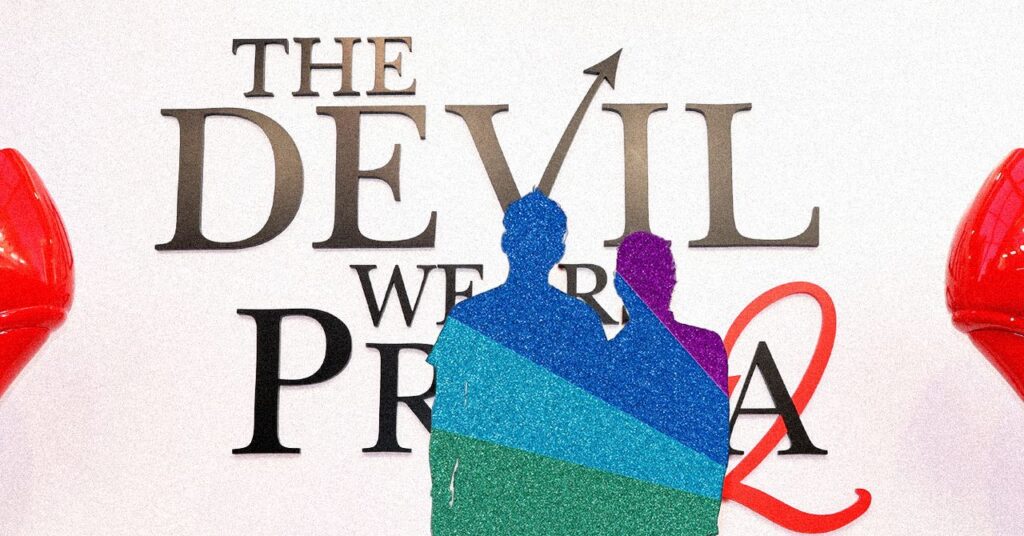
Earlier this week, two characters, “Santos Walker” and “Caleb Ellis,” gained viral fame after their “appearance” on the red carpet during the premiere of The Devil Wears Prada 2. “I’m gagging. Scrolling through Instagram, I stumbled upon an entire group of AI models/accounts,” remarked writer and editor Mikelle Street.
Santos and Caleb’s red carpet moment elicited backlash online, with many assuming the post was sponsored content for 20th Century Studios, the film’s distributor. However, WIRED confirmed that the creator of the “Santos” account crafted the image independently, aiming for it to represent an online equivalent of unexpectedly crashing the red carpet. The creator even devised an elaborate backstory for the post, envisioning a wealthy producer having flown Santos and Caleb to Hollywood on a private jet. (20th Century Studios did not respond to a request for comment.)
While the post wasn’t sponsored content, it ignited an online debate about whether AI-generated influencers like Santos and others are deceiving their audiences or establishing a troubling precedent for the future of branded content.
“We currently have human influencers,” one user expressed on X. “So, the next logical step is to CREATE fake, fully controllable influencers FROM SCRATCH purely for the purpose of marketing films, shows, products, etc.?” Others ridiculed Santos’ and Caleb’s supporters and those admiring their absurdly muscular physiques, leading to a discourse on how AI models perpetuate unrealistic body standards within the gay community.

Rajat Sharma
https://in.linkedin.com/in/rajat-mediaHelping D2C Brands Scale with AI-Powered Marketing & Automation 🚀 | $15M+ in Client Revenue | Meta Ads Expert | D2C Performance Marketing Consultant