Experiencing a 7.5-Hour Film in Theaters Filled Me with Optimism About Our Shared Mental Decline
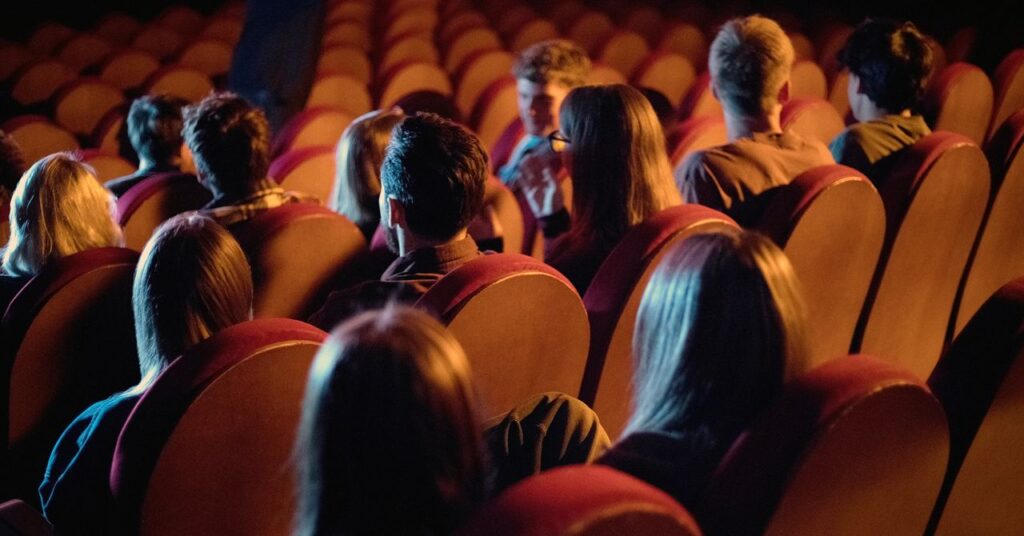
There are a couple of ways to wrap your mind around the idea of watching a seven-and-a-half-hour film.
As a child, I used to measure time in “Roseannes,” where 30 minutes equated to one Roseanne episode—the length of the sitcom. My junior hockey games were equivalent to two Roseannes, and the drive to my uncle’s took about 12. A seven-and-a-half-hour film amounts to 15 Roseannes, or roughly the duration of an economy flight from New York City to Paris without a headrest. These days, it’s a considerable stretch to sit and watch a film, or really do anything at all. Yet, over 250 enthusiasts gathered to do just that on a recent early spring Saturday in Manhattan.
Sátántango, a 1994 grim epic by Hungarian filmmaker Béla Tarr about a failed farming collective in Hungary, runs for a staggering 439 minutes. The centerpiece of Film at Lincoln Center’s Farewell to Béla Tarr program this week (the director passed away in January at 70), this film has become a rite of passage for devoted movie lovers. It is seldom shown and even less frequently seen.
Experiencing a black-and-white film for 7.5 hours is increasingly rare. Disturbing reports indicate an “attention-span crisis.” Parents are successfully suing social media companies for allegedly robbing their children of focus through addictive short-form video content. Film professors note that, post-pandemic, students struggle even with standard-length films. A whole genre of memes has emerged to mock the deterioration of focus itself. Reportedly, Netflix insists that films and TV shows repeat crucial plot points to cater to viewers who only half-watch.
I often struggle to watch even a full episode of The Real Housewives of Beverly Hills without feeling the urge to reach for my phone to check hockey scores, search for “Amanda Frances scams,” or simply scroll mindlessly.
“We’ve weakened the muscle of sustained attention,” says Tyler Wilson, programmer at Film at Lincoln Center. “This is a chance to be in a space with the understanding that I’ll stay put, not check my phone, and refrain from small talk. There’s a collective discipline.”
Sátántango stands out not just for its length. Many films stretch beyond three hours, while binge-watching the latest streaming series has become the norm. Tarr’s film isn’t merely long; it feels long. With just 171 shots across its 439 minutes, the average shot lasts about 2.5 minutes—around 60 times longer than the typical shot in a Hollywood production.
Sátántango offers an immersive experience in the nature of duration itself. It serves as a cornerstone in a subgenre of art-house films often referred to as “slow cinema.” (And it’s not even the longest; I once dedicated an entire day to watching Chinese director Wang Bing’s 2018 documentary Dead Souls, which exceeds eight hours, highlighting the lives of survivors from a Mao-era reeducation camp.) While contemporary editing often aims to hasten the passage of time—fostering a quicker pace—slow cinema takes its time.
“Slow cinema is genuinely a film style that compels you to invest time,” explains Lexi Turner, who leads seminars on slow cinema at Marymount Manhattan College. “It invites contemplation and requires patience.” Frequently featuring nonprofessional actors and settings unfamiliar to Western audiences, she notes, these films elevate the dignity of the ordinary. By taking the time to observe someone laboriously cross a field or a sunset gradually dimming, these filmmakers assert that such moments are worth capturing and reflecting upon.

Rajat Sharma
https://in.linkedin.com/in/rajat-mediaHelping D2C Brands Scale with AI-Powered Marketing & Automation 🚀 | $15M+ in Client Revenue | Meta Ads Expert | D2C Performance Marketing Consultant