Code Metal Secures $125 Million to Transform Defense Industry Software Using AI
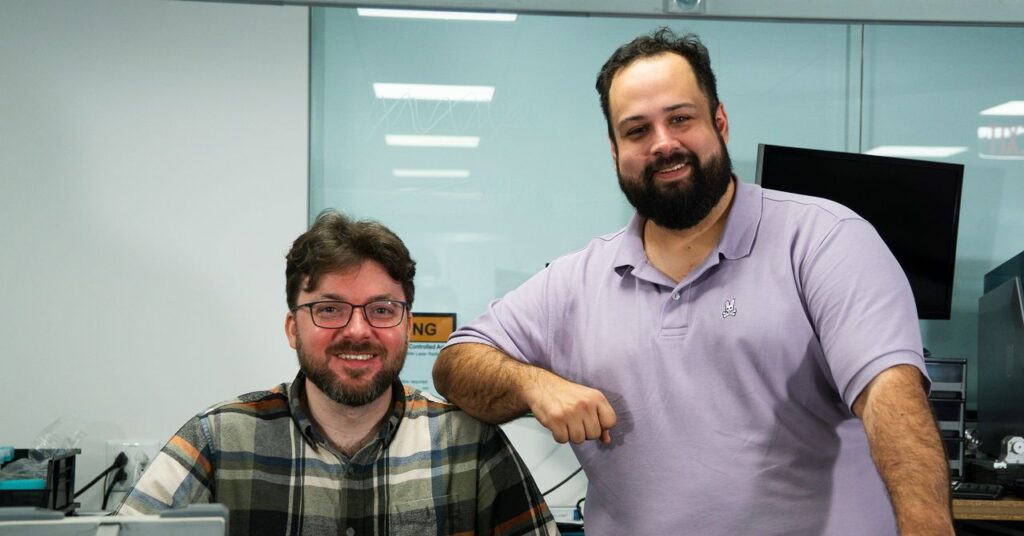
Code Metal, a startup based in Boston that leverages AI to write and translate code into various programming languages, has successfully secured a $125 million Series B funding round from both new and existing investors. This announcement follows closely on the heels of the startup’s earlier $36 million Series A financing, led by Accel.
As part of a burgeoning trend, Code Metal aims to revolutionize the tech sector with AI-generated code and its translation across programming languages. A lingering concern regarding AI-assisted coding is the quality of the output—and the potential ramifications should it fall short.
In recent years, companies such as Antithesis, Code Rabbit, Synthesized, Theorem, and Harness have attracted substantial investment from venture capitalists for their unique approaches to automating, validating, testing, and securing AI-generated code. These ventures offer the foundational “picks and shovels” to the AI gold rush—technology tools that support a broader industry. While some underlying methodologies remain untested, investors are banking on the success of several.
Founded in 2023, Code Metal has concentrated its resources on code translation and verification specifically for the defense sector. Early clients include L3Harris, RTX (previously Raytheon), and the US Air Force. The startup is also collaborating with Toshiba, a Japanese electronics giant, and is in discussions with a major chip manufacturer regarding code portability across different chip platforms, although details remain undisclosed.
The startup’s software platform is designed to translate code from high-level programming languages like Python, Julia, Matlab, and C++ into lower-level languages or code that operates on specified hardware, such as Rust, VHDL, and chip-specific languages like Nvidia’s CUDA.
Peter Morales, CEO of Code Metal and former employee at Microsoft and the MIT Lincoln Laboratory, asserts that the market is beginning to acknowledge “the significant challenges” within an industry that could soon be bolstered by AI-generated code. One key issue is transitioning outdated code into new applications. When a government body or defense contractor requires rapid coding solutions but can only access engineers skilled in legacy languages, it results in delays.
Morales references a recent X post by renowned AI researcher Andrej Karpathy, who noted the “increasing interest in porting C to Rust.” Karpathy remarked: “It seems likely that we will be rewriting a substantial portion of all software ever created multiple times.”
“That sums up our mission in one tweet,” Morales states.
One of Code Metal’s backers, Yan-David Erlich, a general partner at B Capital, emphasizes that much of the code governing critical communication infrastructure and even satellites “is outdated, cluttered, and formulated in languages that are no longer commonplace. An upgrade is necessary.”
“However, during the translation process,” Erlich noted, “there’s a risk of introducing bugs—which can have disastrous consequences.”
This is where Code Metal claims its proprietary technology stands out. Morales explains that throughout the translation process, Code Metal’s software creates a series of test harnesses—virtual containers filled with data and tools—that assess the code and keep customers informed of its functionality. In response to inquiries about the error rate during translation, Morales points out that it largely depends on the complexity of the code being converted. He adds that for the current pipelines Code Metal operates, “there’s no possibility of generating an error. The software will simply declare, ‘There’s no solution for this’ if the translation cannot be completed.”
While the startup is cautious about divulging too many specifics regarding its methods, it is openly discussing its pricing strategy.

Rajat Sharma
https://in.linkedin.com/in/rajat-mediaHelping D2C Brands Scale with AI-Powered Marketing & Automation 🚀 | $15M+ in Client Revenue | Meta Ads Expert | D2C Performance Marketing Consultant