New York Takes Action Against Twelve Celebrity Deepfake Sites
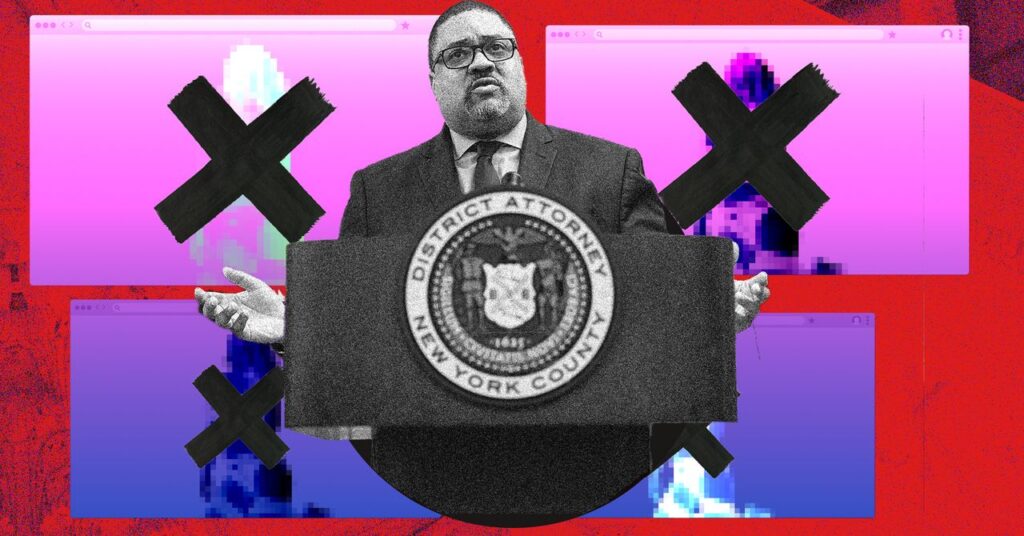
Over the past ten years, numerous abusive deepfake “pornography” websites have disseminated thousands of nonconsensual videos featuring women, including notable celebrities, politicians, and public figures, in sexual scenarios. Recently, New York officials undertook what is likely the largest crackdown on explicit deepfake sites to date, seizing more than twelve harmful domains.
On Monday, the Manhattan District Attorney’s Office revealed the confiscation of 12 domains alleged to be used for “unlawfully” sharing, publishing, and selling deepfake videos of celebrities. Approximately 1,200 individuals—predominantly women—were portrayed in nonconsensual sexual visuals on these sites, according to the office. This group included social media influencers, actors, activists, athletes, musicians, and politicians.
“These appalling infringements on privacy affect victims both professionally and personally, inflicting significant emotional and mental distress,” district attorney Alvin Bragg stated, urging potential victims to reach out to his office’s cybercrime bureau. The office continues its investigation into the individuals responsible for the websites and those who uploaded harmful videos featuring victims.
The seizures, executed under New York’s criminal procedure laws, represent one of the most substantial actions against sites hosting explicit deepfake content since the technology became prevalent in late 2017. As artificial intelligence capabilities have advanced, a dark market of websites, applications, and bots has emerged: these are engineered to “undress” images of women or craft explicit sexual videos involving them. The generated images and videos are becoming increasingly lifelike and can be produced almost instantaneously.
Although deepfake technology predominantly targets non-famous women and girls—often circulated in private social media circles—celebrities have raised awareness about the various harms associated with being represented in such content and the difficulties of having it removed. While progress on deepfake legislation has been sluggish, the US Take It Down Act allows for the removal of images, giving law enforcement the authority to eliminate and seize websites.
The Manhattan District Attorney’s Office has not disclosed the specific websites that were seized. However, prior to Bragg’s announcement, WIRED noted that several homepages of these sites were replaced with takedown notices—“THIS DOMAIN HAS BEEN SEIZED”—late last week, indicating they were taken over following a seizure warrant issued by a New York State Supreme Court.
“The takedowns mark a significant victory in the battle against synthetic nonconsensual intimate imagery (NCII),” states Leonie Oehmig, a researcher at the Institute for Strategic Dialogue (ISD), who has studied the ecosystem of deepfake creation. Oehmig asserts that the enforcement of state laws demonstrates that harmful content can be addressed and that the seized sites do not seem to be accessible via VPNs from other locations. “This indicates that meaningful, coordinated enforcement is possible, even considering the fragmented regulations across jurisdictions.”
These websites likely garnered millions of views. Many employed names containing phrases like “sex celebrity” or promised “real deepfakes.” They hosted fabricated videos of some of the world’s most recognizable celebrities, with one stating, “various actresses’ faces are used for deepfakes.”
Videos could last several minutes and feature fully explicit scenes—often replacing the faces of celebrities or public figures within existing pornographic content. Archived versions of these sites indicate that some videos had been viewed tens of thousands of times, with one claiming to have been operational since 2018.

Rajat Sharma
https://in.linkedin.com/in/rajat-mediaHelping D2C Brands Scale with AI-Powered Marketing & Automation 🚀 | $15M+ in Client Revenue | Meta Ads Expert | D2C Performance Marketing Consultant