DeepMind Claims Its AI Can Forecast Hurricanes Sooner Than Any Competitor
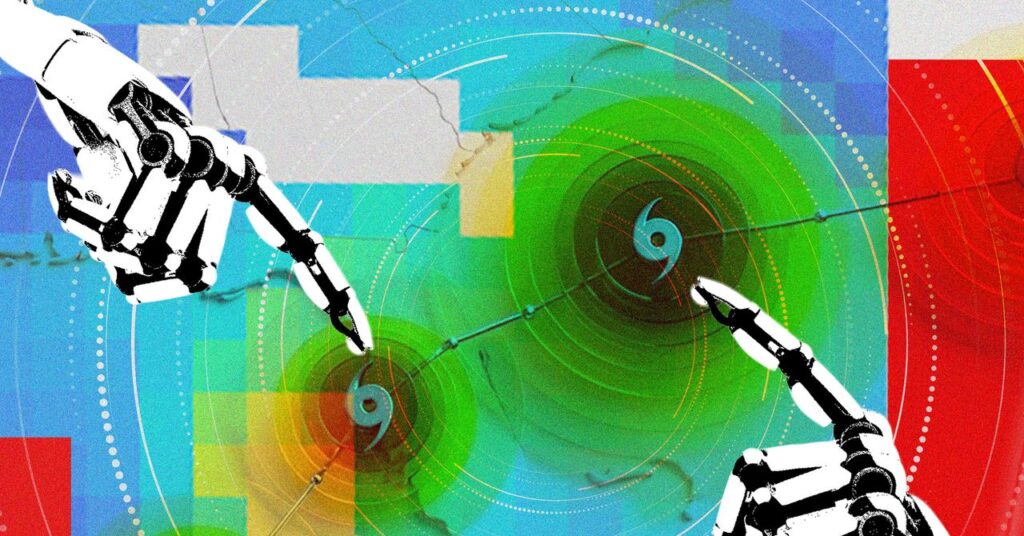
In October 2025, a storm formed over the Caribbean Sea, with weather models displaying different predictions about its path. Would it stay weak and reach Haiti, or would it grow stronger and strike Jamaica? Google’s DeepMind and Google Research developed the artificial intelligence model, WeatherNext, which opted for the latter scenario. Five days prior to landfall, it confidently predicted with 80 percent certainty that the storm would hit Jamaica as a Category 5 hurricane.
Hurricane Melissa was devastating, leading to flooding and landslides across Jamaica. However, the AI model provided forecasters with an earlier warning to communities in its trajectory, enhancing their preparedness.
A study released on Thursday in Nature demonstrates that the WeatherNext AI model can forecast cyclones with unmatched precision. On average, it offers forecasters an additional day of lead time compared to current models, meaning its predictions three days ahead are as reliable as previous models’ two-day forecasts. That extra day can make a significant difference in real-world scenarios.
“Even a few hours can make a difference,” states Mike Brennan, director of the US National Hurricane Center. Timely organization of evacuations, resource staging, and preparations to address hurricane threats are all crucial, and poor decisions can have dire implications. “Time is really precious for those kinds of decisions, so extending forecast accuracy by up to a day more than we’ve been able to do before is incredibly beneficial,” he emphasizes.
Traditionally, advancing forecasts by a day would take about a decade of effort, according to the researchers.
AI faces challenges in modeling extreme events. Machine learning relies on substantial training data for future predictions, yet extreme events are inherently infrequent. “We don’t have extensive cyclone data, but we have a wealth of weather data,” explains Ferran Alet, a research scientist at Google DeepMind and one of the paper’s lead authors. “So we developed a model proficient in both weather and cyclone prediction.”
Hurricanes are particularly tough to forecast because they function on multiple spatial levels, notes Kate Musgrave, tropical cyclone group lead at the Cooperative Institute for Research in the Atmosphere and a co-author of the paper. Tracking a storm’s direction involves data on a global scale, including factors like cold front positions and prevailing winds. In contrast, assessing a storm’s intensity demands much finer-scale data that focuses specifically on local atmospheric and oceanic conditions.
“That’s information we don’t typically gain from global models,” Musgrave adds. While previous AI models excelled at predicting a storm’s path, “they struggled significantly with intensity.”
Both aspects are essential to predict accurately: a shift in intensity can differentiate between a minor storm and a significant hurricane. Occasionally— as seen with Hurricane Melissa— a storm can rapidly intensify, transforming into an emergency overnight. Melissa marked a pivotal moment when the National Hurricane Centre successfully predicted a Category 5 hurricane while it was only classified as a Category 1.
Before deploying the WeatherNext model for live forecasts, researchers validated it against historical data. “The outcomes were so promising that we were initially skeptical about achieving similar results in real-time,” Musgrave recalls. However, as forecasters began to integrate the model into their workflows, it consistently delivered on its promises. “Everyone was astonished by how well it performed,” Musgrave says.
Even the DeepMind researchers developing the model do not completely comprehend how it generates such precise predictions, especially since it relies on much lower-resolution atmospheric data compared to traditional forecasting models. “When we informed the community that our model utilized relatively coarse resolution, they were taken aback, as this implies that the lower-resolution inputs encapsulate more signal about future events than previously thought,” Alet notes.

Rajat Sharma
https://in.linkedin.com/in/rajat-mediaHelping D2C Brands Scale with AI-Powered Marketing & Automation 🚀 | $15M+ in Client Revenue | Meta Ads Expert | D2C Performance Marketing Consultant