Top AI Experts at Google Depart to Start Discovery Loop
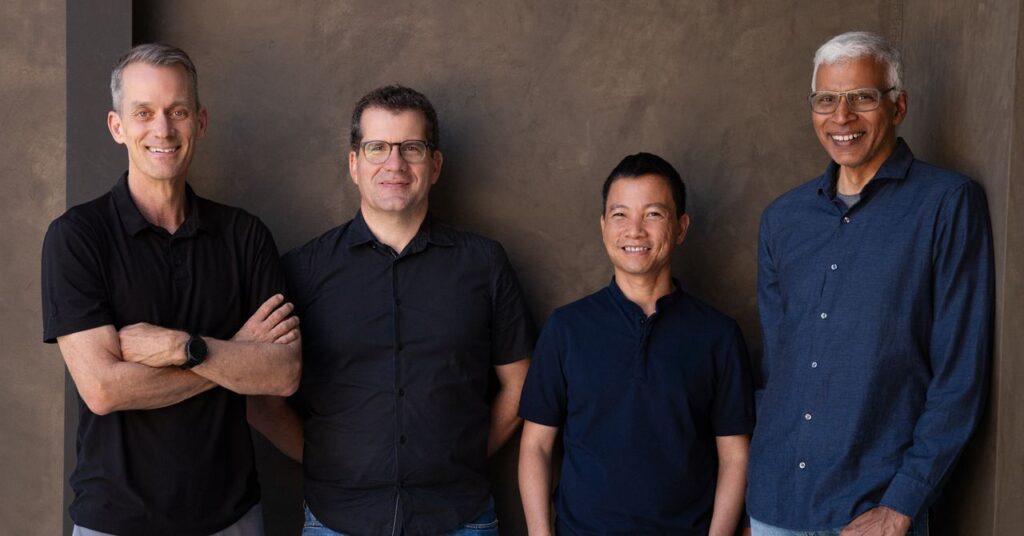
Initially, the team envisions that these concepts will be co-created with humans, but their ultimate ambition is to automate the entire process extensively. If successful, they argue, a few dedicated teams might utilize Discovery Loop to out-innovate the world’s biggest research institutions. It’s likely those smaller teams will become Discovery Loop’s clients. (The startup may also create its own loops to discover and capitalize on breakthroughs.)
They crafted a straightforward pitch deck and approached VCs to secure funding for their company, structured as a public benefit corporation. “We just included a few slides highlighting our backgrounds and a rough outline of how we believe our approach will succeed across various dimensions,” Dean explains. (They didn’t employ AI to design it.) Yet, their presence conveyed more than any presentation could.
“With this team, I wouldn’t need prior knowledge of their activities before investing,” remarks venture capitalist Vinod Khosla, who met them in his Sand Hill Road office on a Saturday to avoid any notice of Google’s impending loss. “It’s the ultimate superstar team.” Khosla also appreciated their vision: “Humans have been leveraging AI for research, rather than having AI act as the researcher,” he states. “The essence of Discovery Loop is that AI embodies the researcher.”
Other discussions occurred at Dean’s residence. In the end, Khosla Ventures and an AI-focused VC firm known as Radical Ventures invested, along with several other firms. (The founders haven’t disclosed the funding amount or valuation—but consider that some firms are paying tens or even hundreds of millions for a single AI expert, and these individuals are legends.) “Developing a solution to tackle all those challenges is a powerful concept,” notes Radical managing partner Jordan Jacobs, who will join the startup’s board. “These individuals have been engaged in this type of work previously, so they have the expertise.”
The process of exiting Google was more challenging. Dean states that Alphabet CEO Sundar Pichai made multiple attempts in meetings to persuade them to retain their badges. Ultimately, the team opted for the enjoyment—and liberty—of launching a startup.
“In a large organization, there’s always considerable inertia to overcome for any substantial changes,” Vinyals observes. “We want to create something distinct.” Google ultimately granted the departing engineers its support, along with an investment and an arrangement to provide computing resources for the first year.
“Over 27 years, Jeff and Sanjay played crucial roles in significant technology shifts, from our early search infrastructure to the neural networks that contributed to the current AI era,” Pichai stated. “We’ll continue collaborating with Discovery Loop as a founding investor and Cloud partner, and work together on a research framework for ML systems and related infrastructure advancements.”
In part, due to the repercussions this small exodus could have on Google, Dean and his co-founders are making efforts to remain discreet. So far, they have not started hiring a team (which might lead to further departures from Google) or even leasing office space. When I inquire about the CEO, there’s a slight pause. “I believe I’m the CEO,” Dean replies, somewhat bashfully. “Everyone pointed at me.”
Discovery Loop’s mission is not a new concept. Almost every notable figure in AI—Dario, Sam, Jensen—has at some point asserted that AI will serve as a catalyst for scientific discovery, addressing issues beyond human capacities. This team is banking on their expertise to create a system that truly achieves such breakthroughs. Absent that, Discovery Loop faces a more constrained measure of success: Will their achievements as a startup have significance that matches the talent void they’re leaving behind at Google?

Rajat Sharma
https://in.linkedin.com/in/rajat-mediaHelping D2C Brands Scale with AI-Powered Marketing & Automation 🚀 | $15M+ in Client Revenue | Meta Ads Expert | D2C Performance Marketing Consultant